
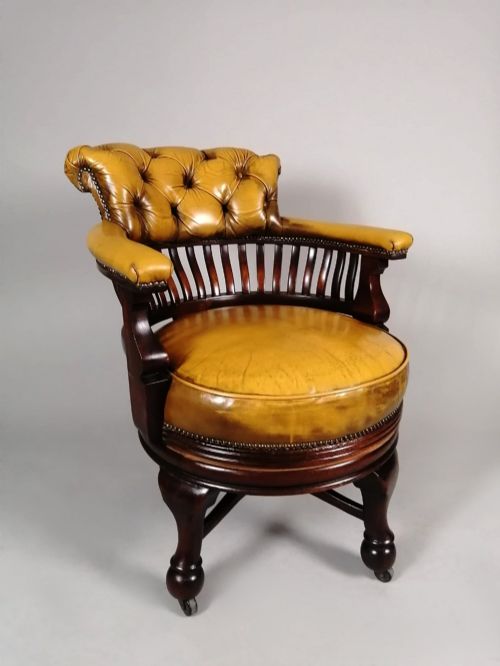
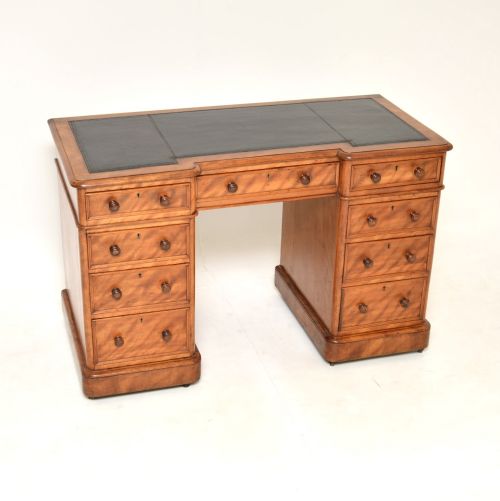
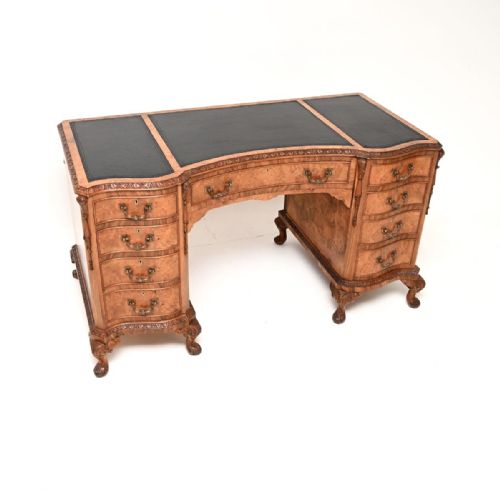
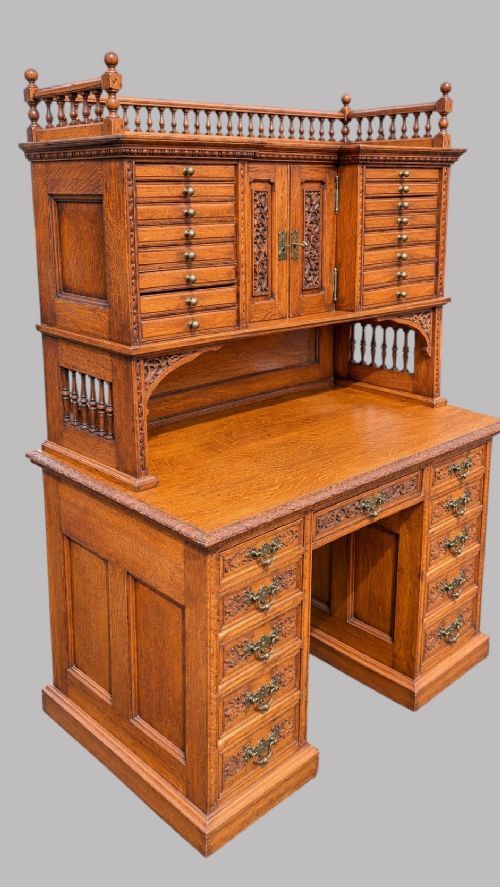


Victorian Executive Office Desk
A Victorian executive office desk offers heavy timber construction and leather writing surfaces, designed for serious business.
Victorian Executive Office Desk
A victorian executive office desk is a substantial piece of nineteenth century furniture designed for study and administration. Buyers examining this page will find pedestal desks, partners desks, and kneehole desks spanning the Victorian period.
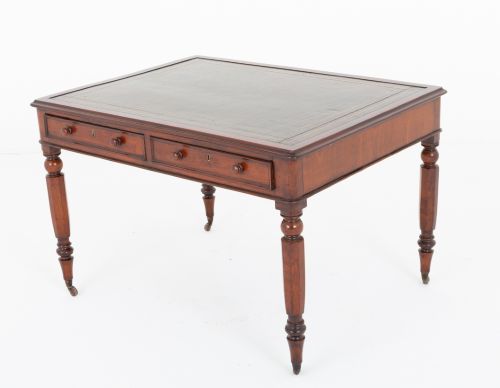
The most common forms are pedestal desks and partners desks fitted with multiple drawers and inset leather writing surfaces. Mahogany and walnut appear regularly alongside oak examples from various decades of the nineteenth century.
These items originate from the Victorian era, incorporating revival styles such as Queen Anne, Chippendale, and Georgian influences. They provide generous working space and deep storage compartments suited to professional rooms.
What varies in quality
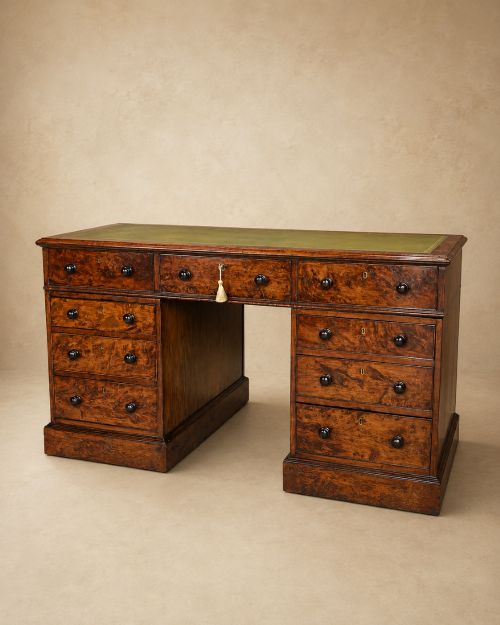
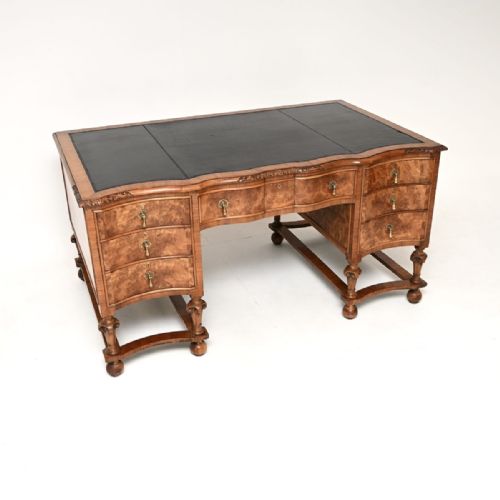
The choice of surface wood significantly differentiates examples, with figured burr walnut and rich mahogany achieving a more striking visual depth than plain timbers. Secondary details such as breakfront profiles and freestanding finished backs indicate superior original commission status.
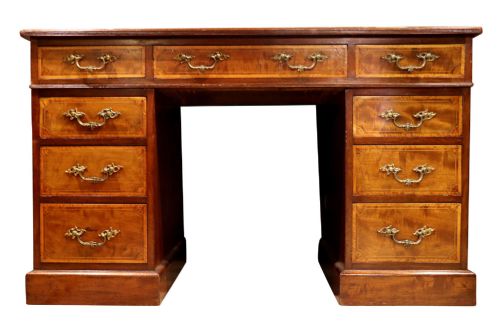
Hardware integrity and the presence of original fittings, including marked drawer locks and matching handles, elevate the standing of a piece. The crispness of carved mouldings and the precision of inlaid details reflect the skill of the workshop involved.
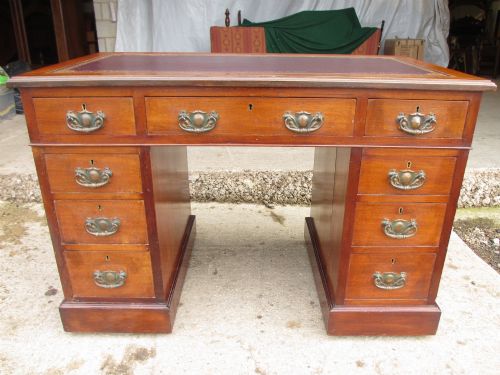
Listings feature pedestal desks and partners desks constructed from mahogany, burr walnut, and oak across the Victorian period.
Trollope and Sons·Edwards and Roberts·Maple and Co·Johnstone and Jeanes·Charles Andrea Nosotti·Hobbs and Co
The Victorian Executive Office Desk Glossary
- Pedestal desk
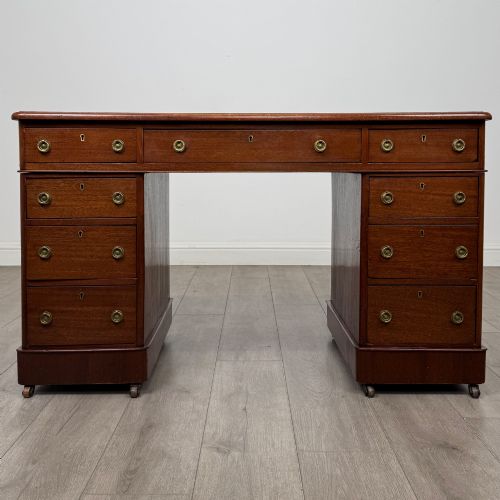
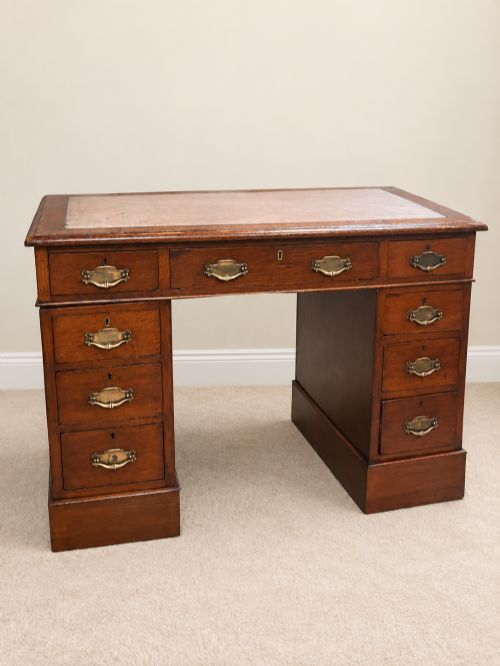
- A heavy writing desk comprising two supporting pedestals of drawers joined by a central desktop and single frieze drawer. This configuration provides substantial storage beneath the main working surface.
- Partners desk
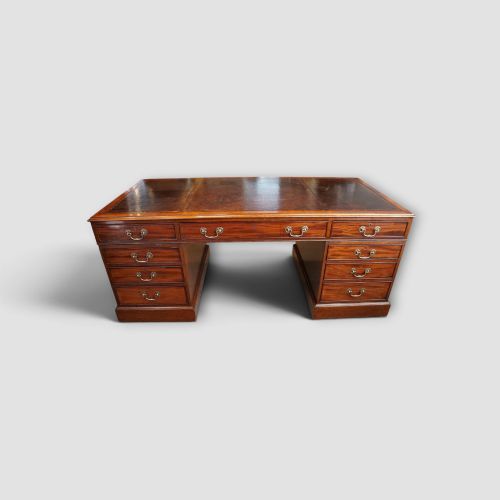
- A large double-sided desk built with drawers and cupboards accessible from both front and rear. It allowed two people to work opposite one another in a library or office.
- Kneehole desk
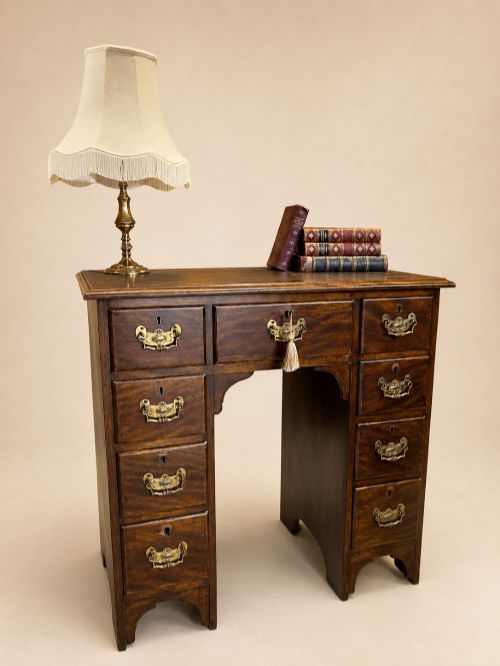
- A compact pedestal desk featuring a central recess for the user's legs, flanked by vertical stacks of drawers. These desks are often finished on all sides to stand free in a room.
- Roll top desk
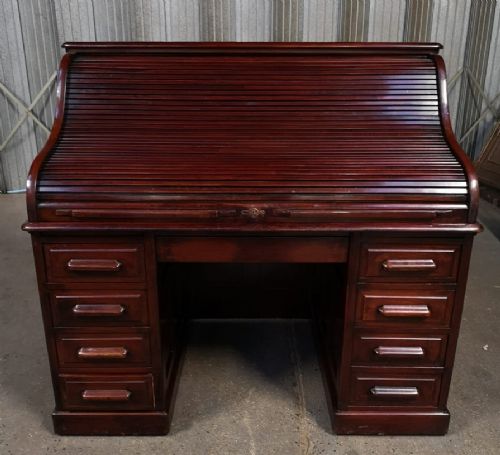
- A cylinder or tambour desk featuring a flexible wooden shutter that slides down to conceal the writing surface and pigeonholes. It secured correspondence and stationery when not in use.
- Writing slide
- A pull-out wooden shelf positioned above the drawers to provide extra surface area for paperwork without cluttering the main desktop. Slides operate on wooden runners integrated into the carcase.
Victorian Executive Office Desk: Frequently Asked Questions
What is a partners desk?
A partners desk is a large double-sided writing table featuring banks of drawers on both sides. This layout allowed two people to sit opposite each other.
These pieces were typically used in professional offices, banks, and large libraries where multiple users required workspace.
How do I care for the leather top?
The leather top should be dusted gently with a dry cloth and treated occasionally with specialist leather balms. Avoid using harsh chemical cleaners or excess moisture.
Keeping the room at a stable humidity prevents the leather from drying out and cracking over time.
Are these desks freestanding?
Many Victorian pedestal desks are finished on all four sides, meaning the back is polished and panelled just like the front. This allows them to sit in the middle of a room rather than against a wall.
Check the listing details to confirm if a specific desk is fully finished at the rear.
What wood was used most?
Mahogany and walnut are the most common timbers found across Victorian desks, with oak appearing frequently in later decades. Burr walnut veneer was often used on higher-end pieces for a decorative finish.
Secondary woods like pine or oak were used internally for drawer linings.