

Victorian Etched Glass
When you search for victorian etched glass, you are seeking the decorated vessels, decanters and windows produced during the nineteenth century.
Victorian Etched Glass
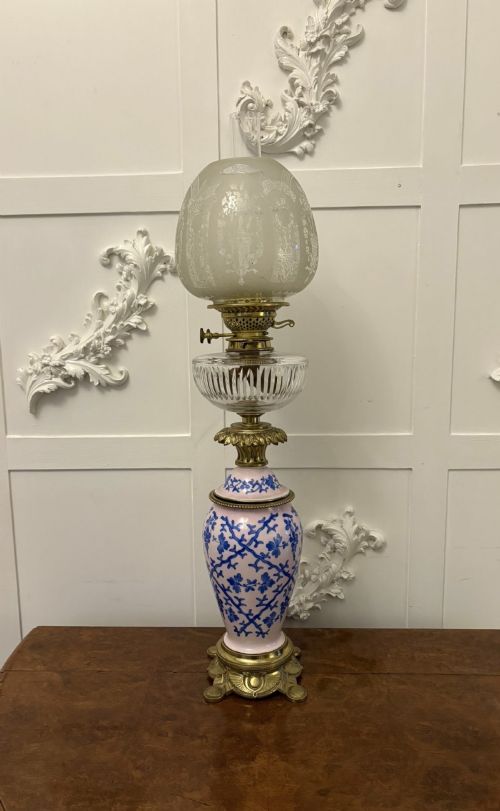
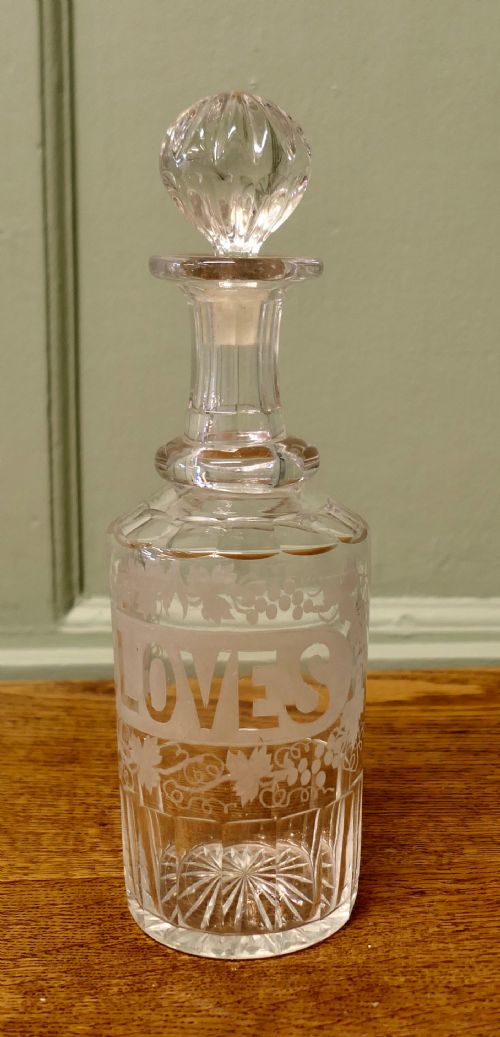
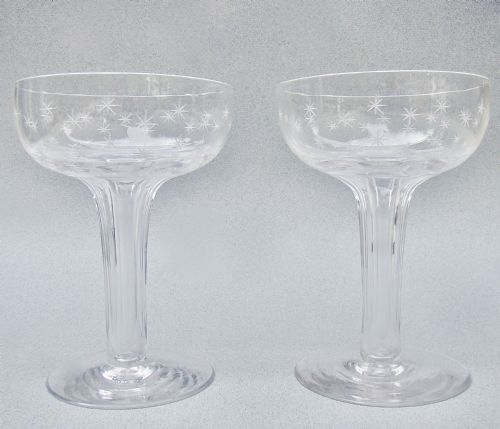
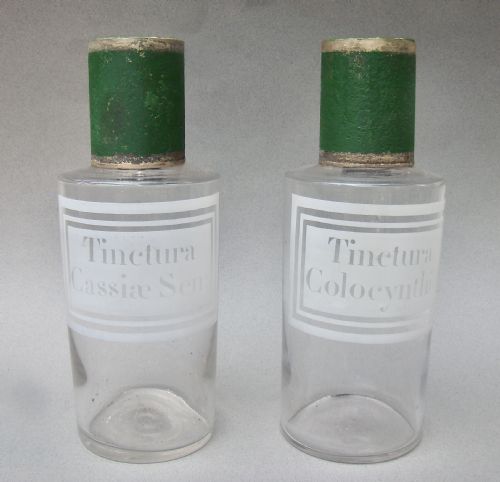
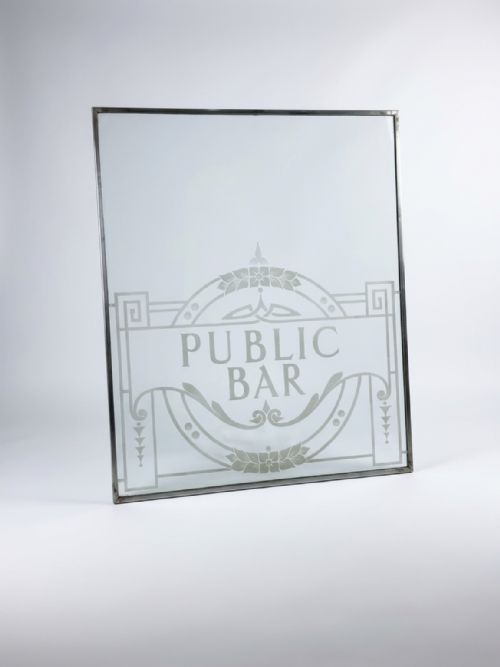
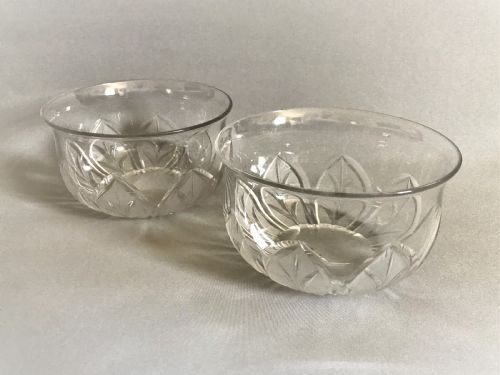
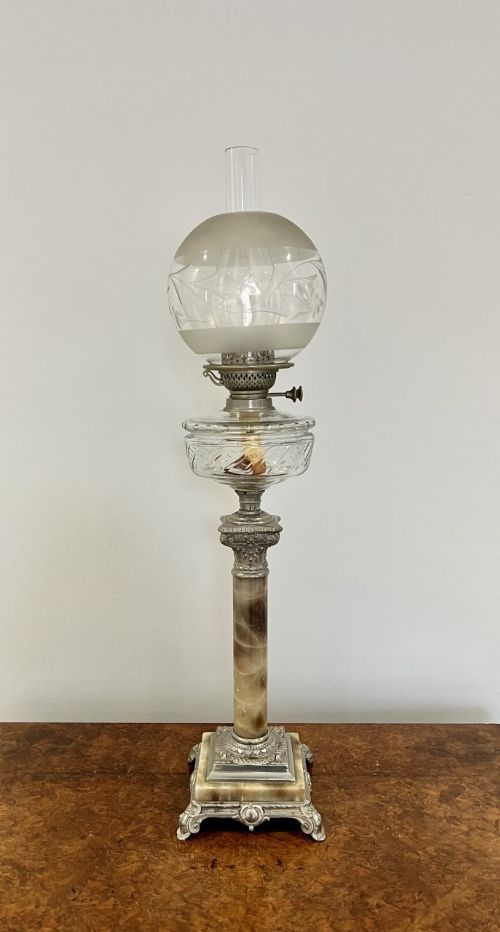
Victorian etched glass encompasses a wide range of domestic and architectural objects, from tableware such as decanters, celery vases, champagne glasses and water jugs to larger installations like pub windows and door panels. These items date primarily from the nineteenth century, capturing the period's fondness for ornate interior decoration.
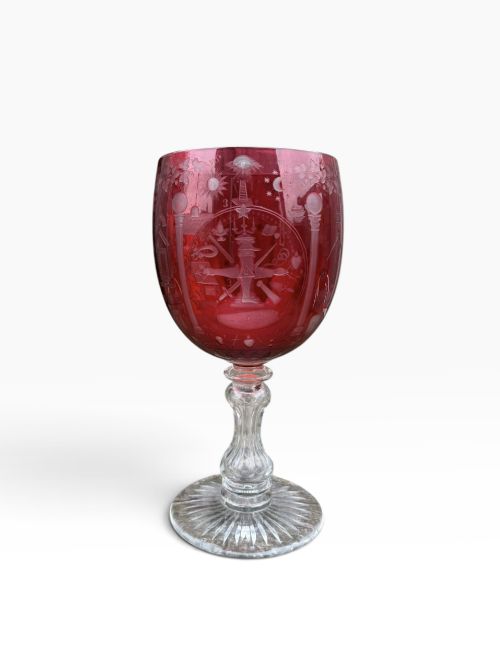
Tableware forms frequently appear as matched pairs or sets, featuring botanical or star motifs applied to clear, cranberry or ruby glass. Architectural pieces, including frosted pub windows and panel displays, demonstrate how the technique extended beyond small vessels into larger commercial spaces.
How they were made
Makers utilised clear and coloured glass, such as cranberry, ruby and amber varieties, shaping them through blowing, cutting and moulding techniques before decoration. Master artisans then applied designs using acid etching or engraving methods to achieve frosted patterns against polished surfaces.
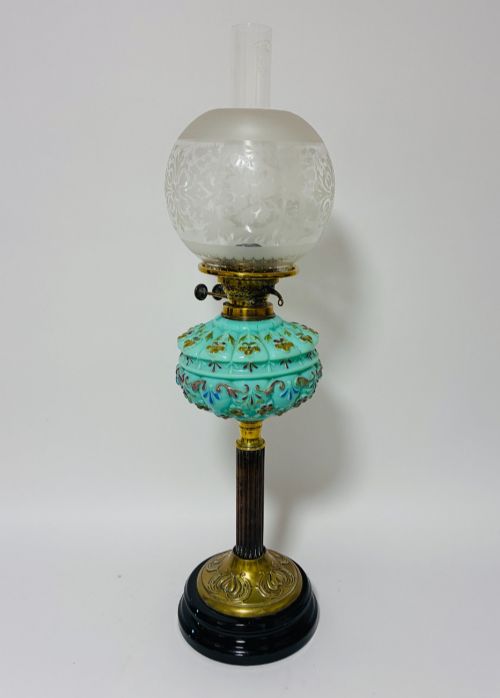
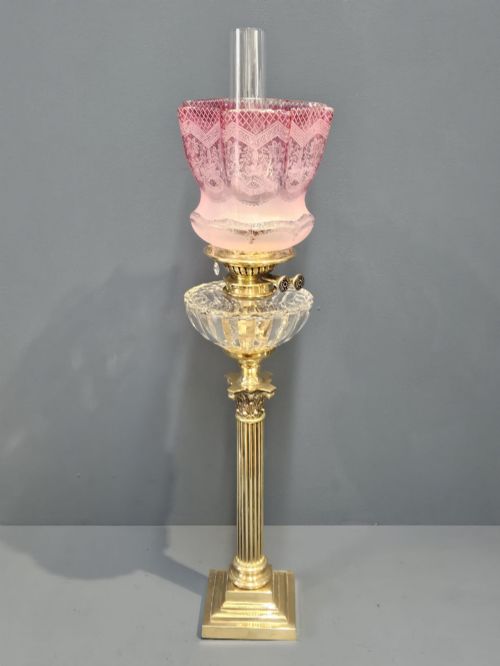
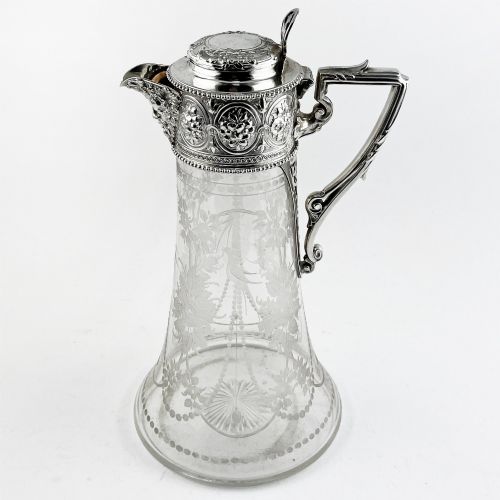
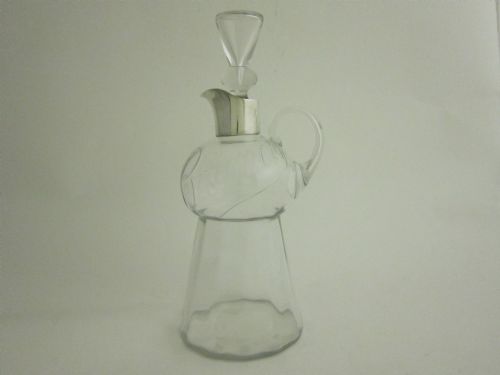
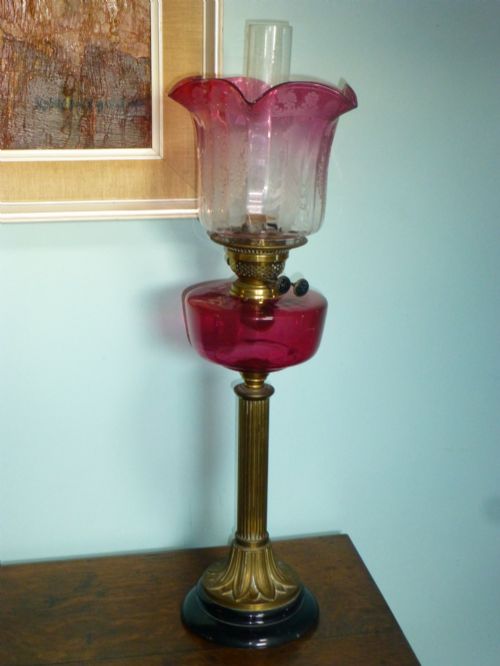
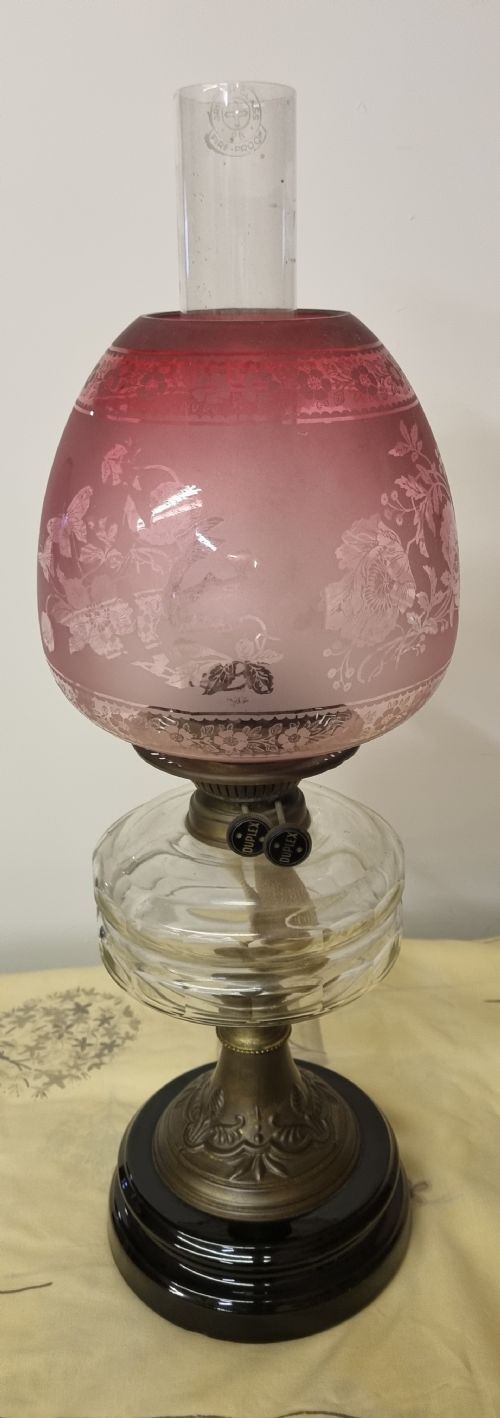
Many hollowware vessels incorporated mounts, handles or stoppers fashioned from sterling silver, silver plate or brass. These metal additions were secured to glass bodies in forms such as claret jugs, scent bottles and oil lamps.
Listings feature items spanning the nineteenth century, including the Victorian, Edwardian, and 19th Century periods.
What varies in quality
Quality rests on the crispness and depth of the etched ornamentation, where sharply defined botanical motifs or star patterns indicate superior handcrafting. The clarity of the base glass, whether clear crystal or saturated cranberry, contributes significantly to a piece's overall impact.
The integration of metal components, such as silver-plated mounts or brass hardware, influences the standing of an object. Items retaining their original stoppers, matching glass sets or authentic maker mounts command greater attention from collectors.
The Victorian Etched Glass Glossary
- Etched glass
- Glass decorated by applying acid to eat away exposed areas, leaving a frosted design. This technique allowed for intricate floral and geometric patterns.
- Claret jug
- A vessel designed for serving red wine at the table. These often combine a glass body with a silver or silver-plated handle, collar and hinged lid.
- Celery vase
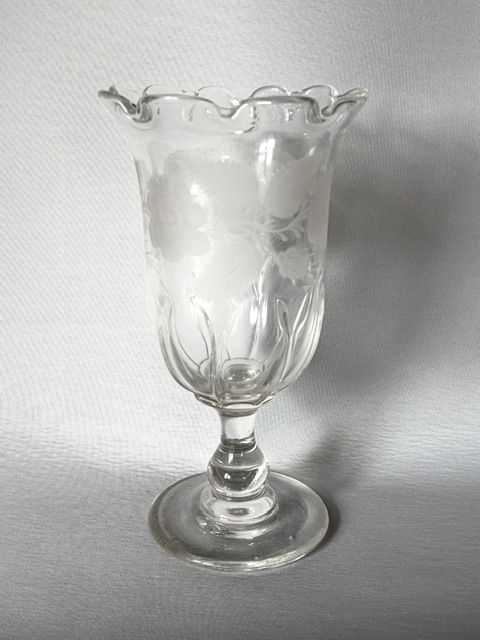
- An upright pedestal glass vessel used on nineteenth-century dining tables to hold stalks of celery. They frequently display cut or etched ornamentation.
- Cranberry glass
- A rich pinkish-red glass produced by adding gold chloride to the molten batch. It is commonly found in Victorian tableware and oil lamp shades.
- Comport
- A shallow dish or bowl raised on a stem and foot, also known as a tazza. These were utilised for serving fruit or sweets.
Victorian Etched Glass: Frequently Asked Questions
What is victorian etched glass used for today?
These pieces serve as decorative table settings, functional decanters, and architectural display panels in modern interiors.
Collectors also utilise smaller items like scent bottles and wine glasses for daily display or specialised collections.
How do you clean antique etched glass?
Wash pieces gently by hand using lukewarm water and mild soap to protect the delicate surface.
Avoid abrasive sponges and harsh chemicals that can damage the etched frosted areas or metal mounts.
How can you tell if etched glass is genuine?
Genuine nineteenth-century pieces exhibit subtle irregularities from hand-blown production and hand-applied acid etching.
Examine the weight, the depth of the frosted motifs, and any associated silver or brass mounts for period-appropriate wear.