








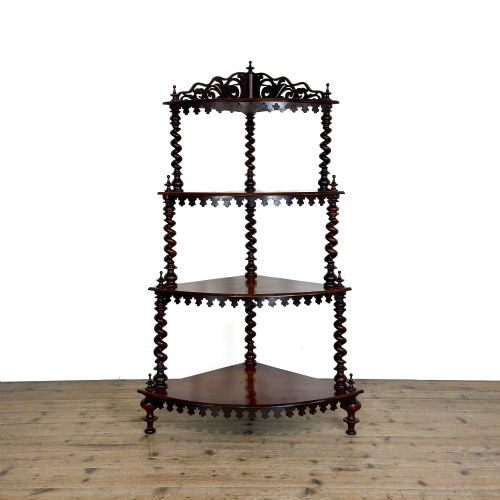
Victorian Etagere Shelf
A victorian etagere shelf brings open display and tiered storage together, offering multiple tiers of timber and glass for books, ornaments and curiosities.
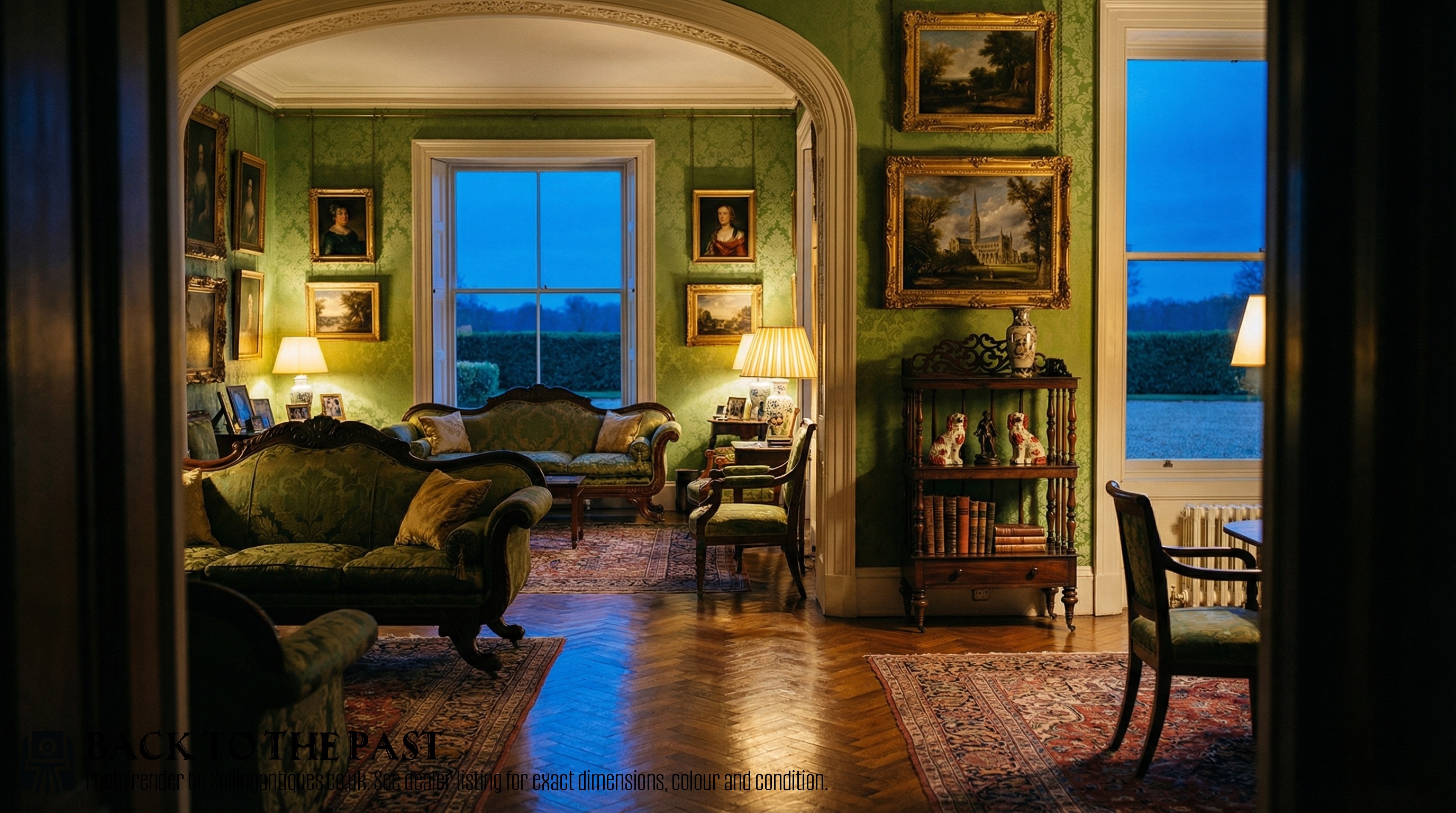
Victorian Etagere Shelf
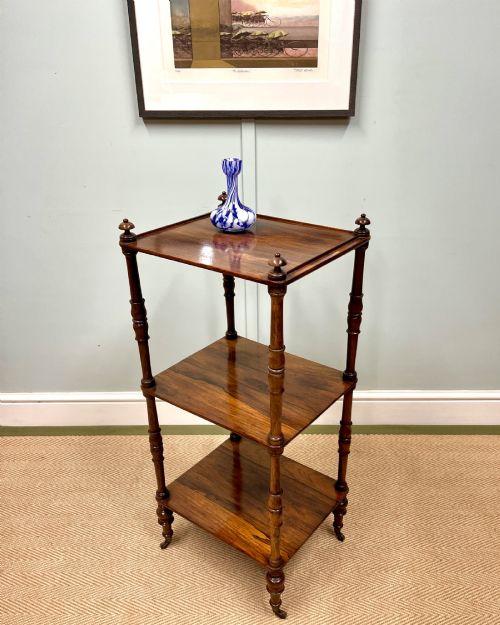
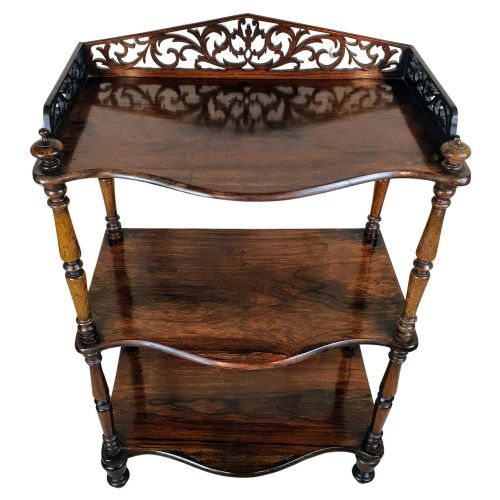
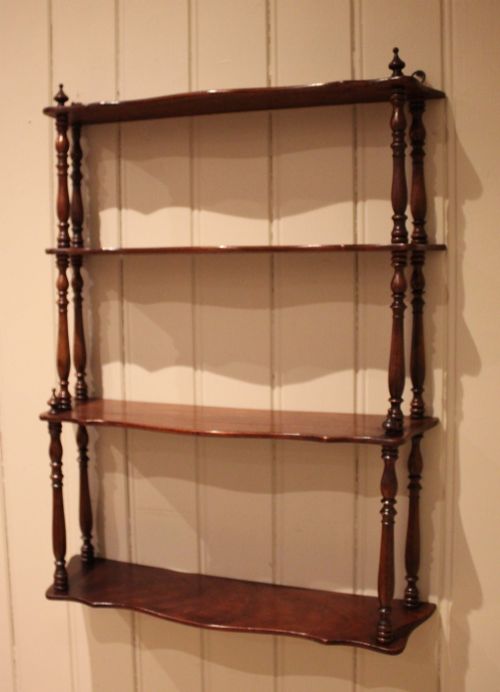
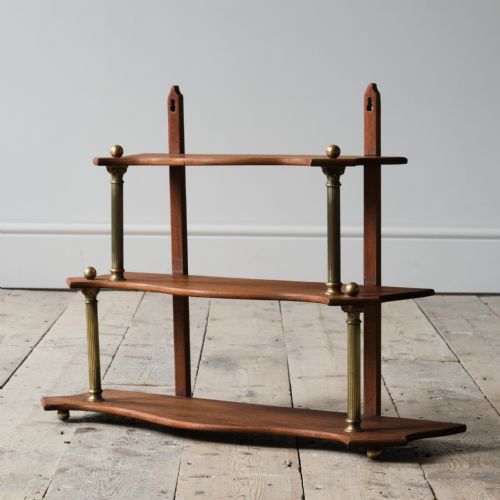
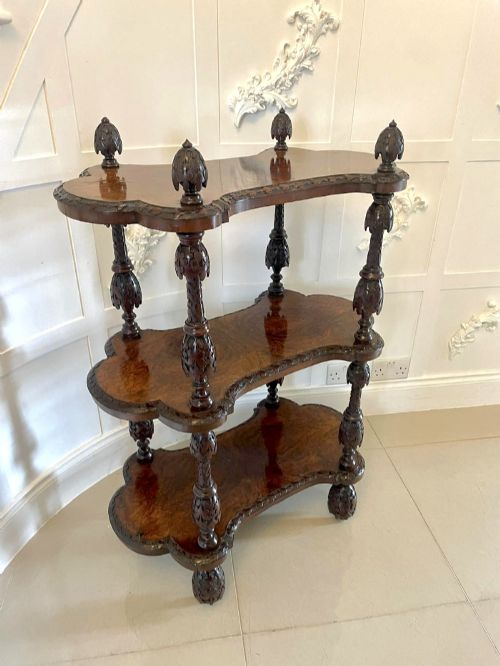
A victorian etagere shelf combines open tiers for display with functional storage, appearing frequently as multi-tiered whatnots, wall hanging shelves and corner units. These pieces span the nineteenth century, including specific dates from eighteen-fifty to nineteen-ten, drawing on periods such as the Victorian era and Regency.
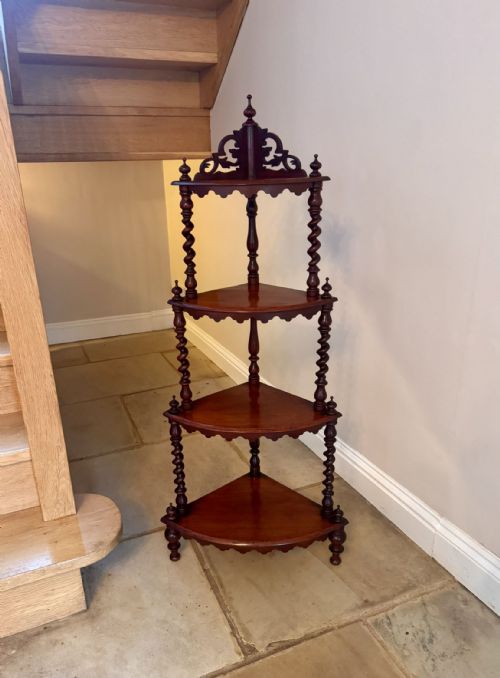
The forms range from slim three-tier buffets and corner cabinets to freestanding display stands and tall six-tier dumb waiters. Buyers encounter various configurations designed to utilise corner spaces or stand centrally against a wall.
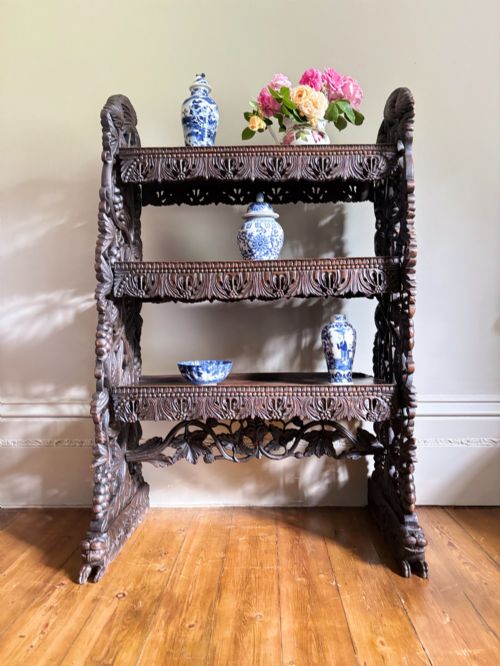
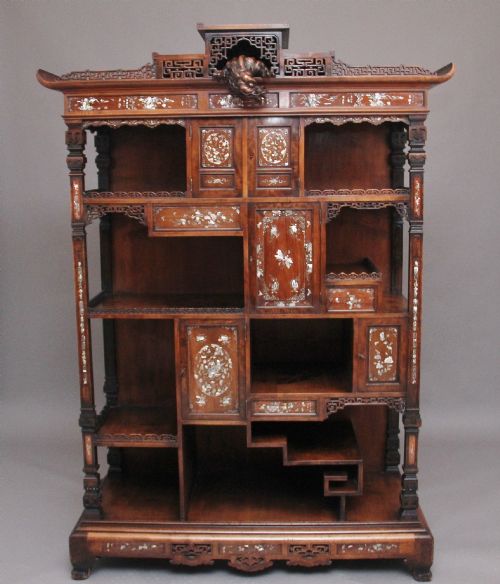
Origins and stylistic influences include French Chateau, Rococo Revival, Japonisme, Anglo-Indian and Victorian Chinoiserie. This variety provides different aesthetic interpretations of tiered display furniture from the period.
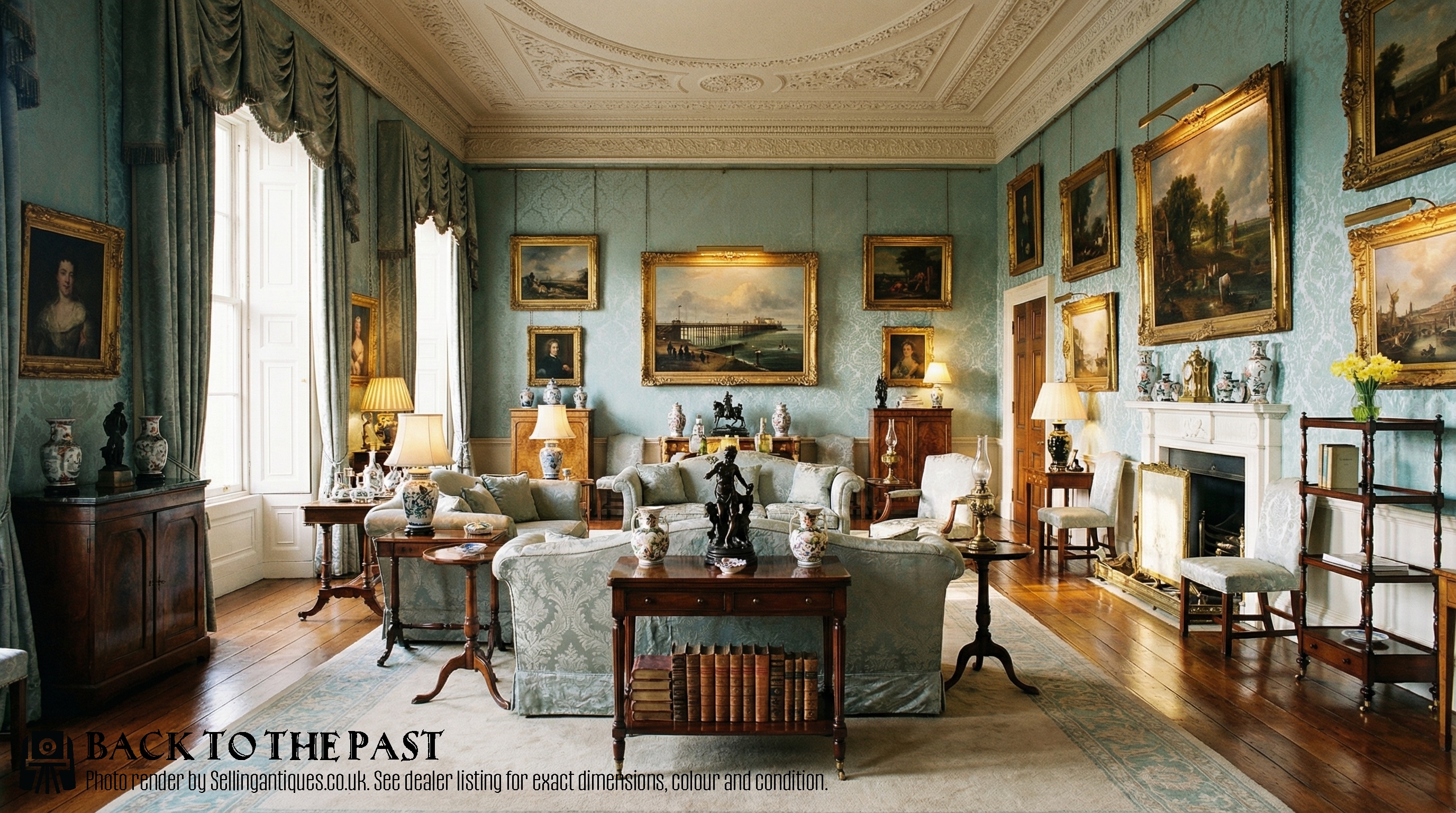
Materials and construction
Cabinet makers utilised dense hardwoods including mahogany, walnut, burr walnut, rosewood, satin birch, teak and padauk. Ebonised wood and bamboo also appear, often paired with brass mounts, gilt metal or parcel gilding.
Structural details involve turned supports, barley twist columns and tiered platforms designed to hold display items securely. Marquetry inlay, lacquer and glass panels are integrated into specific pieces to enhance the decorative surface.
Victorian Etagere Shelf Retail Price Guide 2026
Typical asking prices for victorian etagere shelf among the pieces listed under this phrase on Sellingantiques today, from the lower quarter to the upper quarter. They describe what is for sale here now, not the wider market.
Some nineteenth-century makers ensured their multi-tiered shelves could double as music cabinets and dumb waiters.
Judging quality in tiered shelving
Quality rests in the choice of timber figures, particularly the grain selection in burr walnut, rosewood and mahogany pieces. Crisp carving on barley twist columns and refined joinery on serpentine shapes distinguish finer workshops from simpler production.
The integration of decorative elements such as brass mounts, marquetry and gilt detailing elevates certain examples. Structural rigidity across multiple tiers indicates careful assembly by skilled makers.

Gabriel Viardot·Edwards and Roberts
The Victorian Etagere Shelf Glossary
- Etagere
- A piece of furniture consisting of a set of open shelves for displaying small objects or ornaments. It originated in France and gained popularity during the nineteenth century.
- Burr walnut
- A prized timber taken from the growth deformity of a walnut tree, yielding a swirling, highly decorative grain pattern. It was frequently utilised for high-status Victorian veneer work.
- Marquetry
- The art of applying pieces of veneer to a structure to form decorative patterns and pictures. Makers used contrasting woods to create floral or geometric designs.
- Barley twist
- A turned wooden column resembling the shape of a twisted barley sugar stick. This decorative turning technique is common on upright supports of nineteenth-century furniture.
Victorian Etagere Shelf: Frequently Asked Questions
What is an etagere shelf used for?
These pieces provide tiered platforms to display porcelain, books and decorative objects in a drawing room or parlour. The open design allows items to be viewed from multiple angles.
Historically, they served as versatile storage furniture for items in regular use, keeping decorative possessions organised and accessible.
Where should I place a corner whatnot?
Corner whatnots and shelves fit snugly into empty room angles, turning unused space into an attractive display area. They work well in dining rooms, living spaces or hallways.
Matching pairs can frame a fireplace or a doorway, creating a balanced focal point within an interior scheme.
How do I distinguish between an etagere and a whatnot?
An etagere generally leans towards lighter decorative display, often featuring French styling and delicate supports. A whatnot frequently serves a more robust storage function with three or four solid tiers.
Both terms describe tiered shelving units, and nineteenth-century makers often used the designations interchangeably for similar furniture forms.
How do I care for nineteenth-century wood furniture?
Keep wooden shelves away from direct sunlight and heat sources to prevent the timber and veneer from drying out or splitting. Dust the tiers regularly with a soft, dry cloth.
Apply a traditional wax polish sparingly to maintain the natural lustre of mahogany, rosewood or burr walnut surfaces without building up heavy residue.