


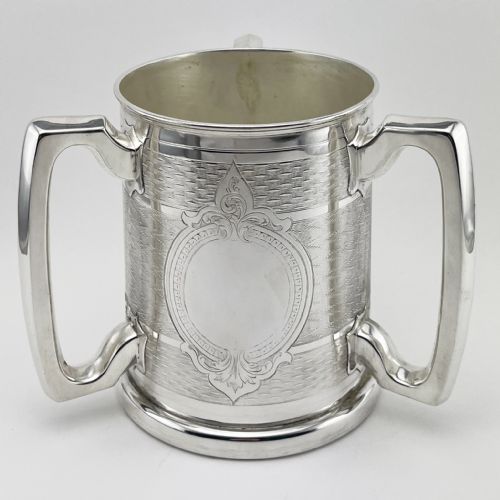


Victorian Engraved Silver Cup
These pieces combine mid-to-late nineteenth-century form with hand-worked surface detail, offering a tangible link to domestic milestones and formal presentations.
Victorian Engraved Silver Cup
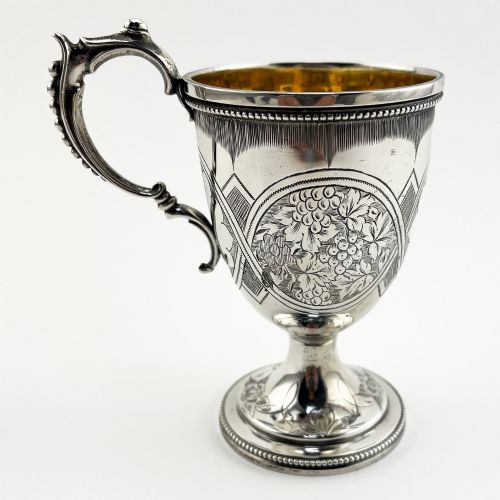
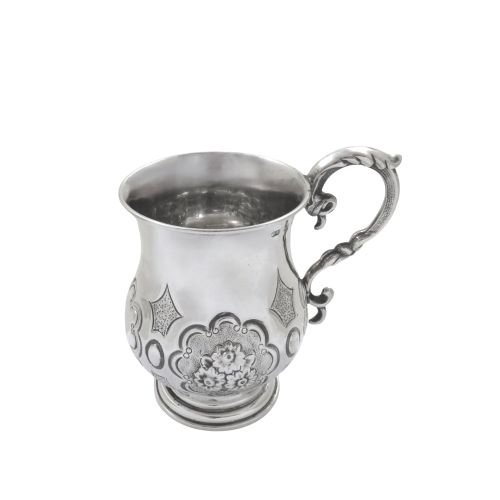
A victorian engraved silver cup encompasses a variety of drinking vessels, ranging from christening mugs and tankards to formal presentation goblets, loving cups, and church chalices. The selection here leans heavily towards nineteenth-century examples produced across English assay offices, alongside broader Victorian styles.
Buyers will most frequently encounter compact christening mugs and sturdy silver-plated or sterling silver goblets bearing intricate floral, geometric, or heraldic engraving. These domestic and ceremonial items reflect the varied social rituals of the period, from family gifts to sporting trophies.
Materials and Techniques
Silversmiths utilised sterling silver, silver plate, and Old Sheffield Plate, often enhancing the interior or details with gold gilding or parcel gilt finishes. Base metals such as copper and electroplated nickel silver also appear, particularly in larger tankards and chalices.
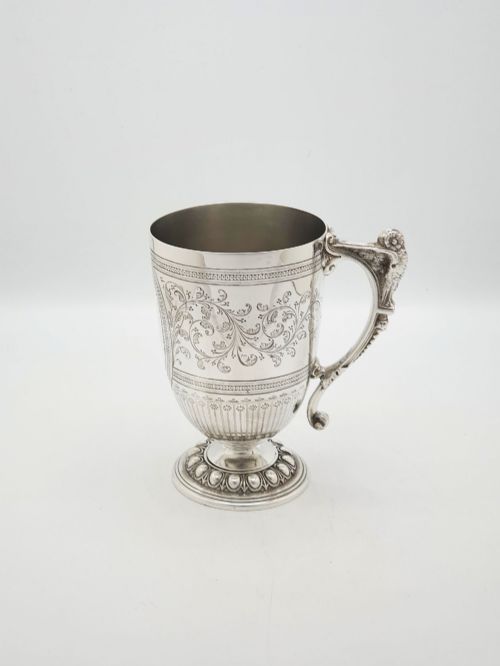
Surface decoration relies on manual embossing and deep engraving techniques, cutting floral motifs, crests, and inscriptions directly into the metal body. Specialised additions, such as cast owl handles or leather casings, demonstrate the diverse manufacturing methods employed by period workshops.
Markers of Distinction
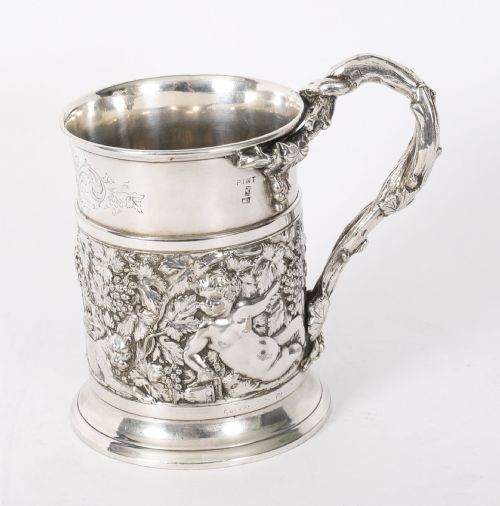
Depth and precision of the manual engraving dictate the visual weight of the vessel, separating mass-produced stamped items from pieces shaped and decorated by skilled hands. Crisp relief work on handles and mounts demonstrates superior craftsmanship.
The weight of the metal and the integrity of the original gilding or plating indicate the standard of production. Maker marks from established silversmiths provide further context regarding the workshop standards upheld during fabrication.
G R Collis·George Unite·Bernard Muller·John hunt and Robert Roskell·Henry Tatton & Son·Aleksandr Timofeyevich Shevyakov·Fordham & Faulkner
The Victorian Engraved Silver Cup Glossary
- Sterling silver
- A silver alloy containing 92.5 percent pure silver by mass, standard for quality British tableware of the era. It provides the durable foundation for detailed hand engraving.
- Silver gilt
- Silver objects that have been coated with a thin layer of gold on the interior or exterior surfaces. This technique protected the metal from corrosive liquids and added a rich visual contrast.
- Loving cup
- A large drinking vessel equipped with multiple handles, designed to be passed among guests at banquets or communal gatherings. Victorian versions frequently display elaborate presentation engraving.
- Christening mug
- A small, single-handled cup traditionally given as a birth or baptismal gift during the nineteenth century. These items often feature floral cartouches intended for personal inscriptions.
- Old Sheffield plate
- An early composite material made by fusing a sheet of silver to a thicker copper base. It predates modern electroplating and produces a warm, durable finish seen on mid-century chalices.
Victorian Engraved Silver Cup: Frequently Asked Questions
What were christening mugs used for?
These small mugs served as traditional gifts for newborns or young children to mark baptisms and early birthdays. Families kept them as sentimental keepsakes rather than items for daily use.
Over time, many accumulated engraved names, dates, or family crests that recorded these significant domestic milestones.
How do I care for silver plated cups?
Gentle cleaning with a specialised silver cloth prevents the buildup of tarnish while preserving the thin surface plating. Avoid harsh abrasive polishes that can wear away the fine engraved details.
Store the vessels in dry environments away from direct sunlight to maintain the integrity of any associated leather cases or gilding.
What is the difference between a chalice and a goblet?
Chalices typically originate from ecclesiastical contexts, serving sacramental wine during church services with deep bowls and sturdy stems. Goblets generally function as secular drinking vessels or presentation trophies.
Both forms utilise similar manufacturing techniques, but their intended environments dictated their scale and decorative motifs.
How can I identify a Victorian date mark?
British silver incorporates a series of hallmarks, including a date letter that corresponds to the specific assay year and office location. Consulting standard hallmarking reference guides allows you to pinpoint the exact year of manufacture.
Maker's marks alongside these stamps further verify the period and the workshop responsible for the piece.