




Victorian Embroidery Artwork
Victorian embroidery artwork brings narrative wool and silk into rooms through framed historical needlework.
Victorian Embroidery Artwork
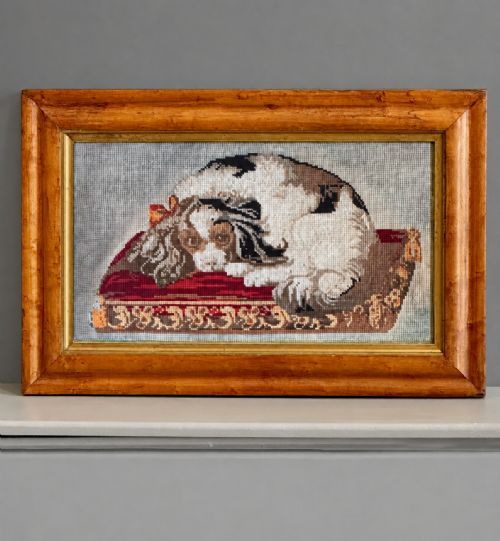
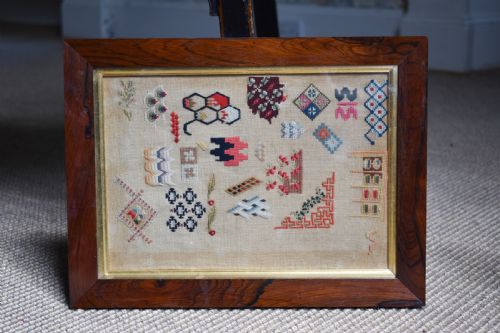
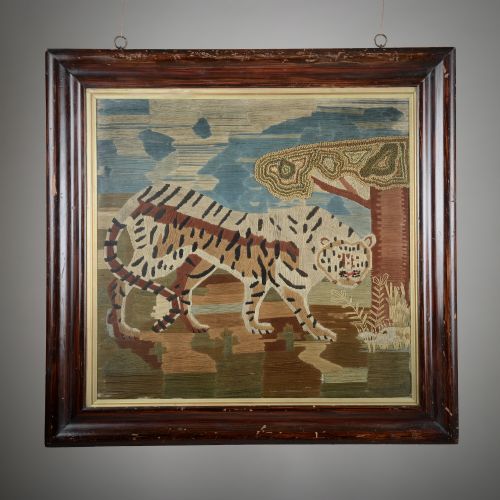
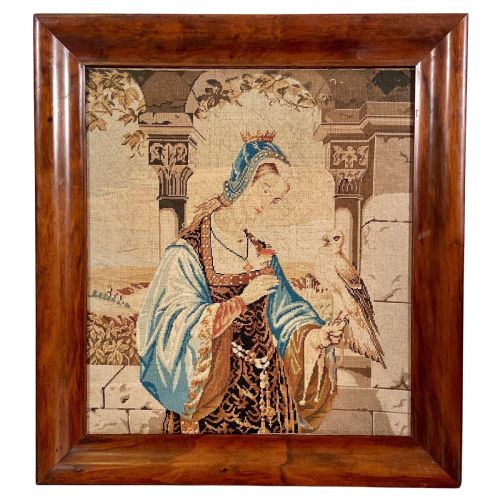
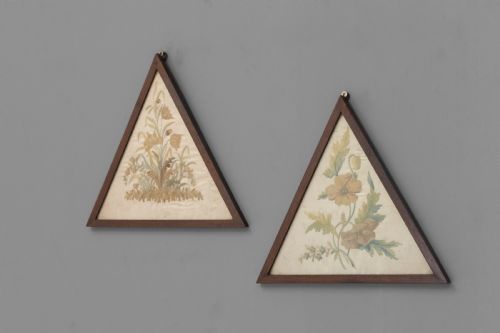
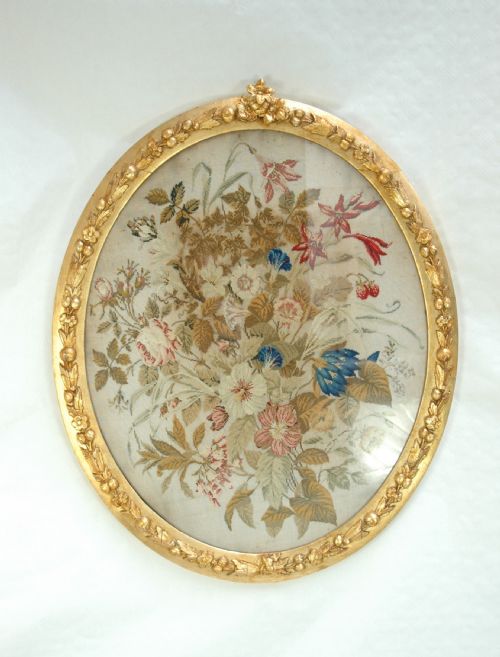
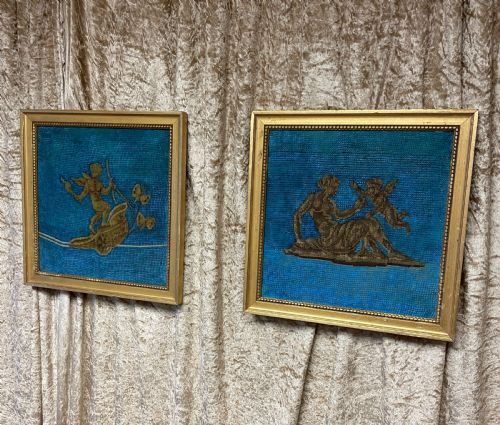
Victorian embroidery artwork encompasses framed textile pieces created across the nineteenth century, including needlework samplers, wool work pictures, and silk embroidery panels. These textile items span subjects from domestic alphabet samplers and religious portraits to horse racing scenes, animals, and classical figures.
The objects take several distinct forms, most commonly appearing as wall art housed in period frames made of rosewood, burr maple, oak, or gilded wood. Pieces range from Italian needlepoint tapestries and Gros Point needlework to American beadwork pictures and English country house wool work.
Materials and techniques
Maker execution relies on wool, silk, and linen stitched onto canvas grounds using specialised needlework techniques such as Gros Point and needlepoint tapestry. Artisans also incorporated glass beads in specific American works to create textured pictorial surfaces.
Framing forms an integral part of the construction, utilising native timbers like rosewood, burr maple, oak, and gilded wood to protect and present the delicate textile panels.
Listings feature items spanning the nineteenth century, including works from the eighteen-fifties, eighteen-sixties, eighteen-eighties, and eighteen-nineties, framed in rosewood, burr maple, oak, and gilded wood.
Assessing quality and execution
Quality rests in the precision of the stitch work and the complexity of the pictorial subject, distinguishing simple alphabets from elaborate figural portraits and animal depictions. Finer execution shows in the tonal blending of silk and wool threads across detailed scenes.
The preservation of the original framing materials, such as burr maple or rosewood surrounds, contributes significantly to the integrity of the piece. The clarity of the needlework and the stability of the textile ground determine the overall standard.
The Victorian Embroidery Artwork Glossary
- Sampler
- A piece of needlework produced as a demonstration or test of skill in various stitches, often featuring alphabets, numbers, and motifs. These exercises frequently record the name of the maker and dates.
- Gros Point
- A type of needlepoint embroidery worked in a coarse cross stitch on canvas. This technique creates durable pictorial panels suitable for wall display.
- Berlin Work
- A style of charted needlepoint embroidery popular in the nineteenth century using brightly coloured wools. It allowed stitchers to copy elaborate patterns onto canvas grids.
- Silkwork
- Embroidery executed primarily in silk threads to achieve a smooth, lustrous pictorial finish. These panels often depict theatrical scenes or landscapes.
Victorian Embroidery Artwork: Frequently Asked Questions
What subjects appear in these pieces?
The subjects range from domestic alphabet samplers and religious portraits to horse racing tracks, falconry scenes, and exotic animals like tigers.
Makers also rendered classical figures, theatrical moments, and allegorical depictions within framed textile panels.
Are dates usually recorded on them?
Certain samplers and portraits include stitched dates and maker names, such as specific years in the mid-nineteenth century.
Other works rely on stylistic indicators, framing materials, and subject matter to suggest a period of origin within the nineteenth century.
What materials make up the picture grounds?
Needlework pieces are constructed using canvas, wool, silk, and linen as foundational and decorative elements.
Glass beads also feature in specific American examples to add texture and luminance to the embroidered design.