
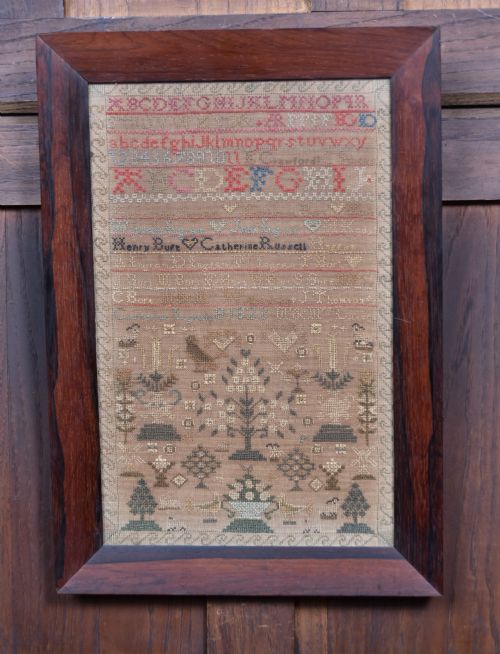


Linen Cross Stitch Sampler
Linen cross stitch sampler works record youthful handiwork in thread on fabric, offering intimate glimpses into past schoolrooms and family parlours.
Linen Cross Stitch Sampler
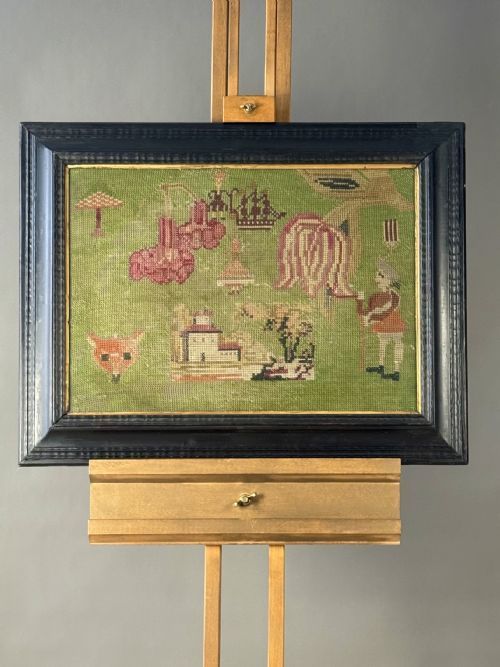
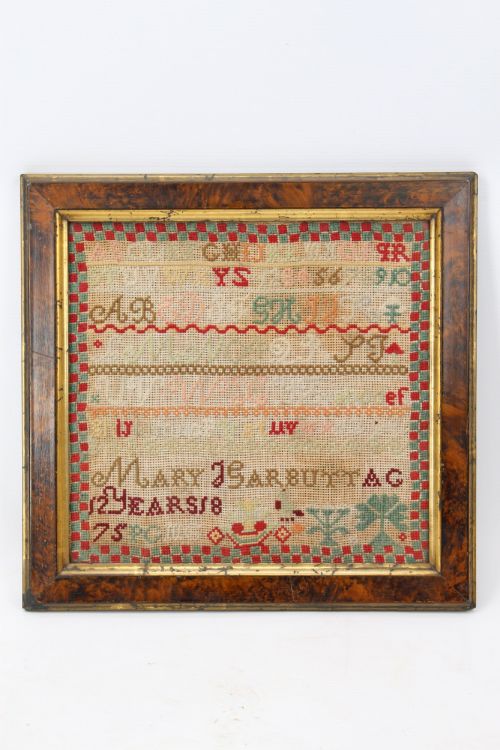
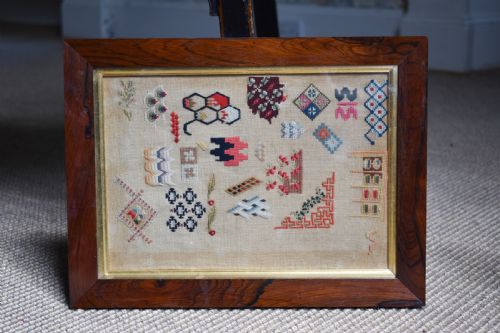
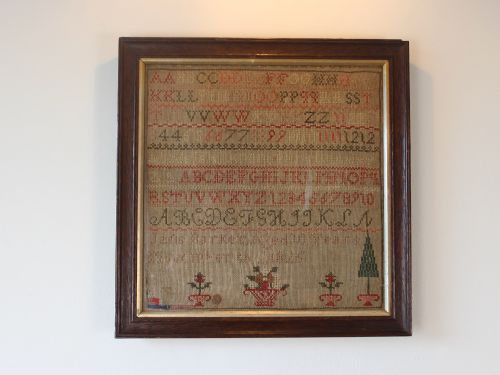
A linen cross stitch sampler displays stitched alphabets, numbers, verses, and motifs worked by young makers. These pieces span the eighteenth and nineteenth centuries, taking the form of framed needlework panels and textile wall art.
The version most commonly met on this page is the nineteenth century Victorian or Georgian schoolgirl piece, often recording the maker's name, age, and a specific date.
Examples range from miniature works to large framed textiles, occasionally including regional Scottish or English variants alongside alphabets and religious texts like the Lords Prayer.
Materials and construction
Needleworkers stitched onto woven linen grounds using silk thread, wool, and standard thread. The primary technique relies on counted thread embroidery, predominantly cross stitch, executed by hand.
Many survivors retain their original framing involving wood and glass, which protects the delicate textiles from environmental wear.
Listings span the eighteenth and nineteenth centuries, encompassing George II, Georgian, Regency, William IV, and Victorian periods on linen grounds.
Assessing quality in needlework
Quality rests on the neatness of execution, the complexity of the motifs, and the variety of stitches employed alongside basic cross stitch. Tightly balanced tension and orderly lettering elevate a piece above simpler exercises.
The inclusion of detailed pictorial borders, significant historical text such as religious commandments, or well-documented maker details adds depth and distinction to individual works.
The Linen Cross Stitch Sampler Glossary
- Sampler
- A piece of needlework produced as a demonstration or test of skill in various stitches and patterns. They frequently include alphabets and numerals for future reference.
- Cross stitch
- An X-shaped embroidery stitch executed on an evenweave fabric like linen. It forms the foundation of most traditional samplers.
- Needlework
- General term for decorative work done with a needle and thread. This includes embroidery and tapestry work.
- Alphabet sampler
- A specific type focusing primarily on rows of letters and numbers. Young makers used these to practice lettering styles.
Linen Cross Stitch Sampler: Frequently Asked Questions
What do the dates and ages mean?
The dates record when the maker finished the textile, while the stated ages show how young the child was at the time. Most recorded makers were between eleven and thirteen years old.
These details ground the piece in a specific schoolroom or domestic setting, often matching historical naming conventions.
How were these textiles originally displayed?
Many samplers were framed in wood behind glass to protect the delicate linen and threads from dust and handling. They hung in domestic parlours as evidence of a young girl's accomplishments.
Surviving examples frequently retain period frames that contribute to their historical context.
Can I identify where a sampler was made?
Some pieces include specific place names, schools, or regional designations such as Scottish or English origins. School names and town references sometimes appear alongside the maker's signature.
Textiles lacking location data can often be attributed through stylistic motifs and lettering conventions.
What texts appear besides alphabets?
Makers stitched religious passages including the Lords Prayer and the Commandments, alongside moral verses on education. Alphabet rows and numeric sequences remain the most common textual elements.
Some works incorporate decorative motifs like trees, birds, and buildings surrounding the central text.