




Victorian Textile Wall Art
Victorian textile wall art brings together needlework, wool work and silk panels that capture nineteenth-century stitchcraft on display.
Victorian Textile Wall Art
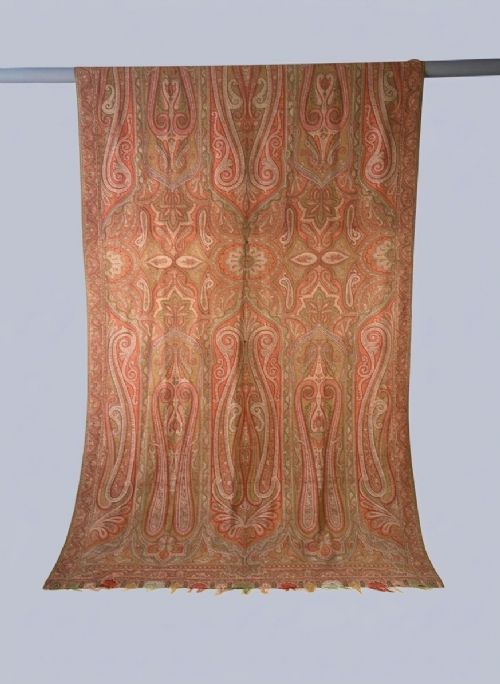
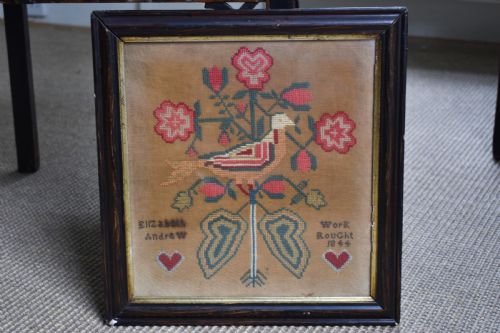
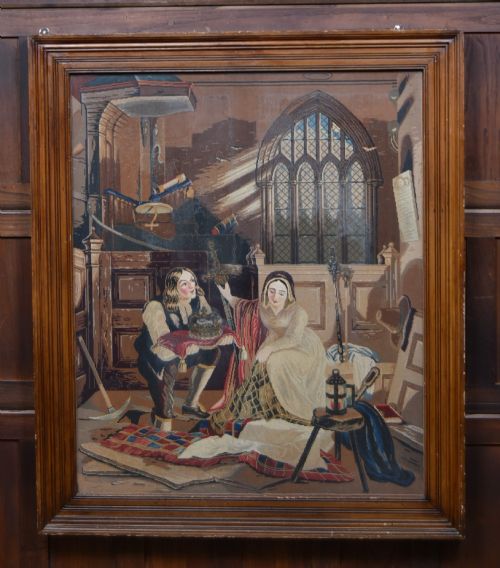
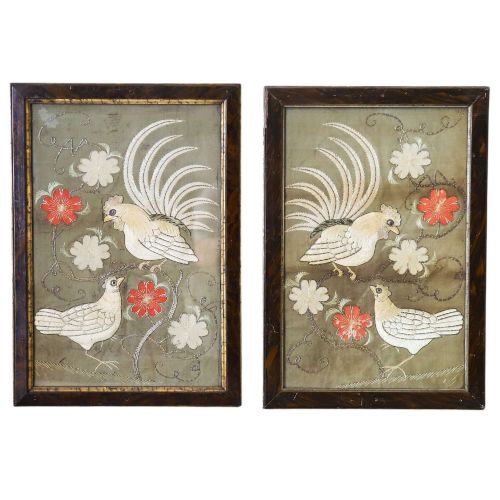
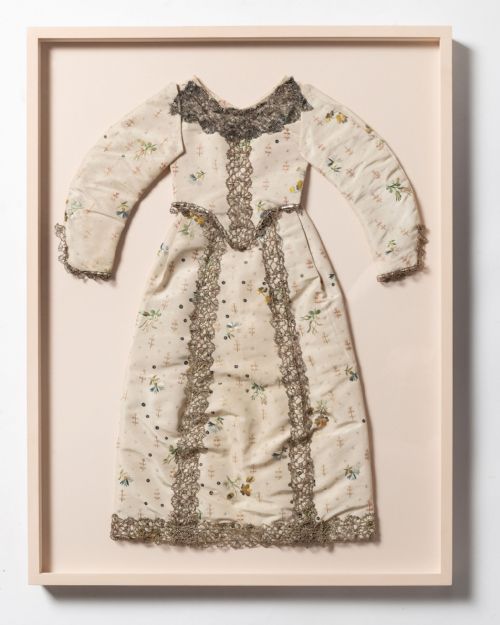
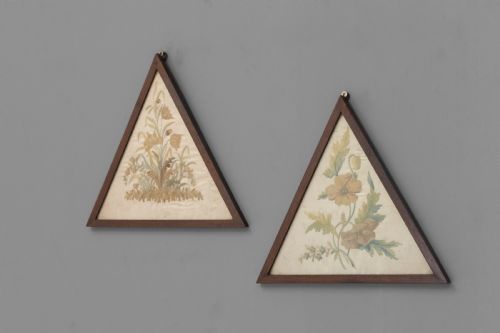
Victorian textile wall art includes framed samplers, needlework panels, tapestries, plushwork and embroidered pictures created during the nineteenth century. These pieces record domestic skill through wool, silk, cotton and linen worked by hand on canvas or fabric foundations.
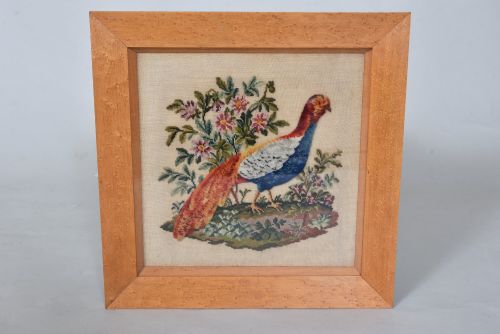
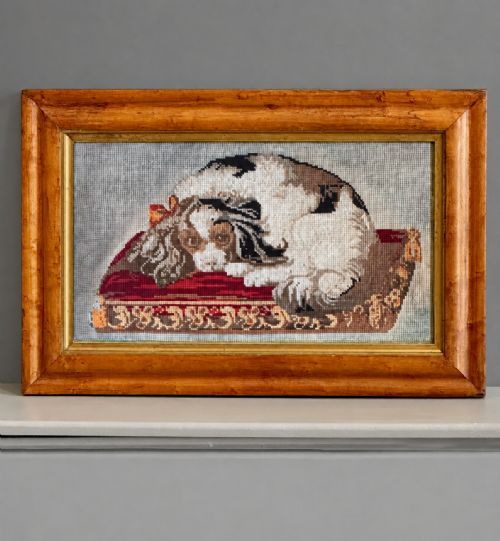
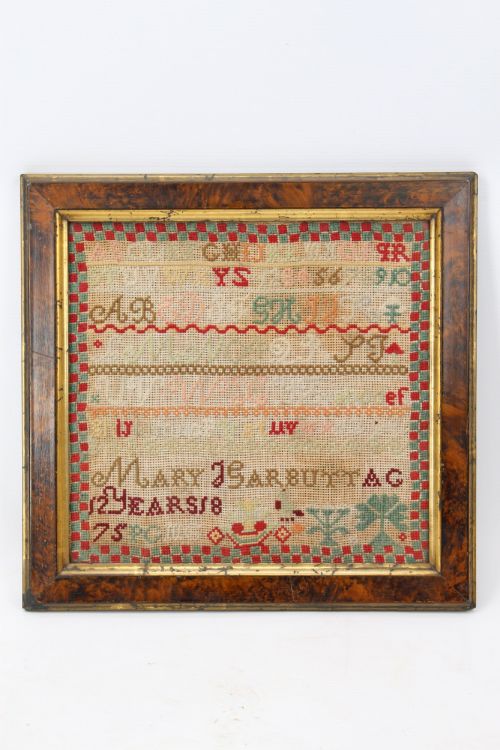
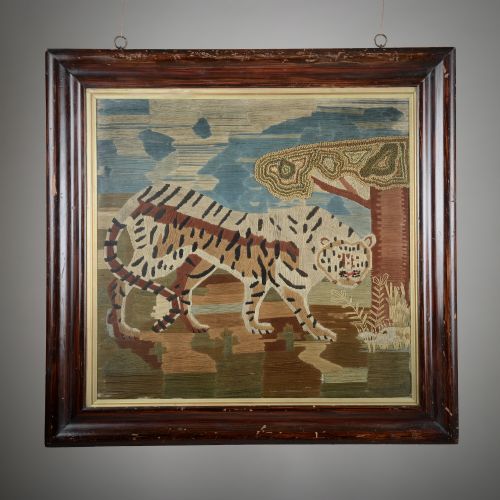
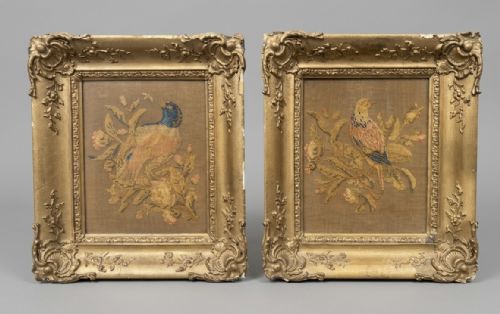
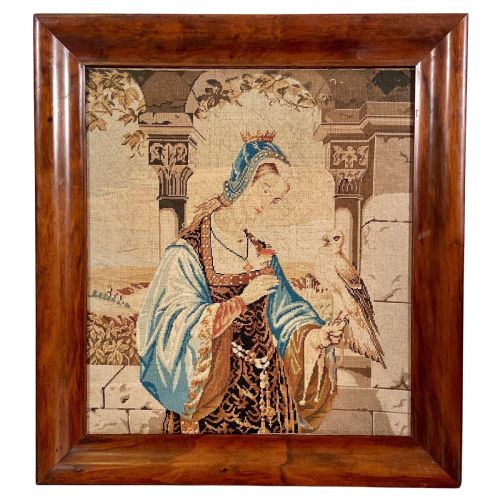
The selection ranges from schoolgirl samplers and Berlin work depictions of animals to large tapestries and commemorative military embroideries. Most examples survive within period frames made from maple wood, burr maple, gilt or faux tortoiseshell.
Materials and construction methods
Makers utilised wool, silk and cotton threads stitched onto canvas, linen or cotton backings using techniques such as gros point, needlepoint, plushwork and carpet mosaic. Samplers and pictorial panels relied on counted thread work or freehand embroidery to build detailed figurative scenes and lettering.
Finished textiles were stretched and mounted into wooden frames, frequently incorporating glass protection. Frames ranged from simple mouldings to burr maple and carved gilt surrounds that matched the domestic interiors of the period.
Sailors spent months at sea stitching woolies, turning idle hours into detailed portraits of naval vessels.
Evaluating quality in period textiles
Quality rests in the precision of the stitching, the complexity of the design and the preservation of the thread colours. Finer needlework displays a high density of stitches per square inch, creating smooth tonal gradations in pictorial subjects like animals, portraits or classical scenes.
Condition plays a central role, particularly the absence of fading, moth damage or textile degradation. Original framing enhances integrity, especially when retaining period glass and backboards that protect the fabric from environmental wear.
Iida Takashimaya Company·Richard Ansdell John Crossley
The Victorian Textile Wall Art Glossary
- Berlin work
- A type of counted-thread embroidery popular in the nineteenth century that used brightly coloured wools charted on grid paper. This technique allowed makers to produce complex floral and animal patterns with ease.
- Sampler
- A piece of needlework produced to demonstrate proficiency in various stitches and alphabets, often executed by young girls. These works typically include names, ages and dates.
- Plushwork
- An embroidery technique using looped stitches that were cut to create a raised, velvet-like pile. It frequently appeared on Victorian depictions of animals such as pheasants.
- Gros point
- A coarse needlepoint stitch worked on canvas that provided a durable foundation for large tapestries and pictorial wall hangings. It allowed workers to cover ground quickly while maintaining firm detail.
- Woolie
- A form of embroidered textile art made by nineteenth-century sailors using spare coloured wools. These works commonly depicted naval ships at sea.
Victorian Textile Wall Art: Frequently Asked Questions
How do I hang Victorian textile wall art safely?
Keep framed textiles away from direct sunlight to prevent the silk and wool threads from fading over time. Maintain stable room humidity to protect both the fabric and the wooden frames.
Use secure picture hooks rated for the weight of the piece, as glass and hardwood frames can be heavy. Ensure the backing remains sealed to keep dust and insects away from the old fibres.
What is the difference between a sampler and needlepoint?
A sampler functions as a showcase of various stitching alphabets, numbers and decorative motifs, often bearing the maker's name and age. It documents the education and skill level of the maker at a specific date.
Needlepoint covers a broader range of pictorial or geometric stitching entirely filling a canvas ground. It focuses on creating a complete picture, such as a landscape, portrait or animal scene, rather than displaying different stitch types.
Can I clean an antique embroidered panel?
Professional textile conservators should handle any cleaning of nineteenth-century embroidery to prevent dye running and fabric shrinkage. Household cleaning agents and water will permanently damage fragile silk and wool fibres.
Surface dust can be gently removed with a soft brush, but deeper intervention requires specialised conservation techniques. Most pieces are best kept behind protective glass to minimise the need for cleaning.