


Antique Needlepoint Alphabet
These antique needlepoint alphabet pieces are historic textile works recording stitchcraft and childhood learning, offering tactile links to past centuries.
Antique Needlepoint Alphabet
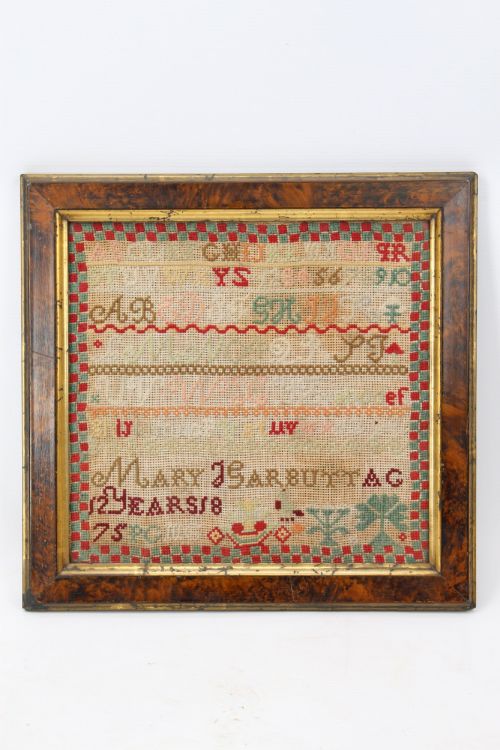
An antique needlepoint alphabet is a textile art form typically worked by young girls to demonstrate proficiency in stitching letters, numbers, and motifs. These pieces serve as historical records of domestic education and personal identity, often bearing the maker's name, age, and a specific date.
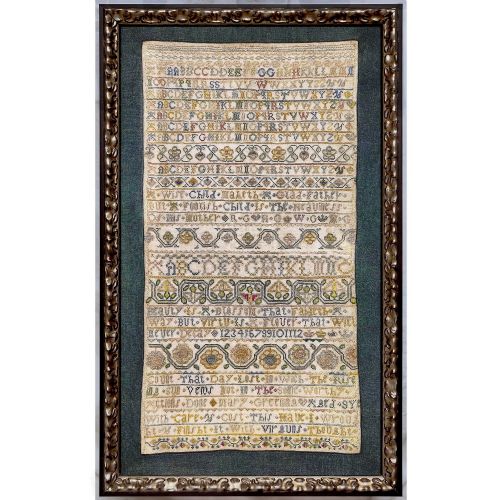
The selections available here span several distinct eras, featuring prominent examples from the Georgian and Victorian periods alongside earlier Stuart-influenced band samplers. Forms range from framed wall art and miniature samplers to paired alphabetical works and commandment panels.
How they were made
Makers utilised linen as the foundational ground fabric, stretching it to receive precise, counted-thread embroidery. Working primarily with wool and silk thread, artisans executed various stitches to form crisp letterforms and pictorial borders.
Framed behind glass in period wood surrounds, these delicate textile panels preserve the original tension of the hand-stitched threads and the natural textures of the woven ground.
The listings show samplers worked on linen grounds using wool and silk thread, spanning the Georgian and Victorian periods.
What varies in quality
The distinction between standard and exceptional pieces rests upon the precision of the stitching and the complexity of the design layout. Finer works display meticulous alphabet execution, balanced proportions, and sophisticated decorative motifs alongside clear maker details.
Preservation of the original silk and wool threads also dictates worth, as does the presence of contemporary framing and the clarity of the historical documentation inscribed within the textile.
The Antique Needlepoint Alphabet Glossary
- Band sampler
- A long, narrow textile strip displaying rows of diverse embroidery patterns and alphabets, popular in earlier needlework traditions. These precursors allowed makers to reference and practise complex stitches.
- Counted thread
- An embroidery technique where stitches are formed over a specific number of fabric threads to maintain geometric precision. This method ensures letterforms remain uniform across the composition.
- Miniature sampler
- A diminutive textile work executed on a smaller scale than standard wall pieces, requiring high technical skill. Such items demonstrate the maker's capacity for fine, detailed work within a restricted area.
- Textile art
- Creative works composed primarily of fabric, yarn, and thread, encompassing historical samplers and framed wall pieces. This broad classification highlights the aesthetic value of domestic needlecraft.
Antique Needlepoint Alphabet: Frequently Asked Questions
What is an antique needlepoint alphabet?
An antique needlepoint alphabet is a hand-stitched textile panel created to practice letterforms and numbers, typically produced by children as an educational exercise.
These pieces frequently record the maker's name, age, and date, functioning as both domestic art and personal historical documentation.
How were these samplers used historically?
Young makers utilised these samplers to demonstrate household competence and mastery of various embroidery stitches before framing them for domestic display.
Over generations, families preserved these textiles on interior walls as commemorative records of childhood and genealogy.
How do I date a needlepoint sampler?
Dating relies heavily on inscribed dates, stylistic conventions of the lettering, and the surrounding pictorial motifs characteristic of Georgian or Victorian periods.
Material analysis of the linen ground and thread composition further assists in establishing the approximate decade of creation.
How should I display and care for textile art?
These framed textiles require placement away from direct sunlight to prevent the fading of natural wool and silk threads.
Maintaining stable indoor humidity levels protects the delicate linen grounds from degradation over time.