

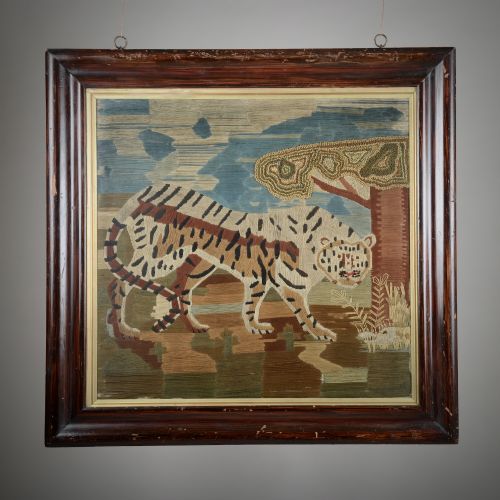


Antique Woolwork Panel
An antique woolwork panel brings domestic textile art into a room, offering framed depictions of animals, historical scenes and commemorative designs.
Antique Woolwork Panel
When you search for an antique woolwork panel, you encounter framed textile art created during the nineteenth century. These works frequently employ Berlin wool work or needlepoint techniques on canvas grounds.
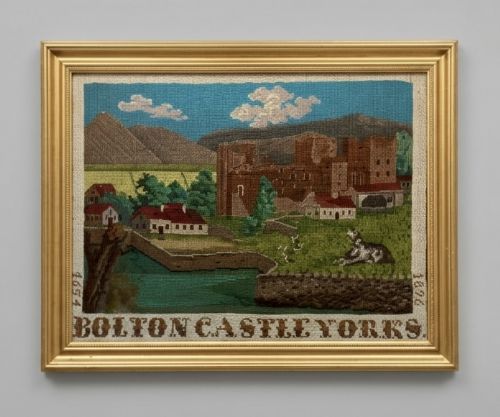
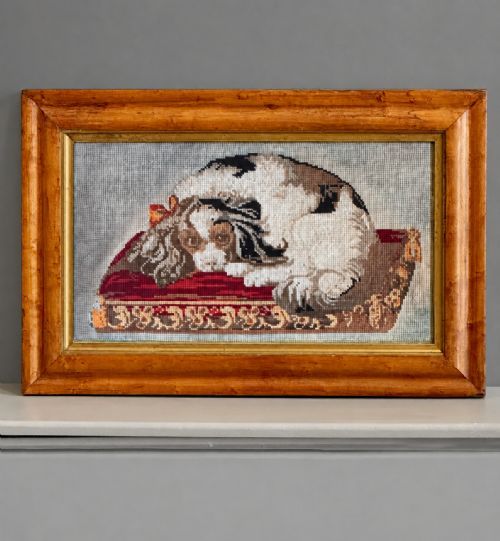
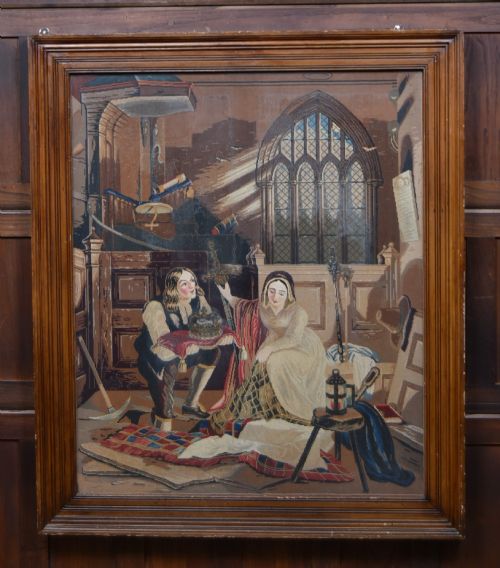
The subjects span animal portraits like King Charles spaniels and tigers, alongside medieval-style tapestries, courtly maidens, Scottish mourning scenes and military commemorations.
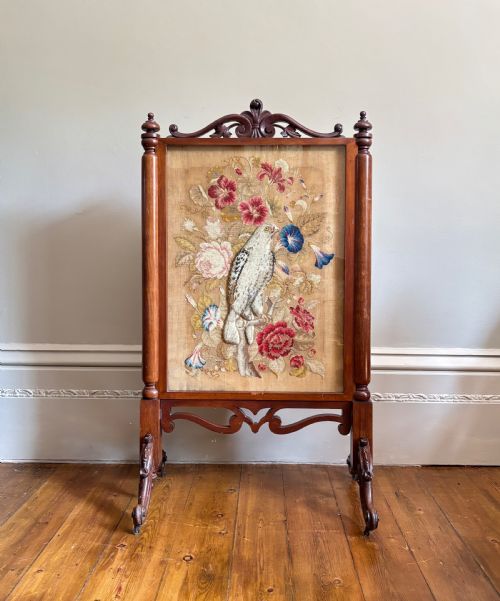
Most examples survive within their period frames, ranging from burr maple and walnut to giltwood, or mounted inside nineteenth-century fire screens.
How They Were Made
Maker execution relies on wool worked across open-weave canvas foundations, using counted-thread methods such as Berlin work and needlepoint. This stitching builds dense pictorial surfaces with varied colour modulation.
Framing forms an integral part of the construction, utilising native timbers like walnut and burr maple, or gilded wood, occasionally paired with protective glass coverings.
Antique Woolwork Panel Retail Price Guide 2026
Typical asking prices for woolwork panel among the pieces listed under this phrase on Sellingantiques today, from the lower quarter to the upper quarter. They describe what is for sale here now, not the wider market.
The listings span the nineteenth century, featuring wool, canvas, glass, wood, giltwood, walnut, gold leaf, and burr maple.
What Varies in Quality
Execution separates standard needlework from superior pieces, depending on the precision of the stitching and the complexity of the pictorial composition. Animal subjects and narrative scenes demand careful tonal shading to achieve depth.
The grade of the surrounding frame influences the overall character, with figured burr maple and carved walnut housing superior panels compared to simpler mouldings.
The Antique Woolwork Panel Glossary
- Berlin Work
- A style of counted-thread embroidery popular in the nineteenth century, worked in wool on canvas using printed colour charts. It allowed makers to produce shaded pictorial designs.
- Needlepoint
- A form of canvas work where yarn is stitched through a stiff open weave, completely covering the ground. It forms the basis of many nineteenth-century wall panels and fire screens.
- Burr Maple
- A highly figured timber prized for its swirling grain patterns, frequently utilised for Victorian picture frames. It provides a warm, mottled border around textile art.
- Fire Screen
- A freestanding piece of furniture designed to shield occupants from the heat of an open hearth, often featuring an adjustable or fixed needlework panel.
Antique Woolwork Panel: Frequently Asked Questions
What is a woolwork panel?
An antique woolwork panel is a textile picture stitched in wool yarn on a canvas ground during the nineteenth century. These pieces record domestic needlework skills and popular visual culture of the period.
They depict subjects ranging from household pets and wild animals to heraldic motifs, literary scenes, and military commemorations.
How were fire screens used?
Fire screens stood before domestic hearths to protect people from the direct radiant heat of coal or wood fires when the grate was unlit during warmer months.
Their decorative panels served as a display of needlework accomplishment for the home.
How do I date a panel?
Dating relies on stylistic clues within the textile, the subject matter, and the construction of the surrounding frame. Nineteenth-century examples often display Victorian aesthetic preferences or revival styles.
Materials such as burr maple frames and specific wool types also help place the piece within the eighteen-hundreds.
Are these panels framed?
Many survive in their original nineteenth-century frames made from walnut, giltwood, or burr maple. Others remain mounted within the wooden frame of a period fire screen.
Original framing helps preserve the textile from dust and handling over time.