
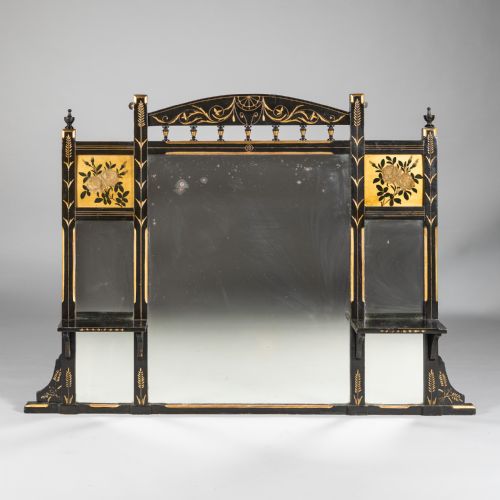
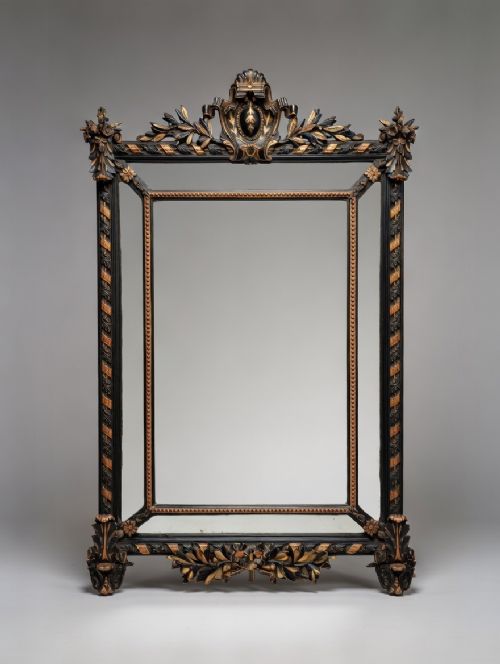


Victorian Ebonised Overmantel Mirror
A victorian ebonised overmantel mirror brings striking dark frames and reflective depth to a hearth, offering a commanding focal point for any room.
Victorian Ebonised Overmantel Mirror
A victorian ebonised overmantel mirror is a substantial wall glass designed specifically to hang above a fireplace mantelpiece. The pieces gathered here span from the mid nineteenth century into the twentieth century, with the majority belonging to the aesthetic movement of the eighteen eighties.
Most examples take the form of large horizontal or arch top frames constructed to anchor the proportions of a chimney breast. While overmantel mirrors dominate the selection, related wall mirrors and occasional display cabinets also appear within the evidence.
Makers utilised dark finishes to contrast with metallic highlights, producing pieces that range from ornate carved wooden frames to simpler architectural shapes. Buyers selecting from this group will encounter items finished in black paint alongside gilt, silver leaf, and cream details.
How they were made
Craftsmen built the underlying structures using wood, including mahogany in certain instances, shaped into expansive architectural frames. Wood, gesso, and paint combined to form the dense base layers necessary for the deep dark finish.
The characteristic black surface was achieved through ebonising wood or applying paint, which was then complemented by parcel gilt, silver leaf, or cream highlights. Artisans applied gold and silver leaf to carved gesso details to create bright contrast against the dark timber.
Original mirror glass or silvered plate was set within these heavy frames, often surviving across decades of domestic use. The combination of carved wooden mouldings and applied metallic leaf defined the aesthetic of the period.
Materials recorded across the inventory include glass, ebonised wood, gold leaf, gesso, paint, and silver leaf.
What varies in quality
The standard of carving and the complexity of the frame determine the visual weight of each piece. Elaborate gesso work and deep relief moulding separate the grander examples from simpler designs.
The choice and execution of metal leaf embellishments also distinguish the range, as parcel gilt and silvered highlights catch the light differently depending on their application. Well preserved silver leaf and crisp gilding elevate the overall impact against the ebonised background.
The Victorian Ebonised Overmantel Mirror Glossary
- Ebonised
- Wood finished to resemble ebony through staining, painting, or chemical treatment. This dark surface defines the visual character of the framing.
- Overmantel
- A mirror or decorative piece designed to sit directly upon or hang immediately above a mantelpiece. These items were proportioned to match the width of fireplace surrounds.
- Parcel gilt
- Portions of an object highlighted with gold leaf while the main body retains another finish. This technique adds brightness to specific carved details on dark frames.
- Gesso
- A plaster mixture applied to wood frames as a base for moulding and gilding. It allowed artisans to create sharp decorative reliefs before applying gold or silver leaf.
- Aesthetic movement
- A late nineteenth century design style emphasising visual beauty over narrative content. Pieces from this movement often utilise ebonised wood and gilt highlights.
Victorian Ebonised Overmantel Mirror: Frequently Asked Questions
Where should an overmantel mirror hang?
These mirrors were originally scaled to mount directly above a fireplace mantelpiece, where they reflected light into the room. They continue to function effectively in that traditional position today.
Placement can also extend to large wall spaces in hallways or living rooms where a horizontal focal point is required. Their substantial size demands secure wall fixings and adequate clearance from surrounding furniture.
How do I identify an aesthetic movement mirror?
Aesthetic movement pieces from the late nineteenth century typically feature ebonised wood surfaces paired with gilt, silver, or cream highlights. They often incorporate incised decoration or geometric framing details.
These designs lean away from heavy historic revivalism towards simpler, cleaner lines that prioritise visual contrast and craftsmanship.
What is parcel gilding?
Parcel gilding is a technique where only specific parts of an object are coated with gold leaf. On these mirrors, it is used to accentuate carved mouldings and raised gesso details against the black background.
This selective application draws the eye to the craftsmanship of the frame without overwhelming the dark ebonised timber.
Are these mirrors very heavy?
The combination of solid wood frames, heavy gesso mouldings, and large glass plates results in substantial physical weight. They require robust wall anchors rather than standard picture hooks.
When hanging these pieces, ensure the fixings engage securely with wall studs or masonry to support the load safely.