


Large Black Carved Mirror
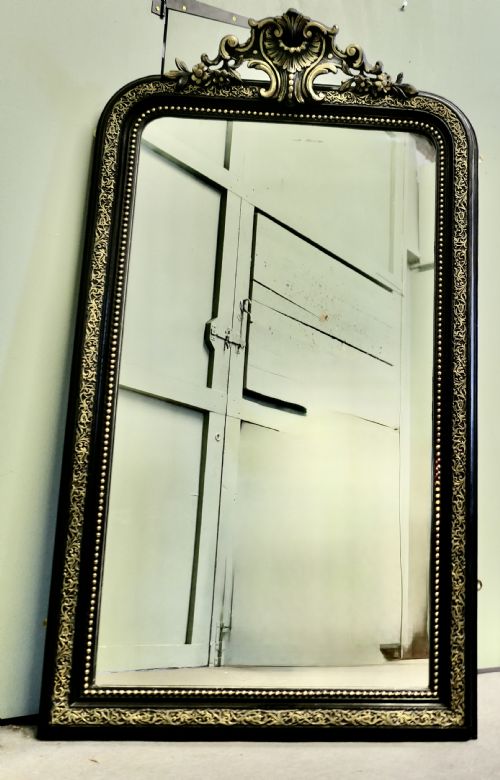
A large black carved mirror anchors a room with dark presence, combining deep ebonised wood or gesso with heavy sculptural framing.
Large Black Carved Mirror
When you search for a large black carved mirror, you encounter imposing nineteenth-century wall and overmantle pieces designed to dominate principal rooms. These grand items frequently combine ebonised surfaces with gilt highlights, bringing substantial scale and architectural weight to domestic interiors.
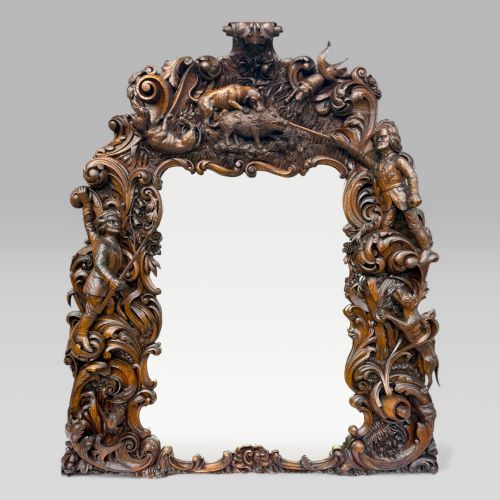
The pieces you meet on this page span Victorian, Napoleon III, and Black Forest styles, originating from English, French, and German workshops. Overmantle and floor mirrors predominate, often featuring architectural crests, cushion frames, or naturalistic carvings like dragons and hunting motifs.
How they were made
Maker-craftsmen built these large frames using solid timbers such as oak or pine, frequently applying layers of gesso to build up intricate ornamental relief. This gesso layer was then carved, painted black, ebonised, or combined with gold leaf and silver highlights.
Surface treatment relies heavily on ebonisation to imitate costly ebony, contrasted with bright gilding on raised mouldings and carved crests. Original mirror glass is often heavy and bevelled, secured within rebated frames behind substantial wooden backing boards.
Listings feature nineteenth-century pieces spanning Victorian, Napoleon III, and German Historicism styles, constructed from ebonised wood, oak, gesso, and gold leaf.
What varies in quality
Quality separates in the depth and crispness of the carving, distinguishing deeply undercut naturalistic foliage or mythical beasts from flat, moulded composition ornament. Superior examples maintain crisp detail across expansive crests and subsidiary scrolls.
The handling of the ebonised and gilt finish determines visual impact, with finer pieces showing thoughtful contrast between the deep dark ground and warm gold leaf. Originality of the silvered mirror glass and structural integrity of the heavy wood and gesso frames define desirability.
The Large Black Carved Mirror Glossary
- Ebonised
- Wood treated with stain or paint to resemble dense, dark ebony. This finish became immensely popular during the Victorian and Napoleon III periods for dramatic contrast.
- Gesso
- A plaster mixture applied to wood frames and carved before gilding or painting. It allows for sharp, intricate relief work that timber alone cannot sustain.
- Overmantle
- A large mirror designed specifically to hang above a fireplace mantelpiece. These pieces often feature wide proportions to match the width of the hearth below.
- Cushion mirror
- A frame profile featuring a rounded, sloping border that swells outward toward the outer edge. This convex shape catches light differently from flat mouldings.
- Napoleon III
- A French design style spanning the mid-nineteenth century, known for eclectic revivals and rich ebonised and gilt surfaces.
Large Black Carved Mirror: Frequently Asked Questions
Where should I hang a large overmantle mirror?
These pieces traditionally sit directly above a fireplace mantelpiece, anchored securely to the wall to bear the substantial weight. They also function effectively on principal salon walls to reflect light and expand the visual space of a room.
Ensure the wall construction can support heavy timber and gesso frames, utilising appropriate masonry or stud fixings rather than standard picture hooks.
How do I identify a Napoleon III mirror?
French Napoleon III mirrors often display ebonised wood combined with gilt bronze or carved gilt highlights, sometimes featuring distinctive cushion frames or architectural crests. They date from the mid to late nineteenth century and reflect an ornate, revivalist aesthetic.
Look for construction details like pegged oak or pine frames and older backing boards that confirm nineteenth-century origin.
What is Black Forest carving?
Black Forest pieces originate from the wooded mountain regions of Central Europe and are celebrated for naturalistic, deeply carved woodwork. They frequently incorporate motifs such as carved foliage, hunting animals, and winged dragons.
These mirrors are typically fashioned from solid oak or limewood, displaying high sculptural relief distinct from standard architectural mouldings.
How should I clean ebonised and gilt surfaces?
Dust gently with a dry, soft microfibre cloth, avoiding modern chemical polishes that can damage historic ebonised finishes or delicate gold leaf. Keep moisture away from the edges of the mirror glass to prevent silver tarnishing.
Check the stability of the gesso and carved elements periodically, as heavy antique frames require careful handling during routine maintenance.