
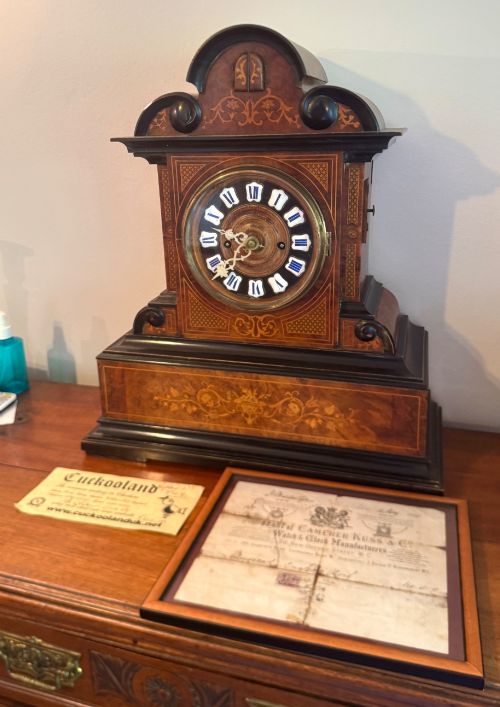


Victorian Ebonised Bracket
These victorian ebonised bracket pieces are dark wood items and housing for timepieces that bring nineteenth-century gravity to a room.
Victorian Ebonised Bracket
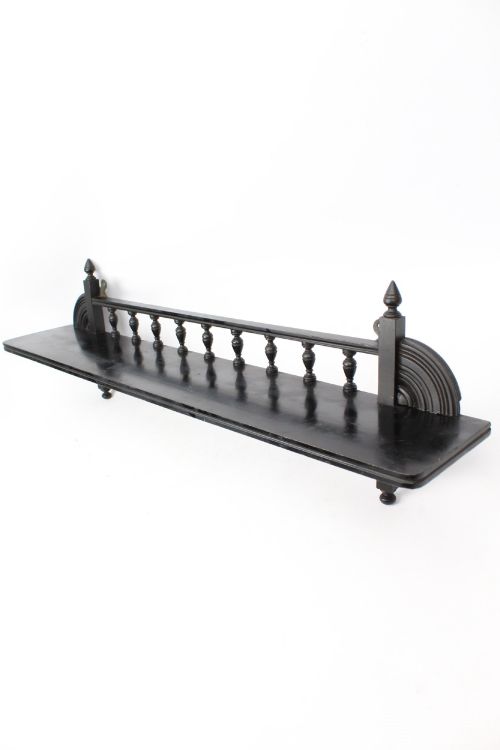
When someone searches for a victorian ebonised bracket, they are looking at a selection of nineteenth-century items dominated by mantel and bracket clocks alongside occasional hanging shelves. The examples here span the Victorian era, bringing together dark wood cases and mechanical timekeeping from the middle and late decades of the eighteen-hundreds.
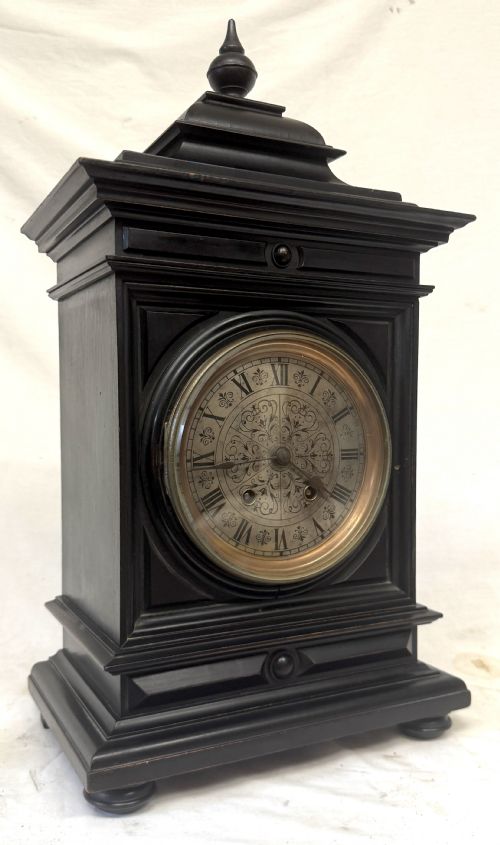
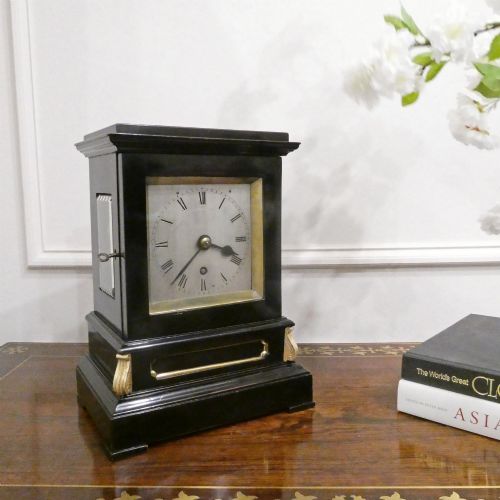
The versions most commonly met on this page are mantel clocks and table clocks housed in ebonised wood, often enhanced with brass, ormolu, and silvered dials. These range from single fusee library timepieces to chiming musical bracket clocks created during the aesthetic movement.
Alongside the clocks, the selection includes wall shelves and mirrors that share the same dark ebonised finish and nineteenth-century styling. Makers and retailers such as Payne and Co, Barraud and Lunds, and Lenzkirch appear across the dates recorded in the listings.
How they were made
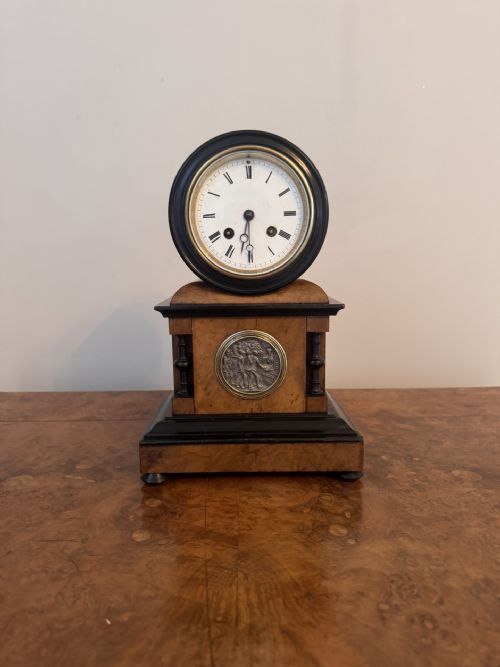
Makers utilised timber treated with dark stain or polish to mimic costly ebony, pairing the ebonised wood with brass bezels, ormolu mounts, and gilt bronze. Burr walnut and marquetry inlay also appear on selected cases to add textural contrast.
Mechanical movements inside these clocks rely on fusee mechanisms and chime systems, while dials feature silvered metals and enamel numerals. The construction combines cabinetmaking skills with precision horology.
Materials recorded on this page include ebonised wood, burr walnut, brass, ormolu, enamel, and gilt bronze.
What varies in quality
The standard of a victorian ebonised bracket piece rests on the crispness of the cabinet carving and the complexity of the internal movement. Triple fusee musical mechanisms and signed dials by established makers distinguish the higher tiers from simpler timepieces.
The application of the ebonised finish and the integration of ormolu or gilt bronze mounts also determine the visual weight and refinement of the piece. Better examples maintain clean lines in the woodwork and precision in the metalwork.
Phillips Brothers·Arnold and Frodsham·Payne and Co·Barraud and Lunds·D Robertson of Perth·Baldwin of Loughborough
The Victorian Ebonised Bracket Glossary
- Ebonised wood
- Timber stained or painted black to imitate ebony. This dark finish was popular during the Victorian period for achieving a formal appearance.
- Fusee
- A conical pulley used in clockmaking to maintain even tension on the mainspring as it winds down. It ensures steady timekeeping.
- Ormolu
- Gilded bronze applied as mounts and decorative highlights on clock cases. The technique creates a bright golden contrast against dark wood.
- Silvered dial
- A brass or metal clock face treated with a silver solution and engraved with numerals. This surface reduces glare and provides clear readability.
Victorian Ebonised Bracket: Frequently Asked Questions
What is a bracket clock?
A bracket clock is a portable timepiece originally designed to sit on a wall bracket or a table.
Over time, the name remained even when the clocks were placed directly on mantelpieces and desks.
How do fusee movements work?
A fusee movement uses a conical drum and a cord or chain to regulate the pull of the mainspring.
This mechanical design delivers equal power to the gear train as the spring loses tension.
Where should I place these clocks?
These clocks suit stable surfaces such as mantelpieces, heavy sideboards, and strong tables away from direct heat.
Level placement ensures the pendulum and mechanical escapement operate without stopping.
How do I identify the Victorian period?
Victorian pieces date from the reign of Queen Victoria between eighteen thirty-seven and nineteen oh one.
Stylistic clues include ebonised finishes, aesthetic movement details, and maker signatures on the dial.