
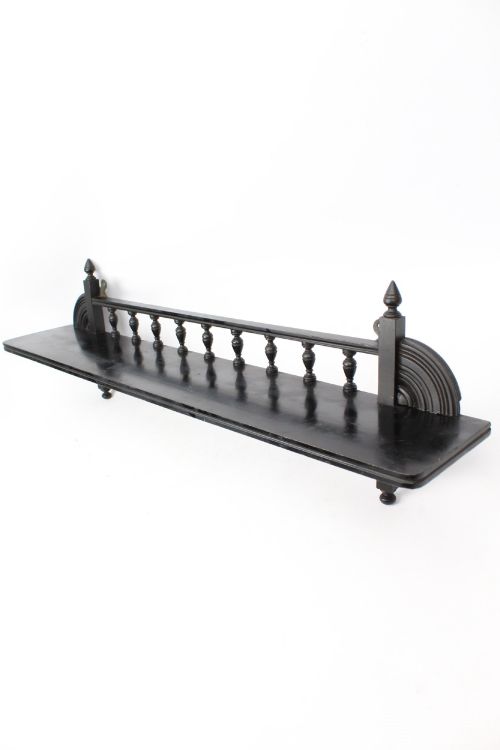
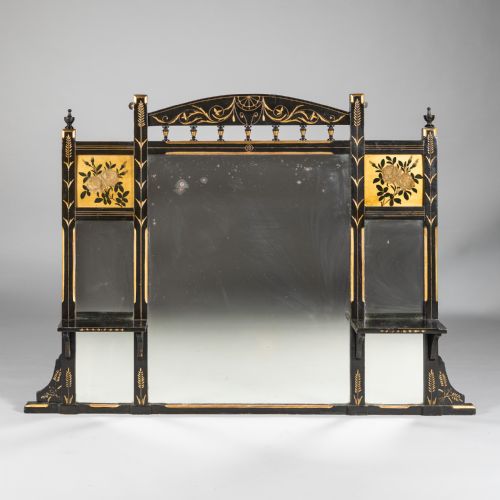
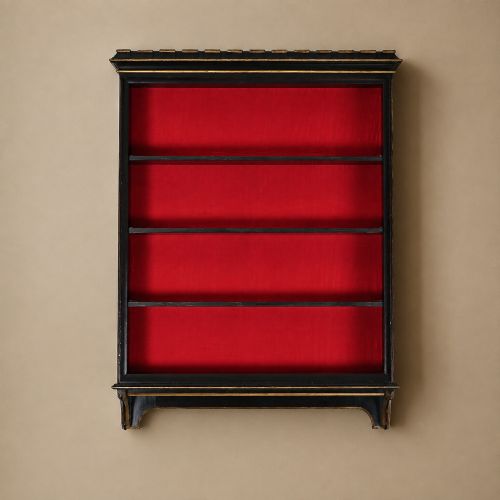
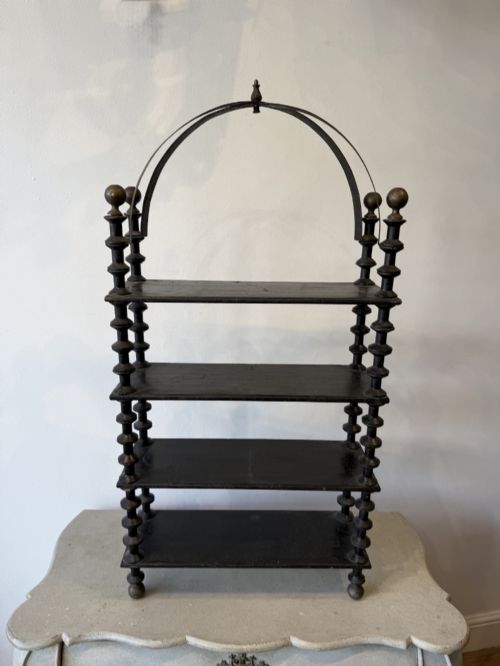
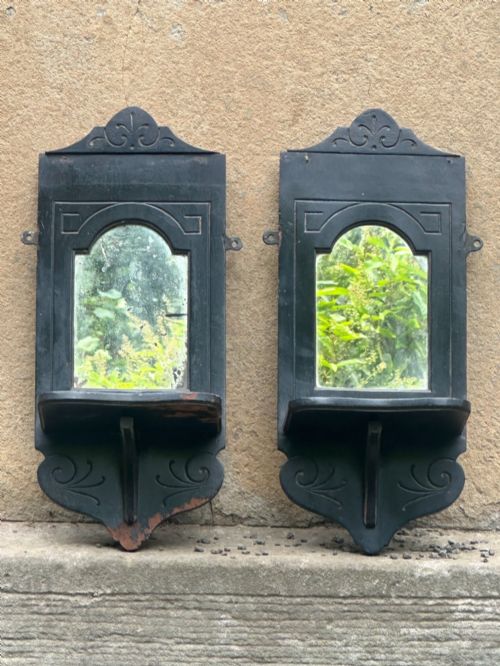


Ebonised Wall Shelf
An ebonised wall shelf brings dark, dramatic Victorian character to a room, offering both display space and a striking decorative silhouette.
Ebonised Wall Shelf
An ebonised wall shelf is a decorative hanging piece designed to display small ornaments, books, or mirrors against a vertical surface. The examples listed here predominantly span the nineteenth century, including the Victorian era, the Aesthetic Movement, and the Gothic Revival.
You will encounter various forms ranging from simple hanging shelves and bookcases to elaborate overmantel mirrors with integrated brackets and cabinets. Materials commonly combine ebonised wood or timber with glass, brass, and occasional parcel gilt highlights.
The aesthetic leans heavily towards dark, polished surfaces that contrast sharply against lighter walls. These pieces reflect the nineteenth-century taste for historicism, drawing on French chateau influences, Napoleon III styles, and Gothic architecture.
How they were made
The construction relies on turning timber to a deep black finish, frequently enhanced with parcel gilt details or contrasting wood species such as limewood and cherry. Cabinetmakers utilised applied mouldings, bobbin turnings, and brass fittings to create intricate architectural profiles.
Surfaces were painted or ebonised to imitate more expensive exotic hardwoods, a technique popular during the Victorian period. Gilding and ormolu mounts were added to catch the light, while mirrored glass and fabric inserts provided further textural contrast.
One Edwardian overmantel comes complete with a heart-shaped mirror, proving the Victorians and their successors knew how to sneak a little romance into the gloom.
What varies in quality
Quality in these pieces is dictated by the crispness of the carving, the depth of the ebonisation, and the integration of secondary materials like ormolu or brass. Finer examples show careful attention to structural joinery and hand-applied parcel gilt highlights rather than uniform factory finishing.
The presence of documented attributions to notable designers or specific regional workshops elevates the standing of a piece. Superior proportioning and well-preserved original glass or mirror plates also distinguish better examples from standard domestic furnishings.
George Edmund Street·Cottier & Co.·Henri Dasson
The Ebonised Wall Shelf Glossary
- Ebonisation
- The process of treating timber to give it the appearance of ebony. This dark finish was widely used in nineteenth-century furniture to create dramatic contrast.
- Parcel Gilt
- A decorative technique where only specific portions of an object are gilded with gold leaf. It highlights carved details against the dark ebonised ground.
- Overmantel
- A large mirror or shelf designed to be hung directly above a fireplace mantelpiece. They often incorporate brackets or small display compartments.
- Aesthetic Movement
- A late nineteenth-century design movement that emphasised visual beauty over narrative subject matter. It favoured asymmetrical arrangements and Japanese-inspired motifs.
Ebonised Wall Shelf: Frequently Asked Questions
What rooms suit an ebonised wall shelf best?
The dark, dramatic finish makes these shelves ideal for living rooms, studies, or hallways where they can anchor a focal point. They contrast well against pale or patterned wallpaper.
Use them to display small ceramics, pocket watches, or framed photographs. The reflective glass panels found on many overmantel variants also help bounce light around smaller spaces.
How do I clean ebonised wood and gilt?
Dust regularly with a soft, dry microfibre cloth to prevent dirt from settling into carved recesses. Avoid using modern chemical polishes or water on ebonised and parcel gilt surfaces.
If the finish requires more attention, consult a specialist conservator. Moisture and harsh solvents can damage nineteenth-century black finishes and delicate gold leaf.
How can I tell an Aesthetic Movement piece from Gothic Revival?
Aesthetic Movement pieces generally favour slender profiles, asymmetrical brackets, and hints of Japanese influence or simple geometric lines. They often feature delicate parcel gilt highlights.
Gothic Revival pieces appear heavier and more architectural, incorporating pointed arches, trefoils, and structural forms that echo medieval churches. The wood is usually robustly carved to emphasise weight and historic presence.