


Antique Ebonised Shelving
Antique ebonised shelving offers a dark, dramatic finish that frames books and display pieces with nineteenth-century gravitas.
Antique Ebonised Shelving
Antique ebonised shelving encompasses a variety of dark-finished wooden tier stands, wall shelves, and open bookcases designed for display and storage. These pieces primarily date from the nineteenth century, spanning Victorian, Aesthetic Movement, and Napoleon III styles.
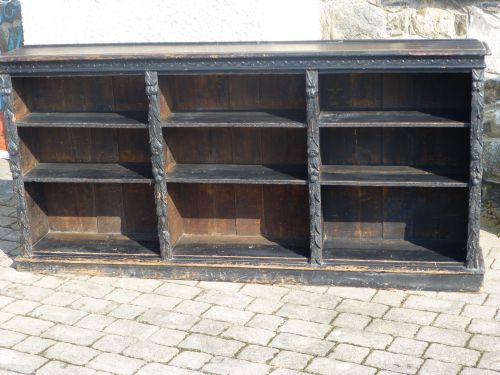
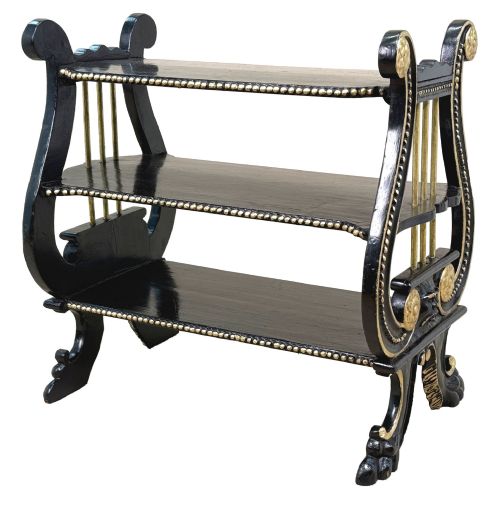
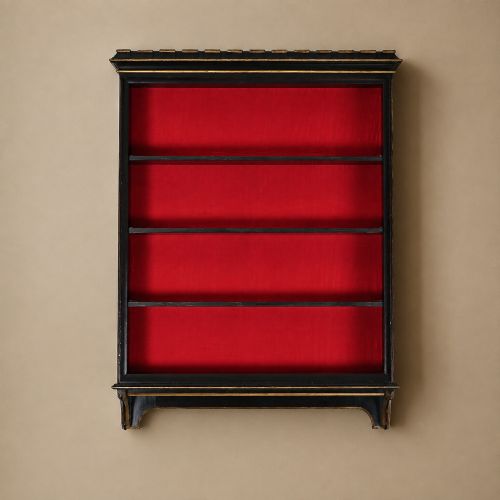
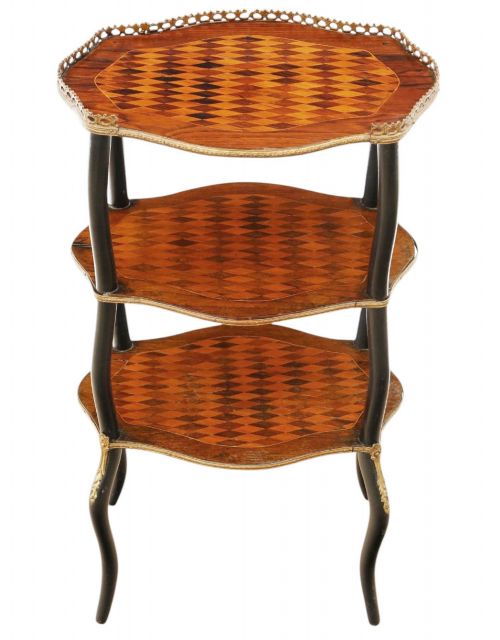
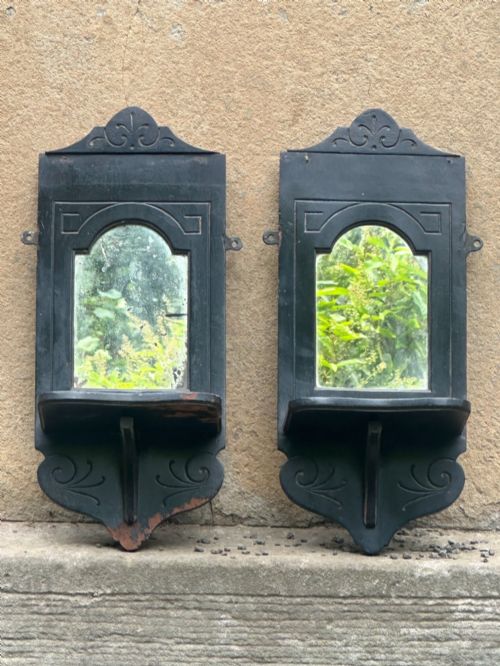
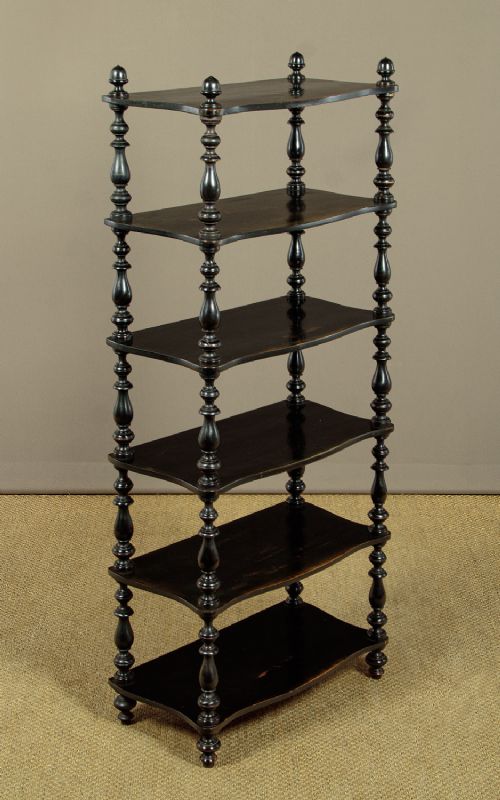
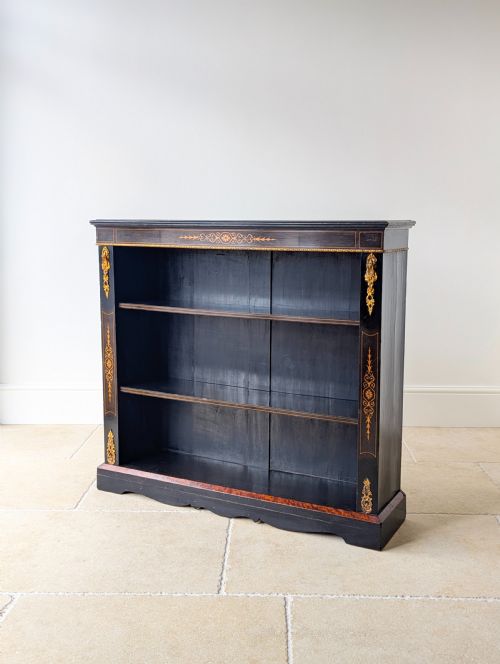
Buyers will most frequently encounter open bookcases, étagères, and corner whatnots finished in ebonised timber or wood. Many incorporate brass mounts, parcel gilding, or inlaid details that lift the heavy dark surface.
Origins stretch from English workshops influenced by Gothic Revival and the Aesthetic Movement to French makers producing Napoleon III display pieces. These furnishings served as functional drawing-room furniture and library storage, built to project sophistication through restrained colour.
Materials and construction
Timbers such as oak, walnut, limewood, and cherry are darkened to imitate ebony, a technique that requires dense grain and careful preparation. Ebonised wood often pairs with contrasting materials like brass stringing, ormolu mounts, and ceramic elements such as Wedgwood plaques.
Joinery reflects nineteenth-century cabinet-making standards, employing pegged joints, hand-cut dovetails for drawers, and adjustable shelving mechanisms. Parcel gilding and inlaid parquetry are applied by hand to accent the architectural lines of the woodwork.
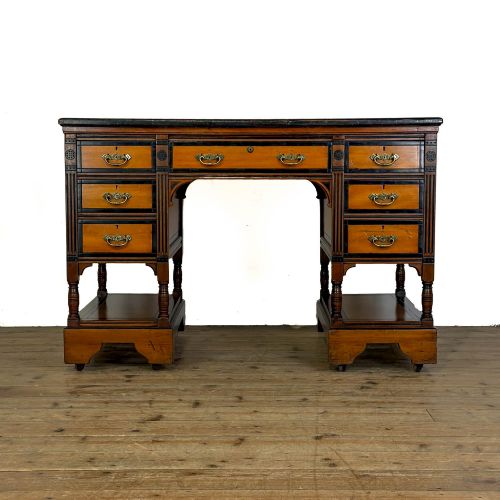
Listings feature nineteenth-century pieces incorporating ebonised wood, brass, and glass across Victorian, Gothic Revival, and Aesthetic Movement styles.
Assessing quality
The distinction between standard commercial pieces and finer workshops lies in the depth of the ebonisation and the crispness of the carved or gilt details. Superior examples utilise dense timber that holds a polished finish without flaking, alongside precise parquetry and substantial brass mounts.
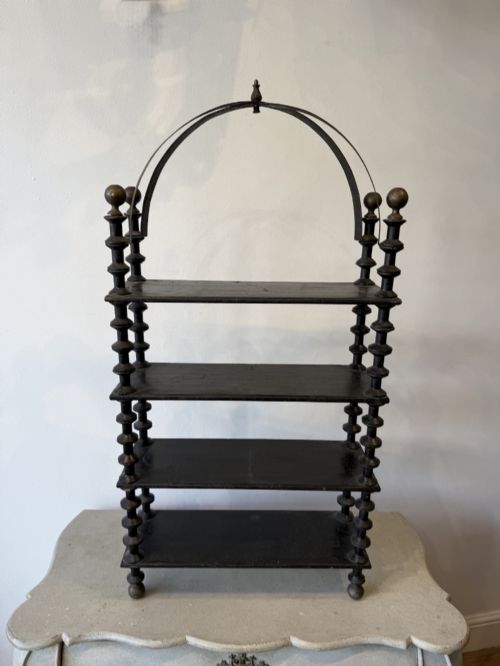
Proportion and architectural coherence separate exceptional items from mass production. Better shelving integrates decorative elements like green man carvings or intricate bobbin turnings harmoniously into the structural frame.
George Edmund Street·Cottier & Co.
The Antique Ebonised Shelving Glossary
- Ebonisation
- The process of staining light-colored timber, such as pear, beech, or oak, to simulate expensive ebony wood. This treatment became particularly popular during the Victorian and Aesthetic periods.
- Étagère
- A piece of furniture consisting of a set of open shelves for displaying small objects or ornaments. Originating in France, these tiered stands often feature slender uprights and mirrored backs.
- Whatnot
- A multi-tiered piece of freestanding furniture used for the storage and display of ornaments, books, or bric-a-brac. Victorians favoured these open stands in drawing rooms and parlours.
- Parcel Gilded
- Partially covered with gold leaf or gilt, usually to highlight carved motifs, mouldings, or incised lines against a dark background. This technique adds subtle contrast to ebonised surfaces.
- Parquetry
- Geometric mosaic woodwork used for floors or furniture decoration, akin to marquetry but forming simple geometric patterns. It often appears on the shelves or tabletops of late nineteenth-century display pieces.
Antique Ebonised Shelving: Frequently Asked Questions
What rooms suit antique ebonised shelving?
These dark wood tiers and bookcases anchor modern living spaces and studies alike, offering strong visual contrast against light-coloured walls.
Their narrow profile makes them practical for hallways or compact alcoves where bulkier storage would overwhelm the floor plan.
How do I care for ebonised wood?
Maintain the finish by dusting with a dry, soft cloth and avoiding silicone-based polishes that build up residue over time.
Keep the timber away from direct sunlight and radiators to prevent the ebonised surface from drying out or cracking.
Can these shelves hold heavy books?
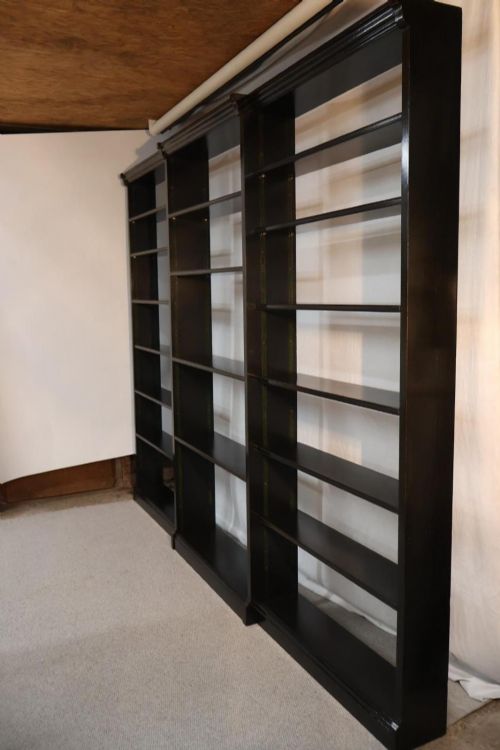
Many open bookcases and dwarf bookcases feature sturdy timber construction and adjustable shelving designed to support substantial volumes.
Lighter étagères and wall-hanging shelves suit display items, ceramics, and small collections rather than heavy libraries.
How do I spot an Aesthetic Movement piece?
Look for clean architectural lines, ebonised finishes, and Japanese-inspired decorative motifs that reject heavy Victorian ornamentation.
These pieces frequently incorporate contrasting parcel gilding and brass mounts to emphasise the geometry of the design.