
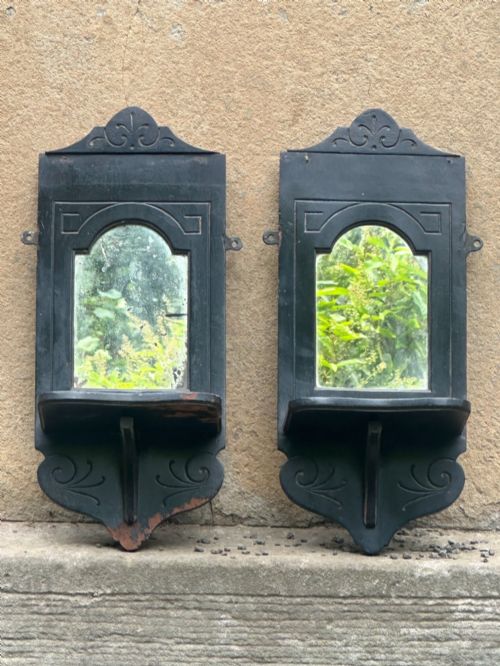


Aesthetic Movement Wall Shelf
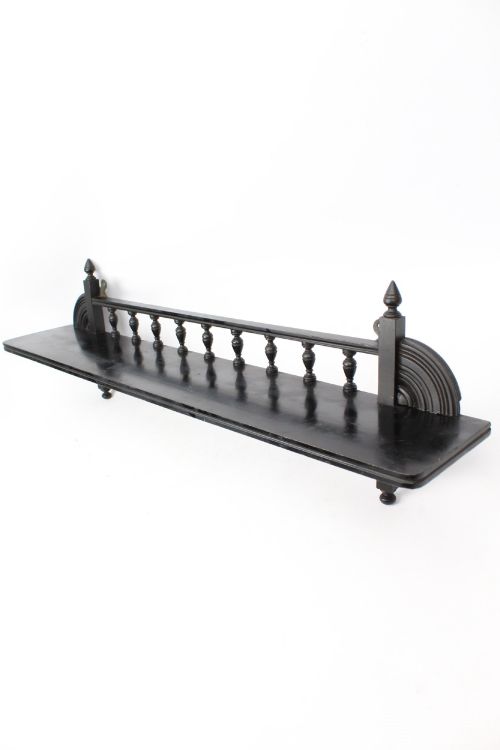
These aesthetic movement wall shelf pieces bring late Victorian pattern and ebonised timber to a room, offering display space with distinct period character.
Aesthetic Movement Wall Shelf
When buyers search for an aesthetic movement wall shelf, they seek hanging shelves, cabinets, and mirrors that reflect late nineteenth-century design principles. These items originate from the Victorian period, specifically around eighteen eighty and eighteen ninety.
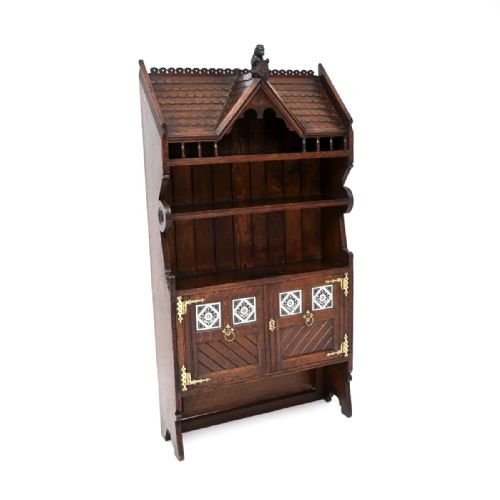
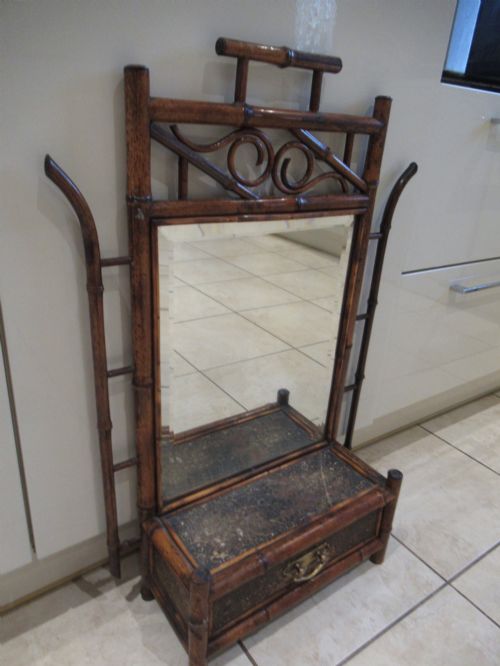
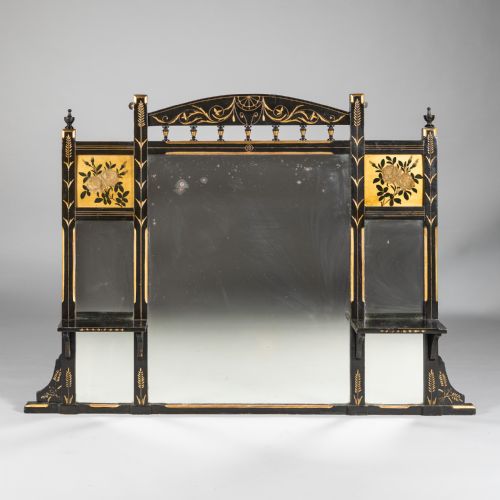
The pieces on this page include hanging shelves, wall cabinets, reception hall cupboards, and overmantel mirrors. Most examples combine display platforms with mirrored glass or enclosed storage in ebonised wood or bamboo.
How they were made
Workshops built these hanging shelves and cabinets using ebonised wood, mahogany, walnut, rosewood, and bamboo. Surfaces often feature parcel-gilt highlights, paint, and carved details that give the timber a dark, refined finish.
Makers integrated bevelled edge mirrors, brass fittings, ceramic elements, and glass panels into the wooden frames. These mixed materials define the construction methods of the late nineteenth century.
What varies in quality
Quality in these wall pieces rests on the crispness of the carving, the depth of the ebonised finish, and the retention of original parcel-gilt details. Finer examples display careful joinery in woods like walnut and rosewood rather than simpler softwood carcasses.
The integration of secondary materials like brass hardware, ceramic inserts, and bevelled mirror glass sets apart the more ambitious cabinetwork. Pieces associated with known designers or specific stylistic circles carry additional decorative weight.
John Moyr Smith·Cottier & Co.
The Aesthetic Movement Wall Shelf Glossary
- Ebonised wood
- Timber stained or painted to resemble expensive ebony. This dark finish provides a stark contrast to parcel-gilt highlights.
- Parcel-gilt
- Woodwork decorated with partial gilding in gold leaf. This technique picks out carved details and mouldings against a dark background.
- Overmantel mirror
- A large wall mirror designed to hang above a fireplace mantelpiece. These often incorporate small shelves and brackets for display.
- Girandole
- A decorative wall mirror featuring attached candle sconces. The candle holders reflect light back into the room from the glass.
- Bevelled edge
- Glass polished to an angled edge around the perimeter. This traditional glazing method adds depth and catches light.
Aesthetic Movement Wall Shelf: Frequently Asked Questions
What is an aesthetic movement wall shelf?
An aesthetic movement wall shelf is a hanging display piece dating from the late nineteenth century. These items emphasise decorative surface patterns and dark wood finishes.
They serve to hold small ornaments, plates, or decorative objects while adding a distinct Victorian focal point to a wall.
How were these wall cabinets used?
These wall cabinets and hanging shelves were placed in reception rooms, halls, and parlours to display prized ceramics and ornaments. The enclosed cupboards stored smaller household items out of sight.
Mirrored back panels and glass doors helped to bounce natural light around Victorian interiors.
How do I date a Victorian wall shelf?
Dating relies on the timber choices, construction methods, and stylistic markers seen in the piece. Pieces from eighteen eighty frequently utilise ebonised wood and parcel-gilt, while items from eighteen ninety often incorporate bamboo or arts and crafts mahogany.
Examining the backboards, fixings, and mirror glass bevels also helps confirm a nineteenth-century origin.
How do I live with an ebonised shelf?
Ebonised shelves suit both traditional period interiors and modern minimalist rooms as contrasting display units. Mount them securely to wall studs to support the weight of the timber and displayed objects.
Keep them away from direct sunlight and excessive moisture to protect the delicate ebonised finish and gold leaf.