
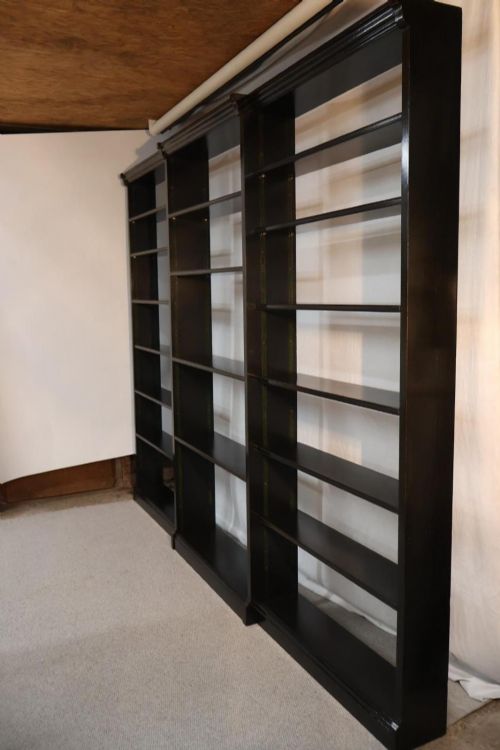


Victorian Ebonised Bookcase
When you search for a victorian ebonised bookcase, you enter a world of dark wood finishes, fine brass mounts, and polished glass display cabinets.
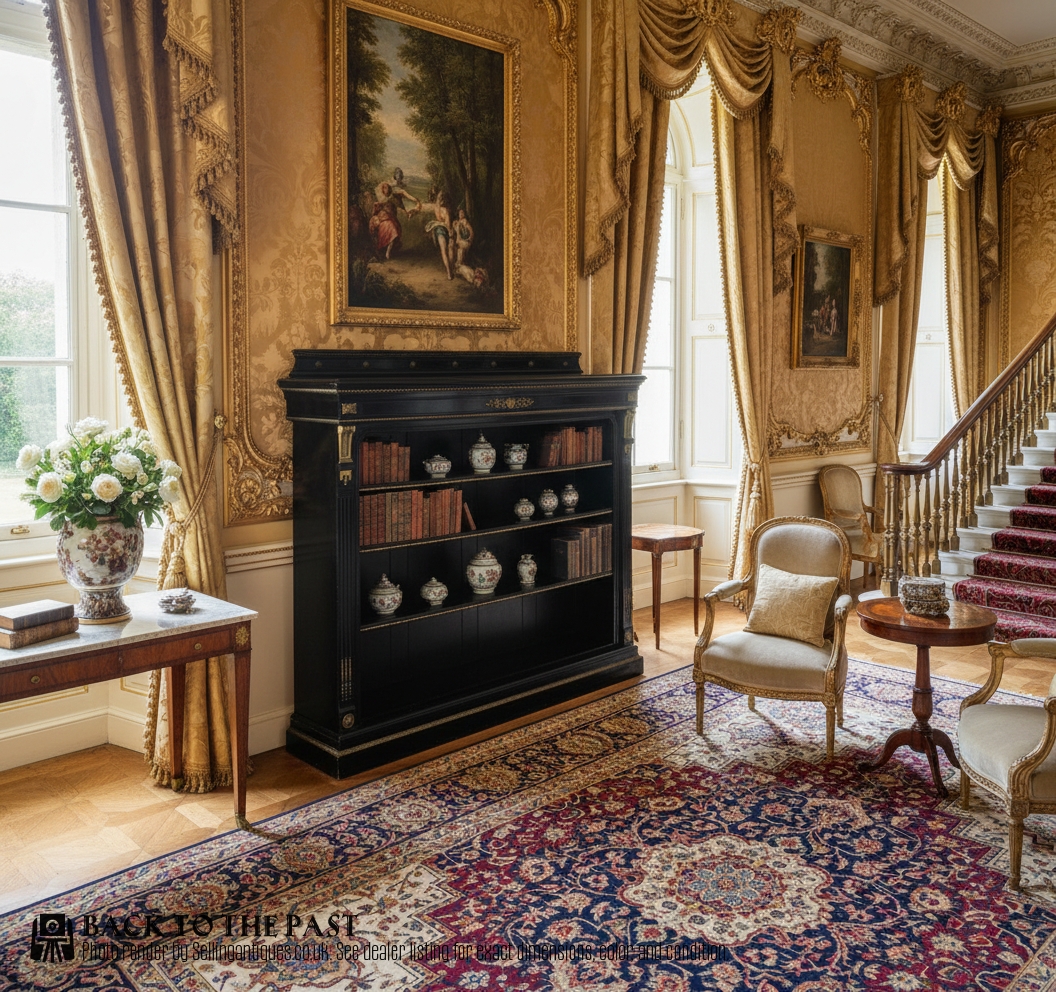
Victorian Ebonised Bookcase
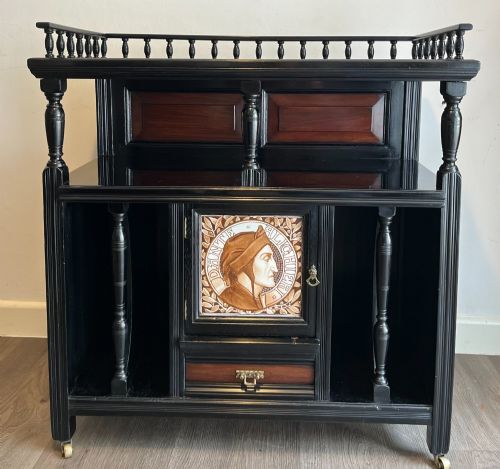
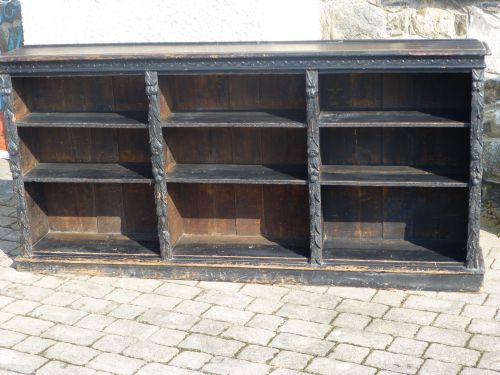
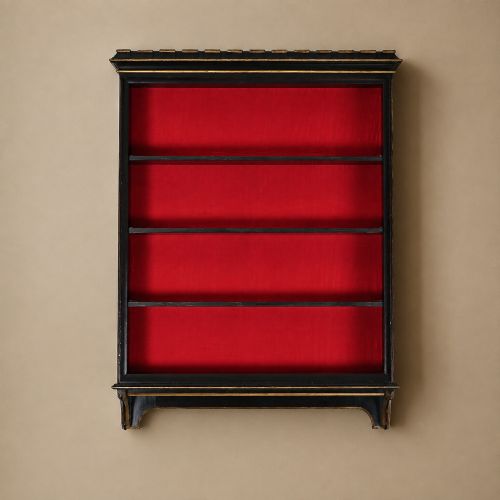
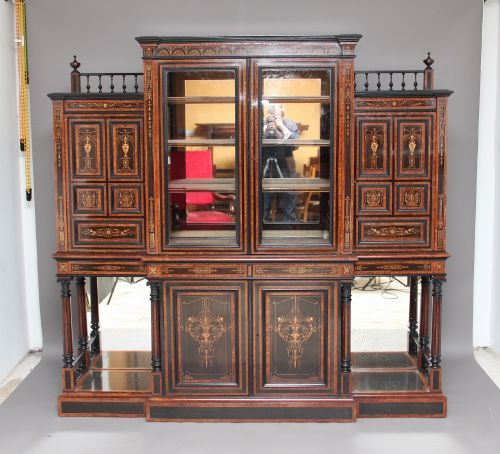
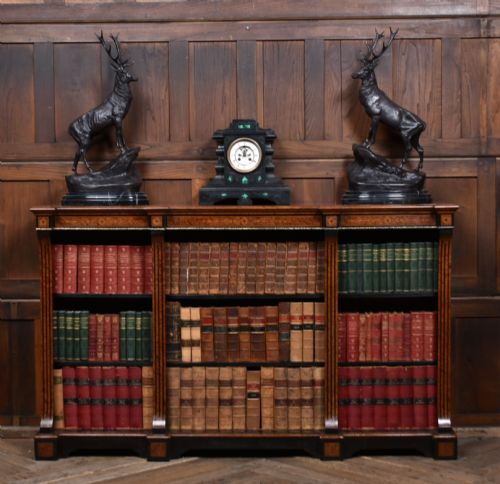
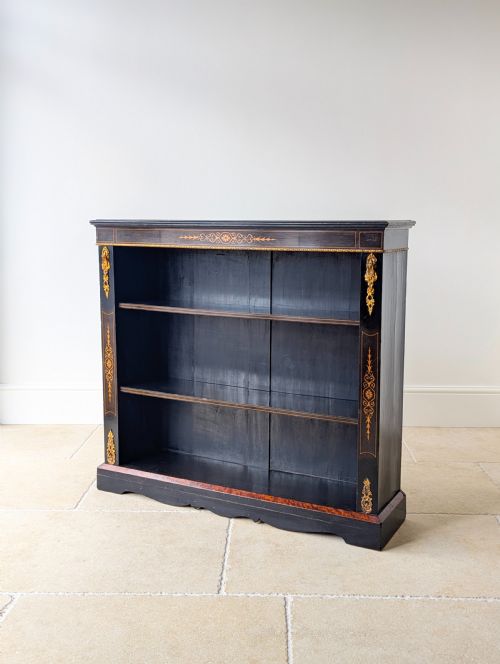
A victorian ebonised bookcase brings together the dark, heavy aesthetic of the nineteenth century and the practical need for displaying and storing volumes. These pieces range from open dwarf shelving units to large breakfront library cabinets with glazed doors.
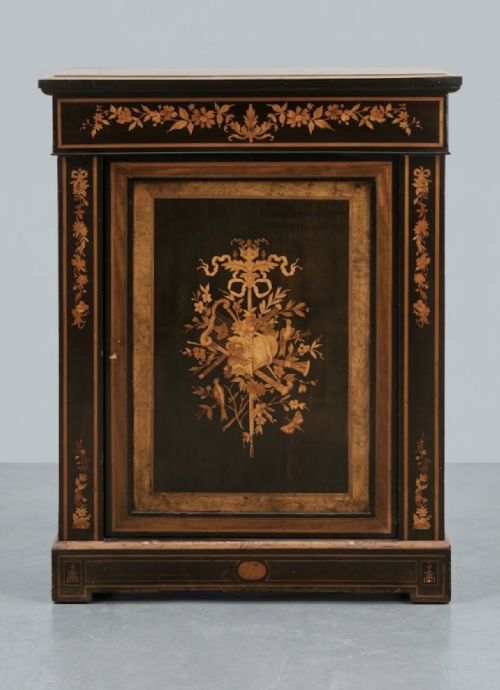
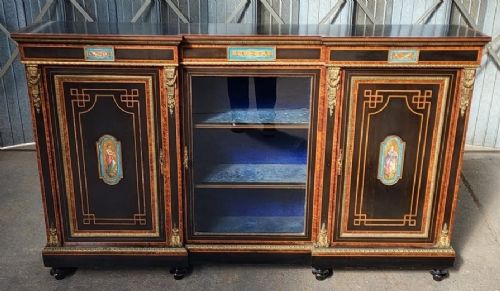
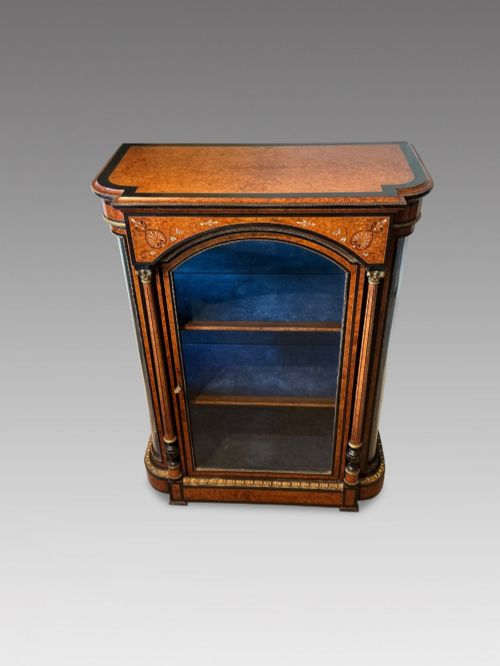
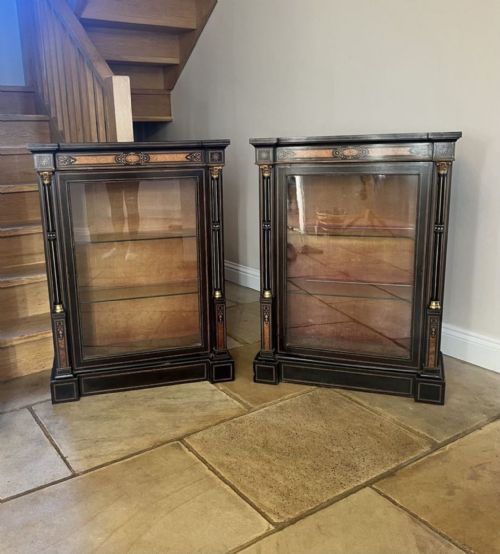
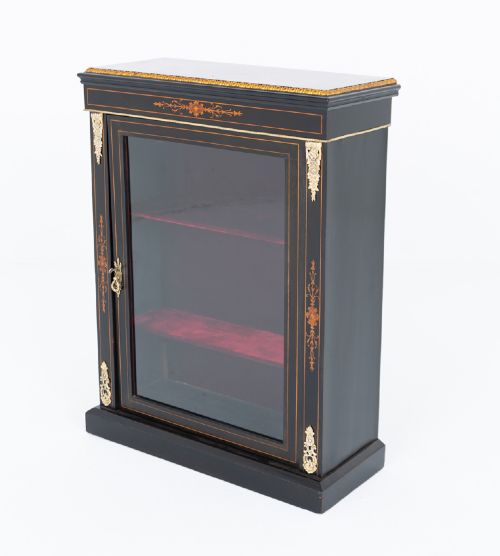
The version most commonly encountered on this page is the pier cabinet or the glazed display bookcase, often featuring inlaid panels and gilt metal mounts. They derive from periods spanning the mid to late nineteenth century, including specific decades such as eighteen eighty and eighteen seventy.
Makers and designers of the era utilised styles like the Aesthetic Movement and Gothic Revival to shape these items. Buyers encounter variations that combine open shelves with enclosed lower cupboards, or incorporate mirrors and porcelain plaques.
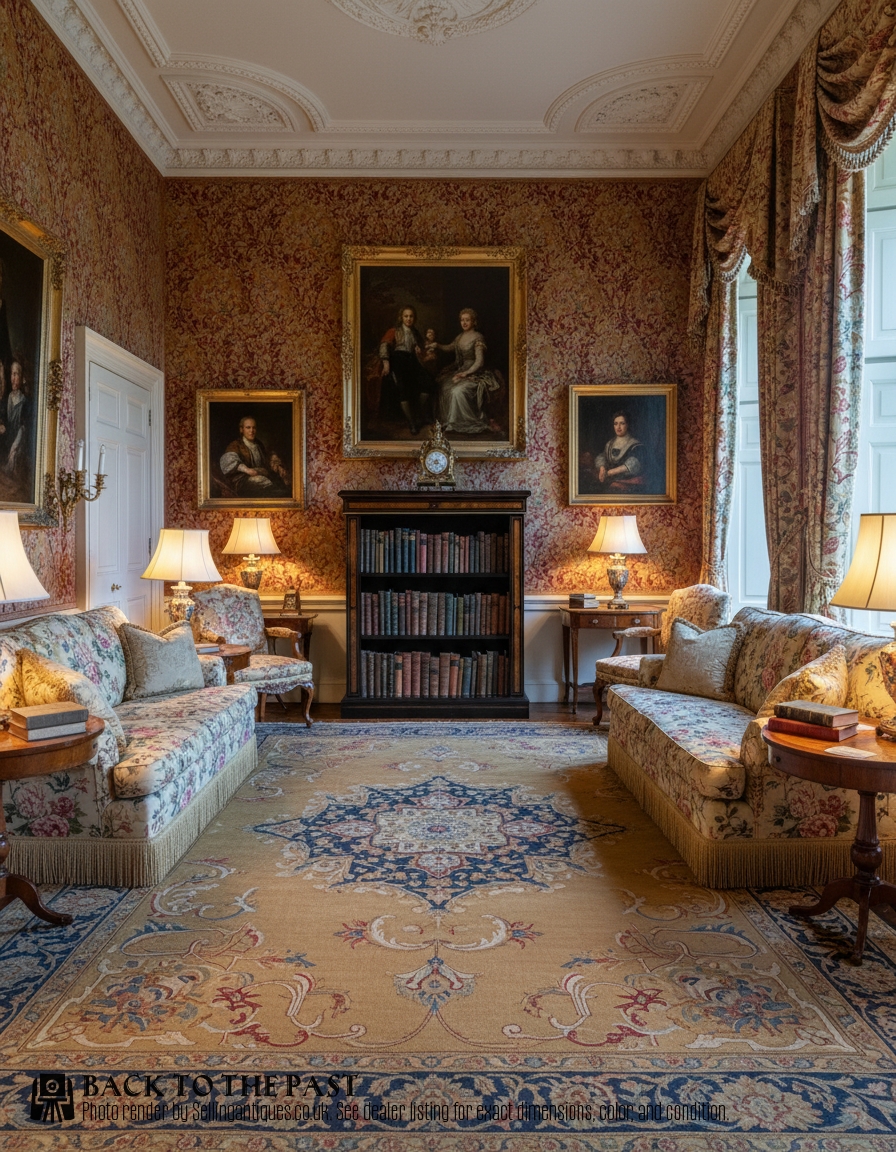
How they were made
Cabinet makers achieved the characteristic black finish by ebonising woods such as fruitwood, walnut, or mahogany to imitate ebony. This dark surface served as a backdrop for contrasting inlay work using amboyna, burr walnut, and various lighter timbers.
Construction frequently incorporated brass, ormolu, and gilt metal mounts to accent the corners, borders, and door panels. Glazed doors protected the books inside, whilst porcelain plaques and intricate carvings completed the decorative scheme.
Victorian Ebonised Bookcase Retail Price Guide 2026
Typical asking prices for victorian ebonised bookcase among the pieces listed under this phrase on Sellingantiques today, from the lower quarter to the upper quarter. They describe what is for sale here now, not the wider market.
A revolving bookcase allows a collection of heavy reading matter to spin quietly at the touch of a single finger.
What varies in quality
The division between standard items and exceptional pieces rests on the intricacy of the inlay and the weight of the metal mounts. Finer examples display meticulous parquetry and hand-chased ormolu rather than simple painted lines or pressed brass.
Structural harmony also dictates standing; cabinets with original glass, functioning locks, and well-fitted adjustable shelving retain greater integrity. The depth of the ebonisation process and the choice of secondary timbers beneath the finish reveal the maker's original investment in materials.
George Edmund Street·Lamb of Manchester·Story and Triggs·Edwards and Roberts
The Victorian Ebonised Bookcase Glossary
- Ebonised Wood
- Timber treated with stain or paint to resemble solid ebony. This technique gained immense popularity during the Victorian period for achieving a sleek, dark finish.
- Ormolu
- Gilt bronze mounted onto furniture as a decorative trim. It provides a bright metallic contrast against the deep black of ebonised surfaces.
- Pier Cabinet
- A narrow display cabinet designed to fit against the wall space between windows. They frequently feature glazed doors and velvet-lined interiors.
- Breakfront
- A piece of furniture where the central section projects forward from the side sections. This layout creates architectural depth in large bookcases.
- Aesthetic Movement
- A late nineteenth century design style emphasising art for art's sake. Pieces from this movement often incorporate Japanese motifs and gilt highlights.
Victorian Ebonised Bookcase: Frequently Asked Questions
How do I care for ebonised wood?
Dust regularly with a soft, dry cloth to prevent surface scratching on the dark finish. Avoid placing the bookcase in direct sunlight or near heat sources to protect the wood from warping.
Apply a microcrystalline wax occasionally to nourish the surface without building up a heavy residue. Keep humidity levels stable in the room to preserve both the timber and any delicate inlay work.
Were these bookcases used for books?
Many pieces served primarily as display cabinets for ceramics, glassware, and decorative objects rather than working libraries. The inclusion of glass doors and velvet linings points toward exhibition rather than heavy reading.
Open shelf versions and larger breakfront bookcases were certainly built to house household volumes and reference sets. Owners often mixed books with curiosities to reflect their personal interests.
What is the Aesthetic Movement style?
The Aesthetic Movement rejected heavy Victorian ornamentation in favour of artistic simplicity and Japanese-inspired motifs. These pieces often utilise ebonised surfaces paired with delicate gold incised lines.
Such designs prioritized visual harmony and craftsmanship over strict historical revivalism. They stand out through slender proportions and refined geometric or floral patterns.
Can shelves be adjusted inside?
Many nineteenth century bookcases feature adjustable shelving supported by wooden ratchets or metal track systems. This allowed owners to alter the shelf height to accommodate volumes of varying sizes.
Some smaller pier cabinets and fixed glazed units contain permanent wooden shelves that cannot be moved. Checking the interior construction reveals whether the shelving layout is original to the piece.