






Victorian Doulton Pottery Vases
These Victorian Doulton pottery vases combine robust stoneware and delicate faience, offering distinct ceramic artistry for the discerning interior.
Victorian Doulton Pottery Vases
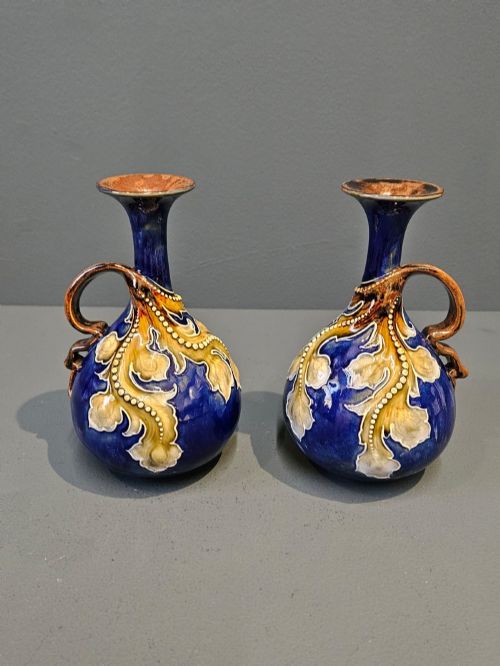
Victorian Doulton pottery vases encompass a diverse range of decorative forms, spanning standard vases, ewers, and jugs produced during the nineteenth and early twentieth centuries. Buyers seeking these pieces will most frequently encounter works originating from the Lambeth and Burslem potteries, dated primarily to the 1880s and 1890s.
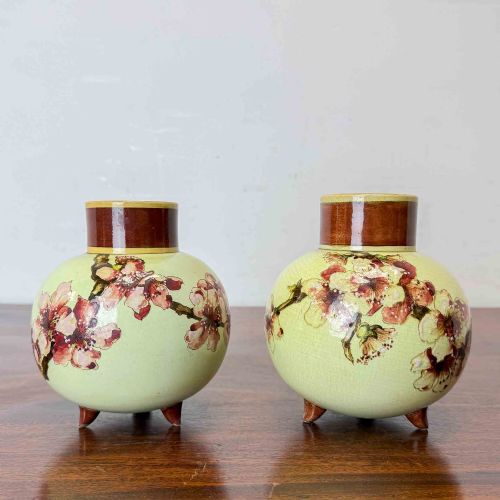
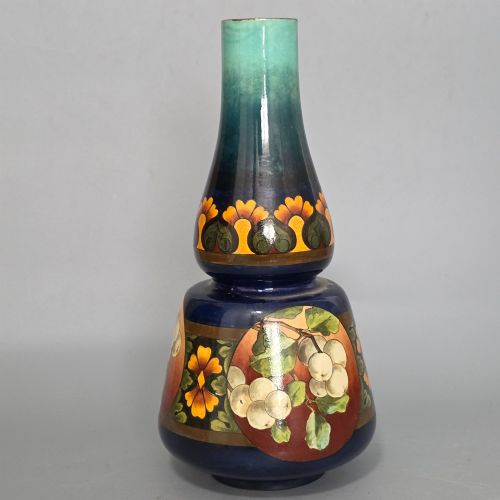
The aesthetic vocabulary of these vessels draws heavily upon Arts and Crafts, Art Nouveau, and Aesthetic Movement principles. Many examples survive as matched pairs, incorporating varied bulbous or baluster profiles designed for ornamental display.
Materials and methods
Makers utilised ceramic, earthenware, and robust salt-glazed stoneware as the foundational bodies for these vessels. Decoration relied upon specialised glazes, enamel, and applied sprigged elements to create textured surface relief.
Certain pieces integrated intricate hand-painted designs under the glaze, occasionally supplemented with gold leaf and gilt detailing to accentuate the contours.
Victorian Doulton Pottery Vases Retail Price Guide 2026
Typical asking prices for victorian doulton pottery vases among the pieces listed under this phrase on Sellingantiques today, from the lower quarter to the upper quarter. They describe what is for sale here now, not the wider market.
Listings feature ceramic, stoneware, and earthenware materials decorated with glazes, enamel, and gold leaf across Victorian, Art Nouveau, and Arts and Crafts styles.
Assessing quality
Quality rests upon the precision of the hand-painted decoration, the complexity of the surface technique, and the distinctness of applied sprigging. Pieces executed by named artists command greater interest due to the individuality of their painted or incised motifs.
The visual balance of the form, the crispness of the salt glaze or faience surface, and the preservation of delicate enamel or gilt detailing further separate standard production from exhibition-grade works.
Alice Euphemia Thatcher·Eliza Simmance·Emma Shute·Emily Edwards·Emily Stormer·Florence Barlow
The Victorian Doulton Pottery Vases Glossary
- Faience
- Tin-glazed earthenware used as a smooth canvas for hand-painted botanical and figurative decoration. This technique allowed artists to apply detailed pigments directly onto an absorbent surface before firing.
- Stoneware
- A dense, vitreous ceramic fired at high temperatures until impermeable to liquids. Salt-glazed variants achieved a characteristic textured finish through the introduction of salt into the kiln.
- Slaters Patent
- A proprietary Doulton technique involving pressed lace or fabric textures imprinted into the damp clay body. This method produced intricate, tactile surface patterns often highlighted with colour and gold.
- Carrara Ware
- A specialised Doulton body created to imitate carved Italian marble. It typically featured delicate hand-painted floral garlands against a muted, matte white ground.
- Baluster
- An architectural vase profile featuring a rounded lower body that tapers upward into a narrow neck. This shape appeared frequently across Victorian pottery production.
Victorian Doulton Pottery Vases: Frequently Asked Questions
What periods do these vases date from?
The listed pieces predominantly date from the Victorian era, specifically concentrating in the 1880s and 1890s. Some examples extend into the early twentieth century around 1910.
Production spans notable design movements including the Aesthetic Movement, Arts and Crafts, and Art Nouveau. Earlier foundations from the sixteenth century appear in archival records, though the marketplace inventory centres squarely on the nineteenth century.
How were these decorative vessels used?
These pieces functioned primarily as ornamental items for domestic interiors during the Victorian period. Ewers, jugs, and pitchers often served alongside vases as display centerpieces on mantelpieces and sideboards.
Their substantial stoneware and faience construction meant they could hold floral arrangements, though many survived primarily for their decorative artistic merit.
How do I identify different Doulton styles?
Styles range from the salt-glazed, sprigged relief work of Lambeth to the refined hand-painted faience of Burslem. Look for specific surface treatments like Slater's lace-impressed patterns or Carrara ware marble finishes to determine the decorative approach.
Art Nouveau and Aesthetic Movement influences manifest through stylized floral motifs, Persian-inspired geometries, and asymmetrical naturalism.
How do I care for antique pottery?
Protect these ceramic and stoneware vessels by placing them away from direct sunlight and areas subject to sudden temperature fluctuations. Dust them gently with a dry, soft cloth rather than using liquid cleaning agents.
Handle ewers and vases with care, supporting the base rather than relying solely on applied handles, which can be vulnerable to impact.