






Brown Green Ceramic Vases
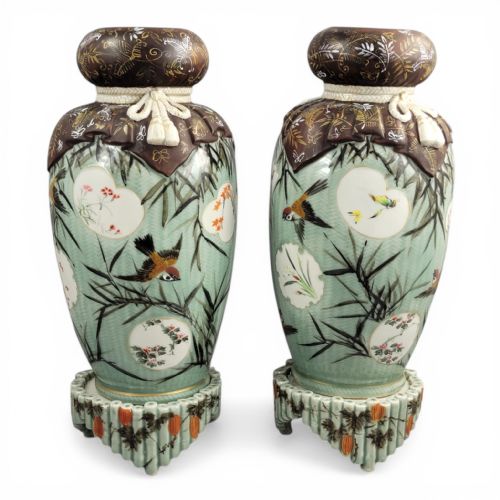
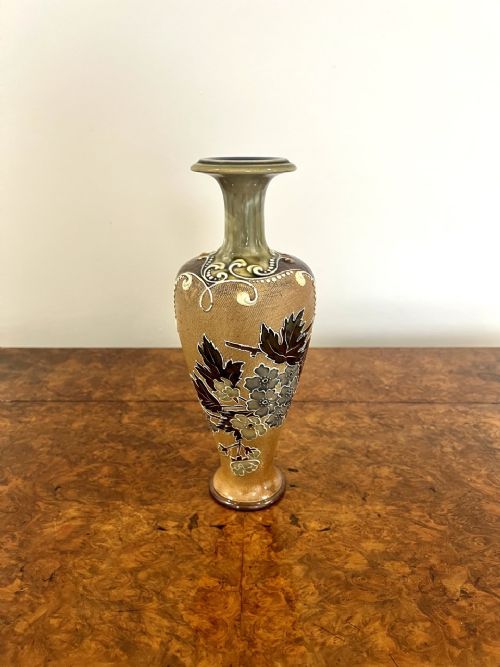
Brown green ceramic vases bring rich earthy tones and striking forms to a room, spanning Victorian pottery, Arts and Crafts design, and Meiji period works.
Brown Green Ceramic Vases
The aesthetic leans heavily into Victorian and Arts and Crafts sensibilities, alongside Art Nouveau curves and Meiji period craftsmanship. You are likely to meet studio pieces, majolica, and faience examples that utilise rich glazes to blend brown and green tones.
How they were made
Potters shaped these vessels using earthenware, stoneware, and porcelain, applying rich glazes to achieve characteristic brown and green surfaces. Some workshops incorporated enamel or gold leaf to highlight intricate details on the ceramic body.
Techniques varied from the specialised faience and majolica methods to cloisonne work on porcelain and pottery bases. Makers relied on skilled throwing and moulding to create amphorae, ewers, and bottle vases before firing.
Brown Green Ceramic Vases Retail Price Guide 2026
Typical asking prices for brown green ceramic vases among the pieces listed under this phrase on Sellingantiques today, from the lower quarter to the upper quarter. They describe what is for sale here now, not the wider market.
Listings feature items spanning the Victorian era, Arts and Crafts movement, and Meiji period.
What varies in quality
Quality rests on the sophistication of the glaze work and the precision of the form, separating standard production items from masterworks. Pieces bearing specific signatures or attributed to notable artists show superior execution in ornament and finish.
The depth and consistency of the brown and green tones, alongside the crispness of moulded or hand-painted details, dictate the standing of each vessel. Original matching stands and intact surface decoration elevate the stature of these nineteenth-century ceramics.
Doulton Lambeth·Eliza Simmance·Kato Sanhei·Burmantofts Faience
The Brown Green Ceramic Vases Glossary
- Faience
- Tinned earthenware decorated with opaque coloured glazes. This technique allowed makers to achieve vibrant surface finishes on decorative vessels.
- Majolica
- Soft-pottery glazed with tin-enamel and painted with bright colours. It gained immense popularity during the Victorian era for ornamental vases and ewers.
- Stoneware
- Dense ceramic fired at high temperatures until vitrified. It provides a robust body suited for rich brown and green glazes.
- Ewer
- A large pitcher with a wide spout and handle. Many examples function purely as decorative vases in nineteenth-century interiors.
Brown Green Ceramic Vases: Frequently Asked Questions
How do I clean my ceramic vase?
Dust the surface gently with a soft, dry cloth to protect the glaze and any delicate enamel work.
Avoid using water or chemical cleaners, particularly on antique earthenware or pieces with gold leaf.
Were these vases used for flowers?
Many nineteenth-century vessels served purely as decorative objects or mantelpiece ornaments rather than utilitarian flower holders.
Larger ewers and amphorae were designed to showcase the potter's skill in form and glaze.
How do I identify the period?
Examine the base for maker marks, impressed ciphers, or handwritten signatures that point to specific potteries and decades.
Stylistic cues such as Art Nouveau curves or Victorian naturalism also help date the ceramic body.
Can I display them in direct sunlight?
Prolonged exposure to direct sunlight can fade delicate glazes and enamel decorations over time.
Position your pieces in indirect light to preserve the richness of the brown and green tones.