

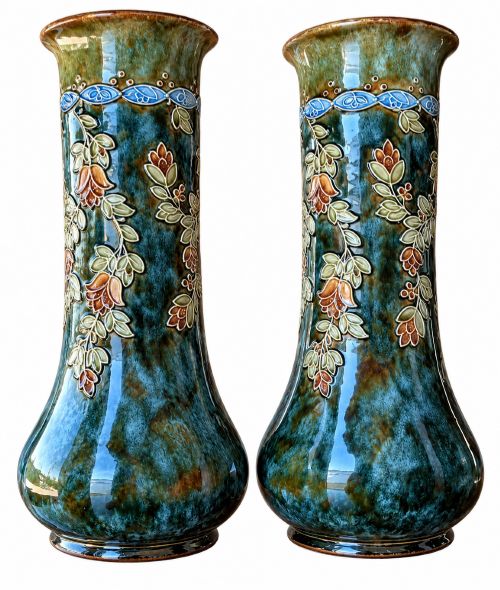
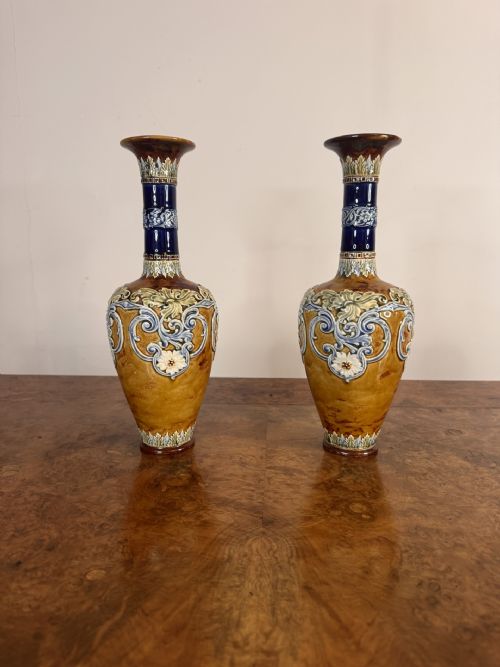
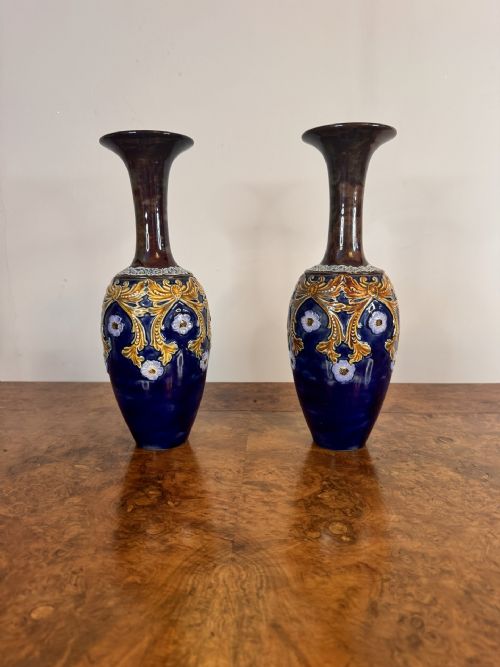
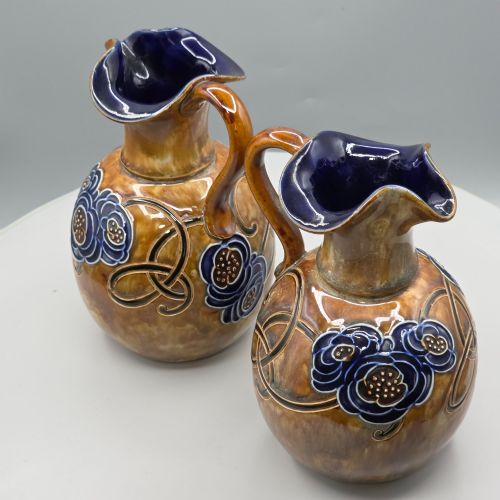


Doulton Art Pottery Pair
These doulton art pottery pair selections bring together matched vessels from the late nineteenth and early twentieth centuries, prized for their distinctive studio ceramic design.
Doulton Art Pottery Pair
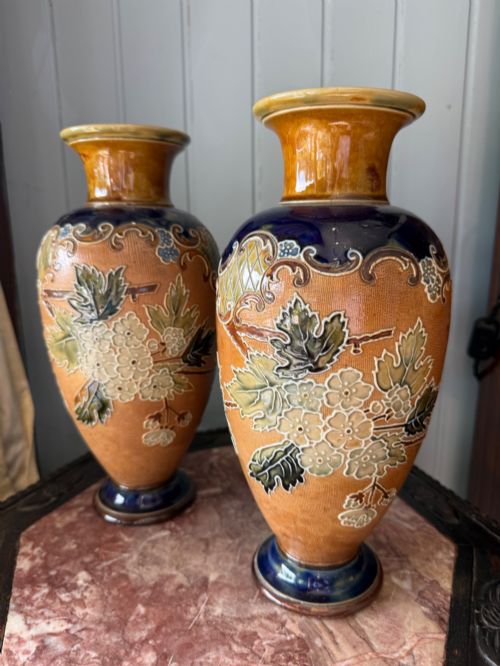
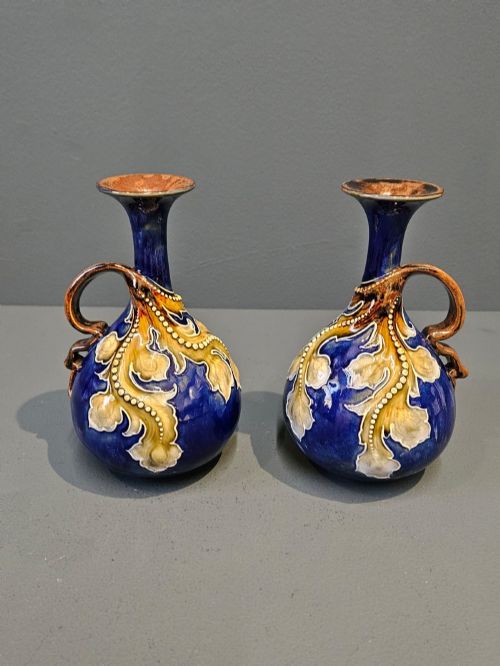
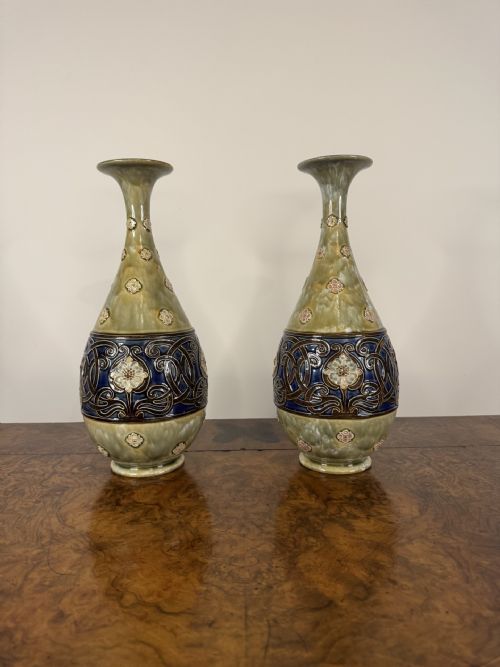
When searching for a doulton art pottery pair, a buyer encounters matched vessels produced by the famous Lambeth works during the Victorian and Edwardian eras. The selection on this page centres on balanced sets of vases, jugs, and planters rather than single items.
The objects stem from distinct design movements, most notably Art Nouveau, Arts and Crafts, and Aesthetic Movement styles. Production dates span from the eighteen-eighties through to nineteen-twenty, capturing the height of British art pottery manufacturing.
Vases dominate the available forms, ranging from small cabinet pieces to large baluster shapes. Planters and candlesticks also appear, often bearing specific model numbers and the individual marks of studio artists.
Judging the range
Quality separates standard production wares from pieces bearing the personal monograms of renowned studio artists like Louisa Wakely, Emily Edwards, or Ethel Beard. Hand-incised ornament and complex enamel work elevate the status of an individual pair.
The crispness of the moulded relief and the depth of the glaze application determine visual success across different examples. Matched pairs showing uniform coloration and clear factory stamps command greater attention than mismatched or heavily worn items.
Doulton Art Pottery Pair Retail Price Guide 2026
Typical asking prices for doulton art pottery pair among the pieces listed under this phrase on Sellingantiques today, from the lower quarter to the upper quarter. They describe what is for sale here now, not the wider market.
Victorian households squeezed miniature bonsai plants into specialised Doulton planters while heavy stoneware baluster vases held the parlour ferns.
Louisa Wakely·Emily Edwards·Ethel Beard
The Doulton Art Pottery Pair Glossary
- Lambeth stoneware
- A dense, vitreous ceramic body produced at the Doulton London works, fired at high temperatures to achieve impermeability.
- Slater's patent
- A technique involving the application of lace or fabric directly into damp clay to create textured background patterns before glazing.
- Baluster
- A vertical vase form featuring a rounded lower body that tapers towards a narrow neck.
- Enamel floral décor
- Surface decoration applied using vitrifiable coloured glass powders, fused to the ceramic body during a secondary low-temperature firing.
Doulton Art Pottery Pair: Frequently Asked Questions
How do I date a Doulton pair?
Dating relies on the impressed factory marks stamped into the base of the stoneware, which changed across the decades. Stylistic markers such as Art Nouveau floral motifs or Victorian aesthetic patterns also help narrow the production period.
The presence of specific artist monograms alongside the factory stamp provides further chronological context. Comparing model numbers against production records assists in placing the manufacturing era more precisely.
How were these pairs used originally?
These ceramic pairs served primarily as decorative mantelpiece ornaments in middle-class Victorian and Edwardian homes. Vases held fresh floral arrangements, while specialised pieces like loving cups functioned as display items or presentation pieces.
Planters accommodated indoor ferns and bonsai plants, reflecting the period interest in interior greenery. Candlesticks provided functional lighting alongside their decorative appeal.
Can I display them in bright sunlight?
Stoneware bodies and fired glazes tolerate normal indoor light conditions without fading. However, prolonged exposure to direct, intense sunlight can occasionally affect delicate enamel surface colours over many years.
Placing matched pairs away from direct window heat sources protects the structural integrity of the ceramic glaze and any applied decoration.