




Victorian Double Back Settee
A victorian double back settee brings double-ended comfort and distinct dual-back framing into a room.
Victorian Double Back Settee
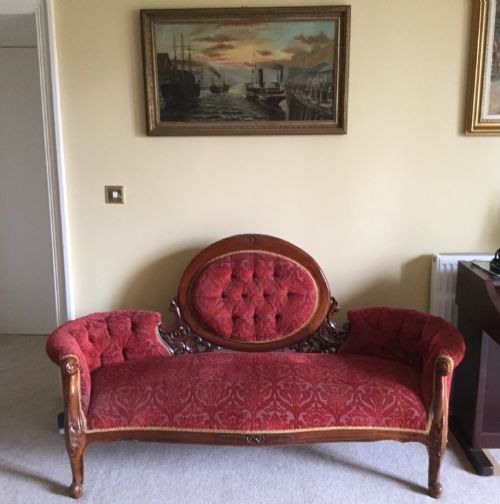
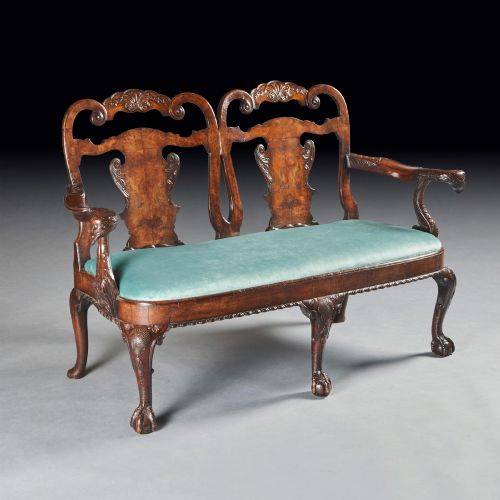
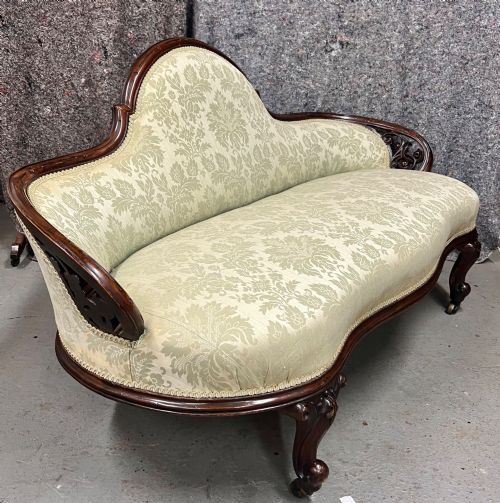
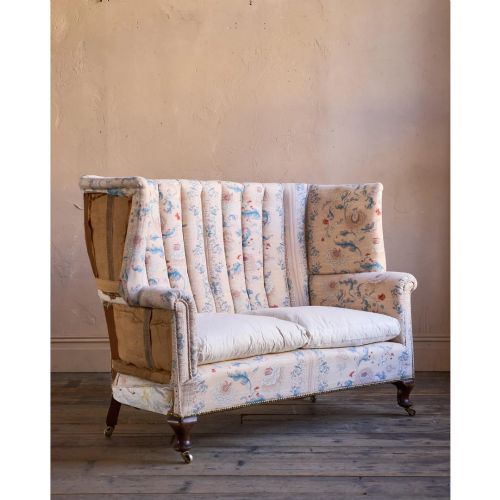
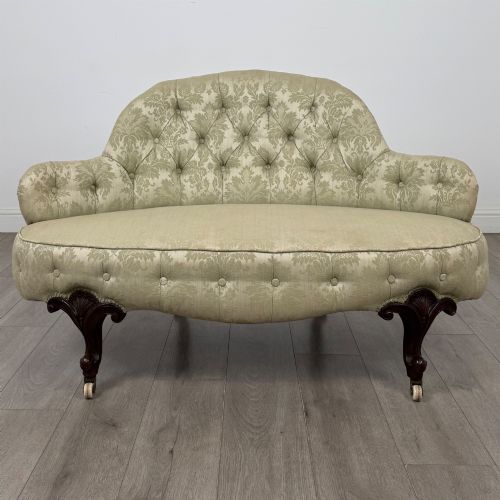
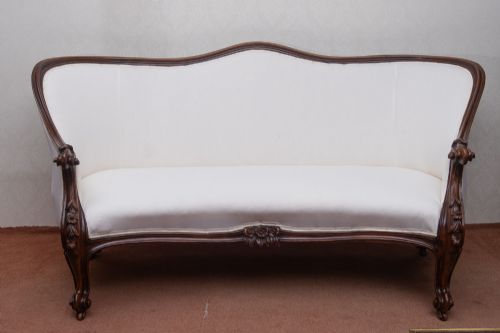
A victorian double back settee is a seating form defined by its dual backrests or twin chair-back construction, often styled after earlier George II designs or Victorian Rococo Revival aesthetics. These pieces appear in forms ranging from double spoon-back sofas and twin high-back settees to double end couches and window seats.
The versions most frequently encountered on this page date from the nineteenth century, spanning early Victorian to late Victorian periods, alongside pieces from around eighteen eighty up to nineteen thirty. They are constructed as two-seat or three-seat sofas utilising mahogany, walnut, and rosewood frames.
Makers and cabinetmakers of the era produced these settees to serve as principal seating in parlours and reception rooms. Their distinct dual-back configurations separate them from standard single-back sofas, offering visual symmetry and structured support.
Materials and construction
Frames are constructed from dense hardwoods such as mahogany, walnut, and rosewood, frequently showcasing carved showwood details and inlaid motifs. These timbers provide the structural integrity required to support dual backrests and serpentine upholstered bases.
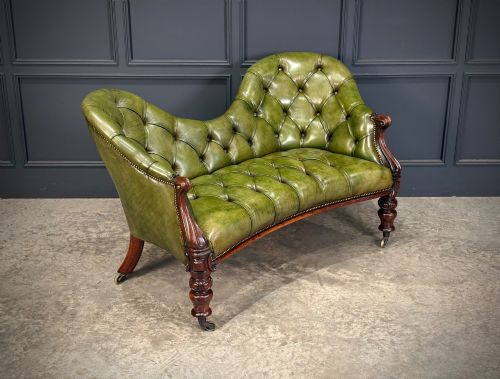
Upholstery techniques involve sprung settee bases paired with buttoned leather, deep pile brocade, velvet, damask, and various textiles. Brass components and traditional webbing complete the internal and external assembly of the seating.
Periods represented on this page span the early nineteenth century through to nineteen thirty.
Evaluating craftsmanship and condition
Quality in a victorian double back settee rests upon the crispness of the timber carving, the selection of figured mahogany or walnut veneers, and the structural execution of the twin backrests. Superior examples display refined proportions and detailed showwood framing.
The standard of upholstery materials, from green buttoned leather to burgundy brocade, alongside the preservation of the original frame integrity, dictates the refinement of each individual piece.
The Victorian Double Back Settee Glossary
- Showwood
- Timber framing left exposed around the upholstered elements of a settee. This allows the carved mahogany or walnut grain to remain visible.
- Double spoon-back
- A backrest design featuring two concave, spoon-shaped wooden frames padded for upholstery. It mirrors the contour of the human spine.
- Serpentine
- A curved line that undulates gently, moving outward in the centre and inward at the sides. This contour often defines the front rail of the settee base.
- Brocade
- A rich, heavy fabric woven with raised patterns, frequently utilised for reupholstering nineteenth-century seating. It adds texture and decorative depth to the piece.
Victorian Double Back Settee: Frequently Asked Questions
Where did they place a double back settee?
These settees served primarily in formal nineteenth-century parlours, drawing rooms, and large reception spaces where guests gathered. Their dual-backed design allowed them to sit away from walls as decorative centrepieces.
Smaller variations also functioned as window seats or couch seating in private sitting rooms. Their dual-ended or twin-back forms provided structured seating for multiple occupants.
How do I style one today?
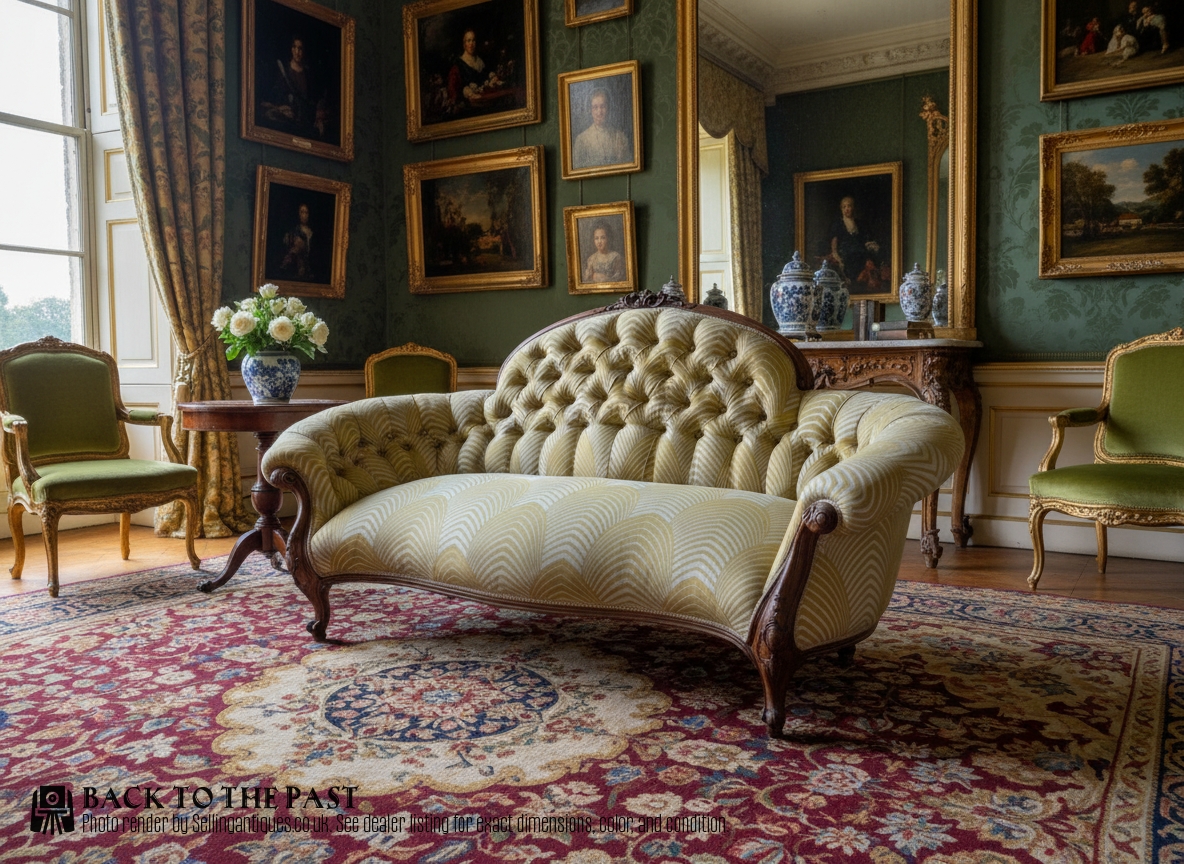
A victorian double back settee works effectively as a focal point in a living room or a study, pairing well with traditional or transitional interiors. Its carved wooden frame and upholstered backrests contrast cleanly against neutral walls.
Position the settee where its dual-back profile remains visible from multiple angles in the room. Keep surrounding furniture understated to let the carved mahogany or walnut woodwork stand out.
What is a double spoon-back?
A double spoon-back refers to a settee with two distinct, concave upholstered backrests shaped like the bowl of a spoon. This nineteenth-century design supported the sitter's back while displaying polished rosewood or walnut framing.
Cabinetmakers carved the wooden borders around the padded inserts to create visual relief. This form appears frequently in early and mid Victorian seating.
How do I distinguish early from late Victorian?
Early Victorian pieces often exhibit bolder scrollwork, heavier mahogany frames, and influences from earlier Georgian revivals. They lean toward robust proportions and pronounced showwood carving.
Late Victorian examples sometimes incorporate lighter walnut timbers, delicate inlay work, or influences from the Arts and Crafts movement. The carving becomes more restrained as the nineteenth century progresses toward nineteen hundred.