


Victorian Dinner Set
These Victorian dinner sets and services bring nineteenth-century dining tables to life with earthenware, porcelain and silver.
Victorian Dinner Set
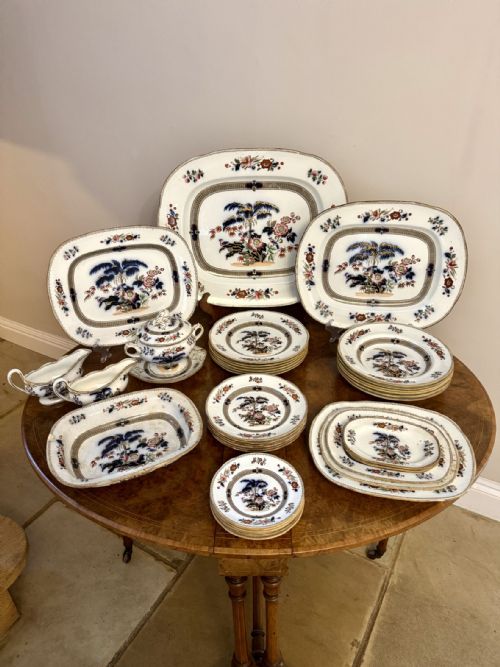
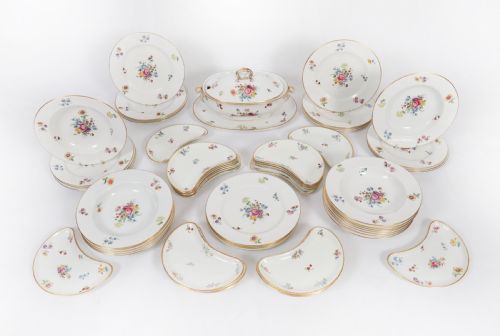
A Victorian dinner set encompasses large ceramic services alongside matched silver cutlery and specialised after-dinner items. Buyers examining this page encounter everything from extensive sixty-piece earthenware services to compact child's sets and silver canteens.
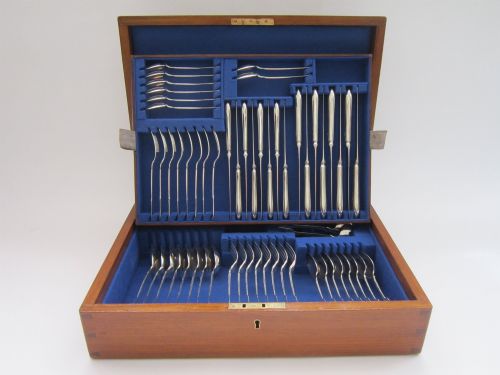
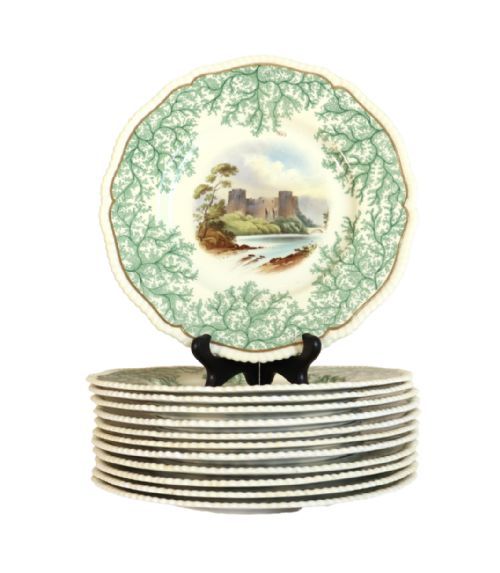
The services span the nineteenth century, including creamware, porcelain and flow blue pieces decorated with botanicals, seaweed borders and hand-painted English scenes. Alongside the ceramic services sit sterling silver forks, knives and complete canteens made for twelve persons.
Materials and Manufacture
Potters shaped these services using earthenware, creamware and porcelain, applying transfer-printed patterns or hand-painted details beneath a protective glaze. Factories such as Wedgwood, Spode, Copeland, Doulton, Coalport and Limoges employed these ceramic techniques to produce durable domestic wares.
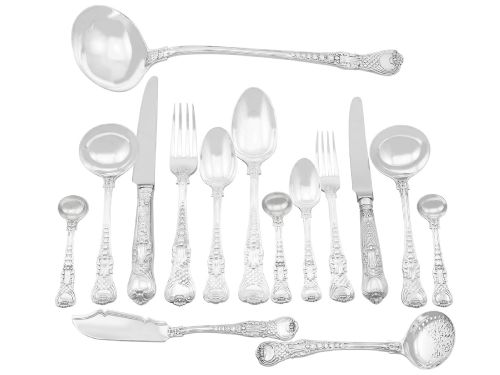
Metal items relied on solid silver and steel, shaped into forks, knives and cutlery sets with engraved patterns like King's Honeysuckle and Queen's Honeysuckle. Makers worked within nineteenth-century traditions to combine functional utility with decorative enamel and gilt finishes.
Listings feature nineteenth-century items spanning earthenware, porcelain, creamware and sterling silver across formal dinner services and after-dinner accessories.
Gradations in Quality
Quality rests upon the completeness of the service and the prestige of the maker, with larger unbroken sets carrying greater distinction. Hand-painted botanical decoration and transfer-printed motifs such as seaweed borders demonstrate higher artistic ambition than plain utilitarian wares.
Silver cutlery varies according to the weight of the metal, the clarity of the hallmarks and the intricacy of the handle design. Comprehensive canteens and matched twelve-place settings represent the more substantial end of the surviving range.
Spode·Wedgwood·Copeland·Coalport·Doulton·Limoges·Hayne and Cater·Cowan
The Victorian Dinner Set Glossary
- Creamware
- A refined earthenware developed in the eighteenth century with a pale yellowish-cream glaze. It remained popular through the nineteenth century for formal dining services.
- Flow blue
- A cobalt-blue transfer printing style on white pottery where the colour bled slightly into the surrounding glaze during firing. This technique created a soft, hazy outline popular on nineteenth-century services.
- Canteen
- A fitted box or chest containing a complete matched set of cutlery for a specific number of diners. Victorian examples often held sterling silver pieces for twelve persons.
- Tantalus
- A locking wooden frame holding spirit decanters that kept the contents visible yet secure from unauthorised access. These after-dinner accessories typically featured oak frames and silver-plated mounts.
- Earthenware
- Porous pottery fired at a lower temperature than porcelain and rendered impermeable by a glass coating. It formed the body of many domestic dinner services.
Victorian Dinner Set: Frequently Asked Questions
What pieces comprise a typical service?
A service often includes dinner plates, serving dishes and related vessels designed to coordinate across the dining table. Larger sets extend to sixty or more pieces to accommodate multiple courses.
Smaller variants include child's toy services and part services that retain a core selection of plates and platters from the original production.
How do silver cutlery sets differ?
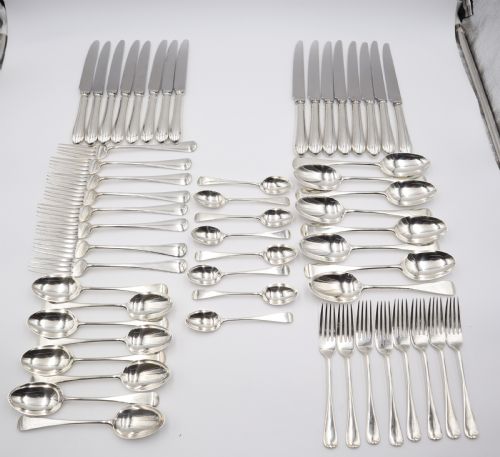
Silver cutlery sets range from individual table forks to extensive canteens equipped for twelve diners. They feature solid silver construction with handles shaped in patterns like King's Honeysuckle or plain Victorian designs.
Knives in these sets frequently combine silver handles with steel blades, reflecting period dining requirements.
Where were these ceramics produced?
The ceramic services originate from English potteries in Staffordshire and surrounding manufacturing centres, alongside continental workshops in France. Factories such as Coalport, Copeland and Limoges established distinct regional styles in porcelain and earthenware.
Maker marks stamped or printed on the underside help identify the specific factory and approximate production era.
How should antique ceramics be used?
Many buyers display these ceramics as decorative collections or utilise them for special dining occasions with gentle handling. Hand washing preserves the delicate glazes, hand-painted enamels and gilt highlights found on nineteenth-century porcelain.
Earthenware and creamware services benefit from careful storage to protect edges from chipping over time.