


Gilt Porcelain Tableware
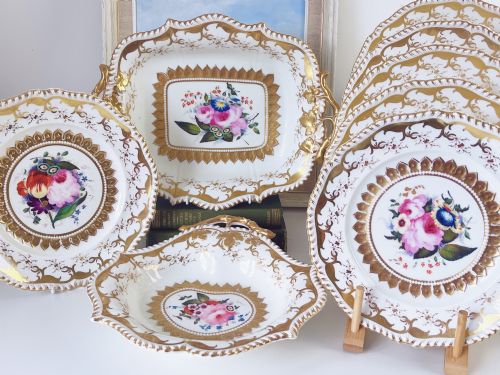
Gilt porcelain tableware brings shimmering goldleaf embellishments and handpainted florals to formal dining settings across the nineteenth and twentieth centuries.
Gilt Porcelain Tableware
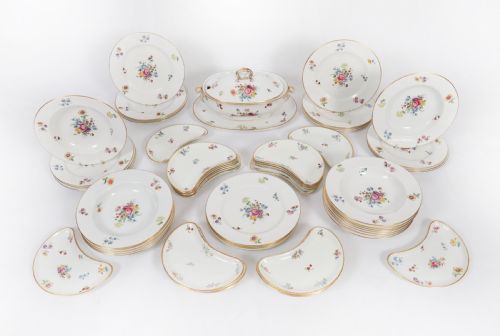
When buyers search for gilt porcelain tableware, they encounter an array of functional dining vessels and decorative pieces spanning the Georgian, Victorian, and Edwardian eras. These objects range from single cabinet plates and armorial jugs to extensive sixty-piece dinner services and multi-part dessert sets.
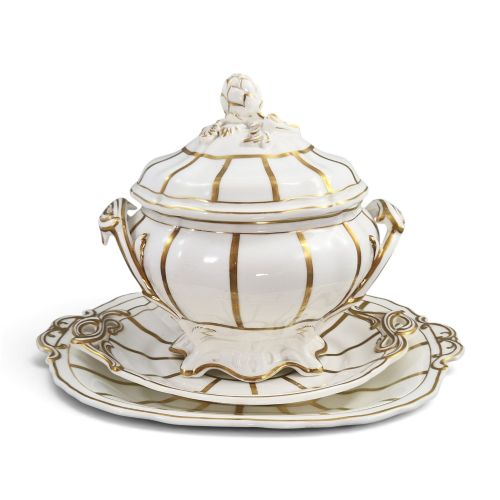
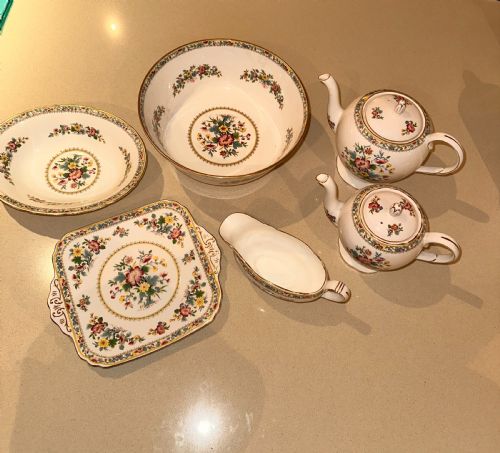
The selections on this page are most frequently nineteenth-century English and European productions, featuring traditional English factories alongside continental works. Pieces showcase varied forms including sauce tureens, soup plates, chestnut baskets, and complete tea services.
Materials and construction
Makers utilised fine porcelain, bone china, and hard-paste ceramic bodies as the foundation for these items, often applying rich enamel colours and detailed handpainted motifs. Gold leaf and applied gilding provide the characteristic metallic highlights framing the rims, handles, and painted scenes.
Techniques combined high-temperature kiln firing of the ceramic base with subsequent lower-temperature firings to fix delicate enamel pigments and precious metal layers. Skilled artisans then polished the raised gold sections to achieve a brilliant lustre.
Assessing quality and craftsmanship
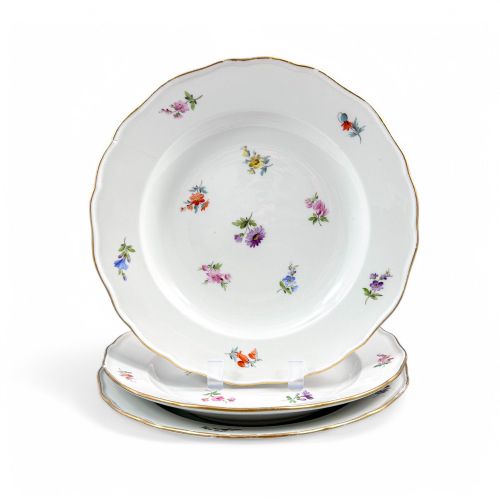
Quality in these items rests upon the precision of the handpainted decoration and the thickness and purity of the applied gilding. Superior examples exhibit intricate brushwork in floral sprays or armorial crests, executed by skilled studio artists rather than simple transfer printing.
The refinement of the porcelain paste and the crispness of moulded details, such as handles on tureens and pierced work on baskets, separate standard production wares from the exceptional output of leading porcelain manufacturers.
Grainger Lee And Co·Royal Crown Derby·Davenport·Spode·Mintons·Coalport·Müller Volkstedt·Chamberlain Worcester·Royal Worcester·Flight Barr And Barr·Mason·Meissen
The Gilt Porcelain Tableware Glossary
- Bone china
- A type of soft-paste porcelain incorporating animal bone ash, resulting in a strong, bright white body used extensively by English potteries.
- Armorial
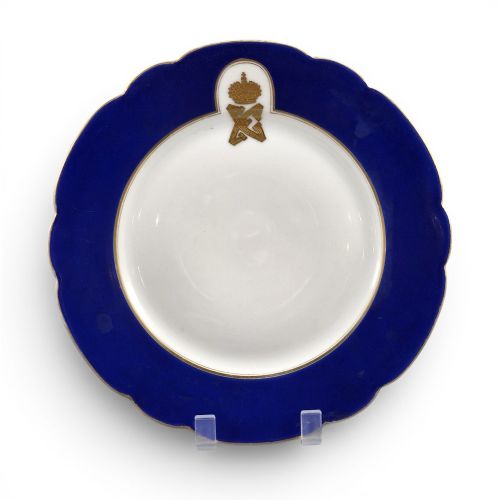
- Decorated with a heraldic coat of arms, frequently commissioned by aristocratic families for bespoke dining services.
- Sucrier
- A small covered sugar bowl designed as part of a tea or coffee service.
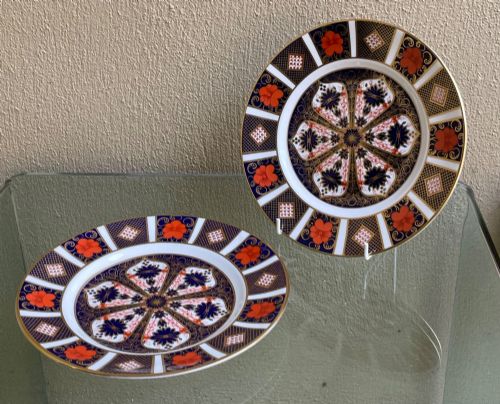
- Imari style
- A decorative scheme inspired by Japanese export wares, typically combining underglaze blue with iron red and abundant gilding.
Gilt Porcelain Tableware: Frequently Asked Questions
Can I use antique porcelain tableware for dining?
While these pieces were originally created for functional dining, many collectors prefer to display them or reserve them for special occasions to protect the delicate handpainted details and historic goldleaf.
Handwashing is essential for preserving the surfaces, as modern dishwashers can quickly damage nineteenth-century enamels and wear away fragile gilding.
How do I identify the manufacturer?
Makers are often identified through impressed, painted, or printed factory marks found on the underside of plates, tureens, and bowls. Pattern numbers and retailer details can also provide precise clues regarding origin and date.
Consulting specialised reference books helps match these marks to specific nineteenth-century potteries and porcelain works.
What is the difference between bone china and hard-paste porcelain?
Bone china includes bone ash in its recipe, which gives the material a slightly warmer tone and high translucency. Hard-paste porcelain uses a denser mineral composition fired at very high temperatures, producing a harder and more vitreous body.
Both materials readily accept rich gilding and enamel decoration, though they originated from different European and Asian manufacturing traditions.
How should I store large dinner services?
Storing large services requires careful stacking with felt or cloth dividers between plates to prevent friction scratching on the gilded rims. Tureens and hollowware should be stored with their lids secured separately or cushioned safely.
Keeping items in a stable environment away from extreme temperature fluctuations protects the historic ceramic body and glaze.