


Antique Floral Dinnerware
Antique floral dinnerware brings botanical and blossom motifs to the table across earthenware, creamware, porcelain, and ironstone.
Antique Floral Dinnerware
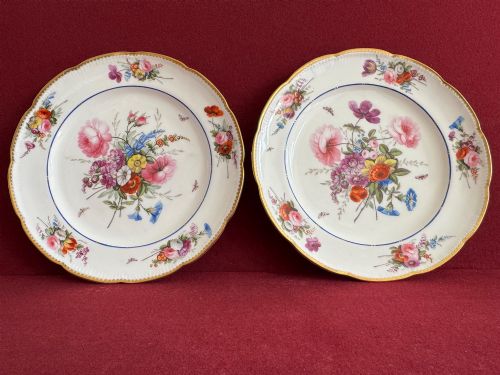
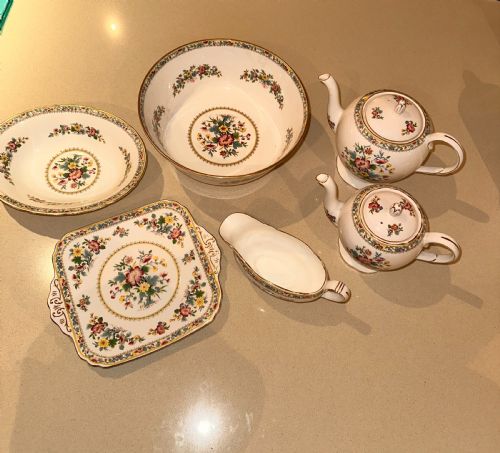
When you examine antique floral dinnerware, you are looking at plates, bowls, platters, and complete services adorned with botanical patterns, blossoms, and leaf motifs. These pieces span the Georgian, Regency, Victorian, and Edwardian periods, stretching into the mid-twentieth century.
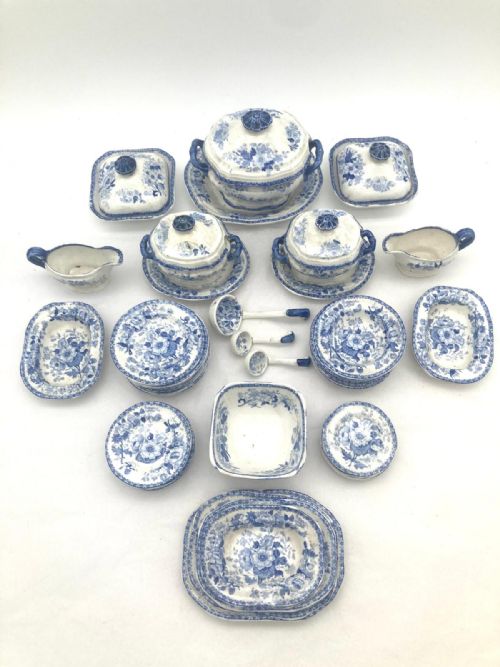
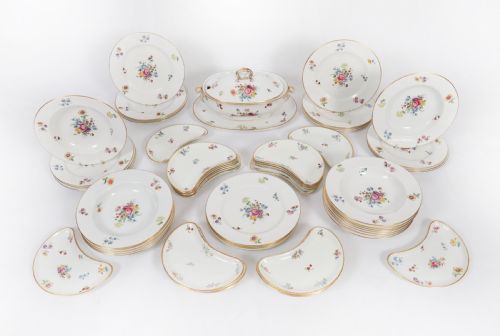
The most common forms on this page include blue and white transfer-printed plates, botanical creamware, and substantial multi-piece dinner services. You will find both English factories and continental makers represented, ranging from large dining sets to cabinet plates and miniature child's services.
How they were made
Potters shaped these services from earthenware, creamware, ironstone, and porcelain, applying glazes and enamels to seal the body. Workers decorated the surfaces using hand-painted brushwork or blue and white transfer printing.
Makers finished many of these pieces with gold leaf and gilt accents, firing the ceramics in kilns to fix the colours and metallic highlights permanently.
Listings feature items from the Georgian period through the Edwardian era up to nineteen sixty, spanning earthenware, porcelain, and ironstone.
What varies in quality
The distinction between ordinary utility wares and exceptional table pieces rests on the crispness of the transfer print or the skill of the hand-painted botanical brushwork. Finely potted porcelain and creamware bodies with clean glaze application stand apart from heavier, utilitarian earthenwares.
The presence of gold leaf detailing, armorial crests, and intact gilding elevates the status of a service from a simple dining set to an important cabinet piece. Completeness across a multi-piece dinner service also influences the standing of the set.
Minton·Spode·Wedgwood·Coalport·Masons·Müller Volkstedt·Flight Barr and Barr·Worcester·Limoges·Royal Worcester·Elkin and Newbon·John Rogers and Son
The Antique Floral Dinnerware Glossary
- Transfer printing
- A method of applying a printed design to ceramic ware from a copperplate via tissue paper. This technique allowed factories to produce intricate patterns like blue and white florals consistently across large dinner services.
- Creamware
- A refined light-coloured earthenware developed in the eighteenth century with a pale yellowish glaze. It provided a smooth surface for botanical painting and transfer work.
- Ironstone
- A durable, dense ceramic patented in the nineteenth century to imitate porcelain. It offered high resistance to chipping and served as a sturdy body for everyday dining plates.
- Porcelain
- A hard, vitreous ceramic fired at high temperatures until translucent. It forms the body of fine cabinet plates and delicate tea and dinner wares.
- Gilt
- A thin layer of gold applied to the edges, rims, and motifs of ceramic pieces. It signals formal dining wares intended for wealthy households.
Antique Floral Dinnerware: Frequently Asked Questions
Can I use antique floral dinnerware for dining?
Many of these services and plates were designed for practical dining use, particularly ironstone and sturdy earthenware pieces. However, wares featuring delicate hand-painted enamels, soft creamware glazes, or extensive gold leaf are better reserved for display and careful handling.
When using older ceramics, hand washing is essential, as modern dishwashers can damage historical glazes and fade delicate transfer-printed or painted botanical details over time.
How do I date an antique floral plate?
Dating relies on a combination of ceramic body type, factory backstamps, decorative style, and potting techniques. Creamware and pearlware point toward the Georgian era, whilst heavier ironstone and detailed transfer prints are typically Victorian.
Examining the foot ring, glaze pooling, and any impressed or painted factory marks will help narrow the manufacturing window. Comparing pattern names against known factory production records provides further chronological accuracy.
What is the difference between porcelain and ironstone?
Porcelain is a vitrified, high-fired ceramic that is usually white and often translucent when held to the light. It was traditionally used for fine cabinet plates and wealthy dining services.
Ironstone is an opaque, heavy earthenware developed for maximum durability in busy households. It lacks porcelain's translucency but offers a robust surface for printed floral borders.
How should I display antique botanical plates?
Plates and shallow bowls can be mounted securely on walls using coated wire hangers or displayed upright in plate racks and cabinets. Ensure the mounting hardware does not put undue pressure on the edges of the ceramic.
Keep display areas away from direct sunlight to protect enamel colours and prevent fading on transfer-printed floral scenes. Stable shelving inside enclosed cabinets also protects pieces from accidental knocks.