


Floral Bone China Set
A floral bone china set brings handpainted botanical charm and historic British craftsmanship straight to the table.
Floral Bone China Set
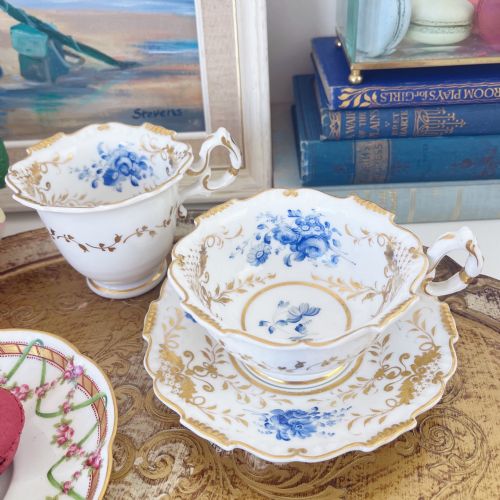
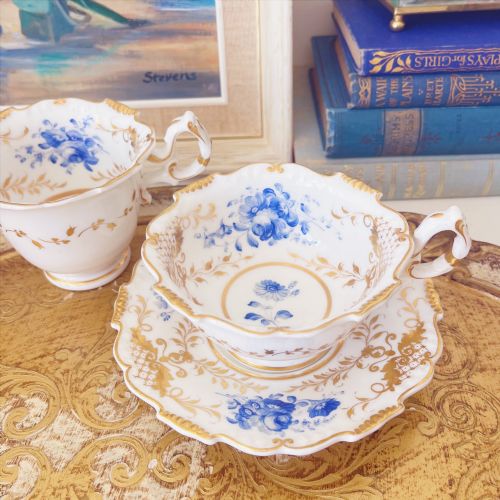
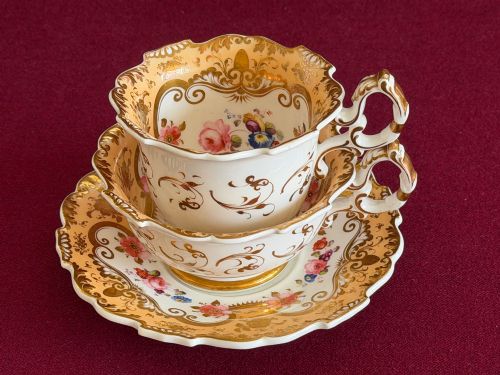
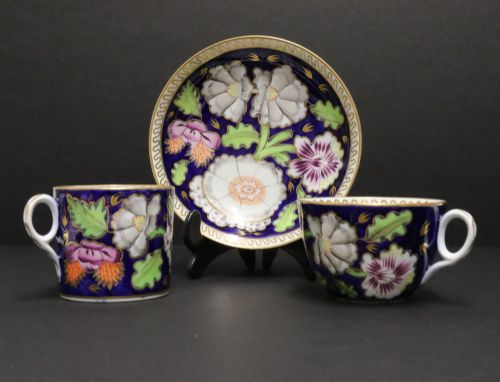
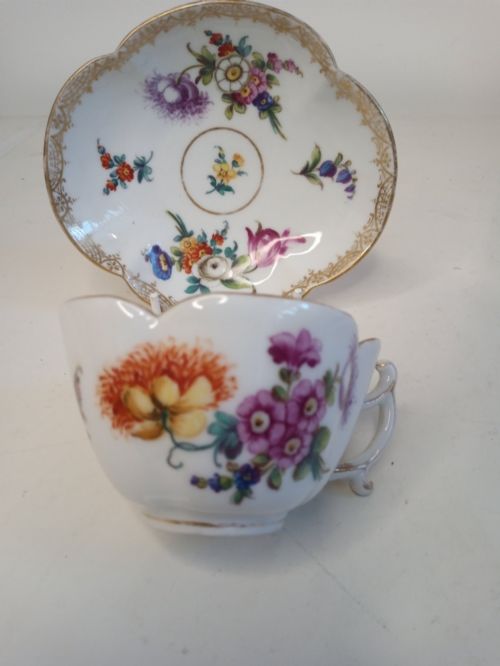
A floral bone china set comprises tea services, dinner services, and cabinet trios originating from periods spanning the early nineteenth century through the early twentieth century. These domestic and display items capture botanical decoration painted upon durable ceramic bodies.
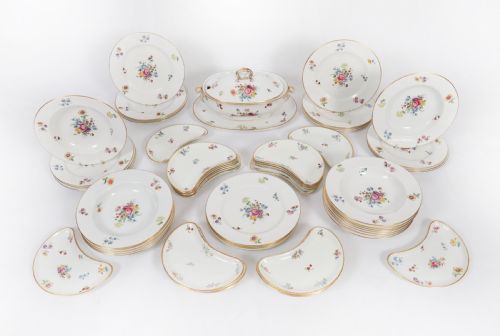
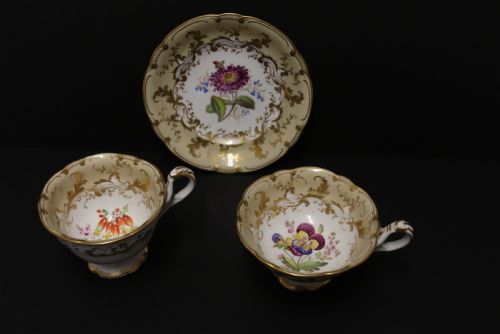
The pieces most frequently met on this page include Regency trios, Victorian dinner services, and Edwardian tea sets. Surviving examples range from small cup and saucer pairs to large multi-piece dining and tea services.
Makers represented across the listings include historic English potteries such as H & R Daniel, Coalport, Minton, and Royal Albert. Each workshop applied distinct floral motifs characteristic of its respective era of production.
Production methods and materials
Potters formed these items using bone china and porcelain, incorporating animal bone ash into the ceramic paste to achieve a translucent finish and high strength. Artisans then shaped the wares either by throwing on a wheel or pressing into moulds.
Decoration relied heavily on handpainted enamel pigments applied directly to the glazed surface. Workers frequently enhanced these floral designs with applied gold leaf, gilt highlights, and intricate gilding.
Object forms vary from single demitasse cups to extensive sixty-piece dinner and tea services.
Distinctions in quality
Quality rests upon the precision of the handpainted botanical brushwork and the complexity of the underlying ceramic form. Pieces featuring delicate, detailed floral scenes and skilled enamel work sit at the higher end of the range.
The application of gold leaf and gilt detailing also dictates distinction, with finely chased gilding indicating superior workshop production. Preservation of the original enamel colours and the crispness of the porcelain moulding further separate standard wares from exceptional examples.
H & R Daniel·Newhall·Spode Copeland·Coalport·Royal Albert·Ridgway·Minton·Wileman Foley Shelley·Royal Crown Derby·Royal Worcester·Davenport
The Floral Bone China Set Glossary
- Bone china
- A type of porcelain composed of clay, feldspar, and animal bone ash. This specific mixture creates a strong, slightly translucent body suitable for refined tableware.
- Trio
- A matching set comprising a teacup, a coffee cup or saucer, and a larger tea plate. These groupings were popular for nineteenth century social dining.
- Demitasse
- A small cup used for serving strong black coffee or espresso. They often appear alongside larger tea sets in porcelain services.
- Sucrier
- A covered vessel designed specifically for holding lump or loose sugar. These pieces matched the broader tea service pattern.
- Enamel
- Opaque glass fused to the ceramic surface through firing to create permanent coloured decoration. Artisans used enamel paints to render botanical motifs.
Floral Bone China Set: Frequently Asked Questions
How do I date a set?
Dating relies upon identifying factory backstamps, ceramic bodies, and stylistic markers recorded in the piece titles. Comparing the shape and floral pattern to known production periods helps narrow down the decade.
Early nineteenth century wares often feature distinct painted pattern numbers rather than printed factory marks. Examining the style of the floral painting provides additional clues to the era of manufacture.
Can I use these for tea?
Historic bone china can generally handle hot liquids, but antique services require careful hand washing. Sudden temperature changes should be avoided to protect the glaze and enamel.
Many collectors prefer to reserve these older pieces for display or occasional gentle use. Modern dishwashers and microwaves must be avoided due to the presence of gold leaf and handpainted enamels.
What is a cabinet trio?
A cabinet trio typically consists of a matched teacup, coffee cup, and saucer created for display rather than active service. These groupings showcased the highest painting skills of the pottery.
They were often produced in limited quantities by prominent English manufacturers. Collectors value them for their pristine condition and detailed artistic execution.
Why buy a partial service?
Partial services survive from larger original dinner or tea sets that have been dispersed over time. They offer an accessible entry point into collecting historic porcelain without requiring a full dining complement.
These surviving components still retain the original decorative schemes and maker marks. They function well for small gatherings or decorative table settings.