
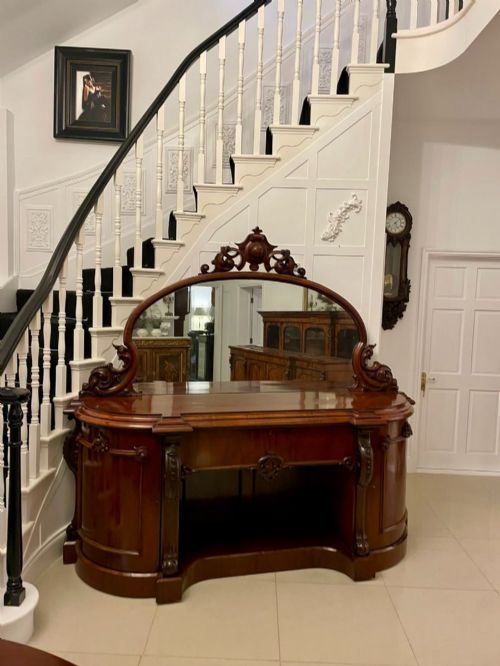
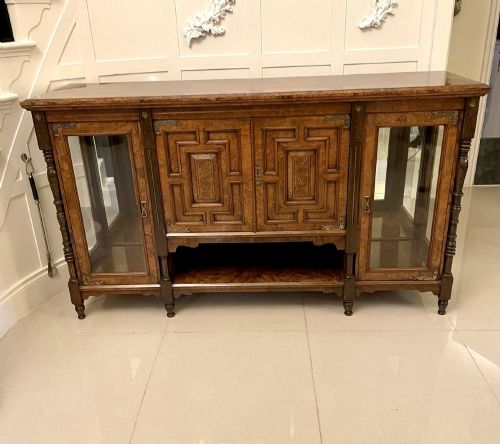
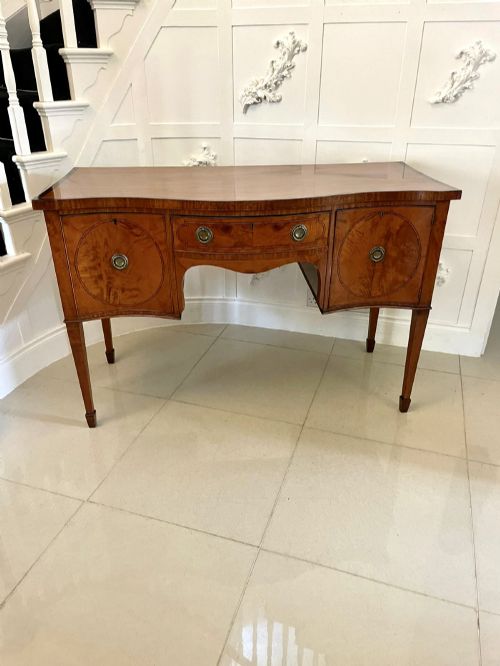
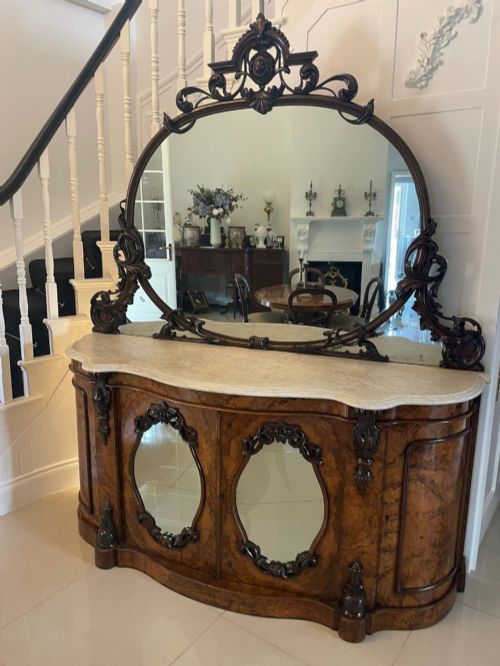
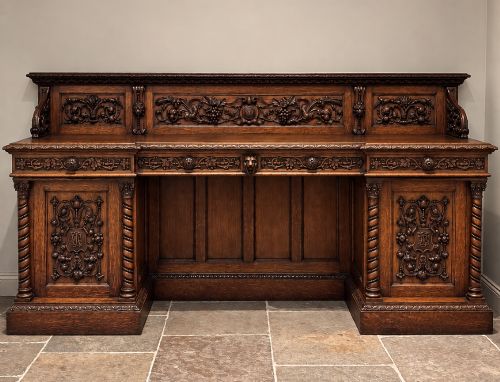
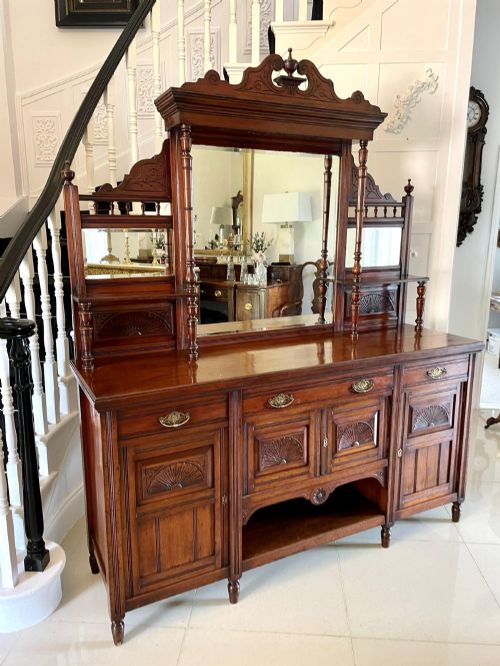
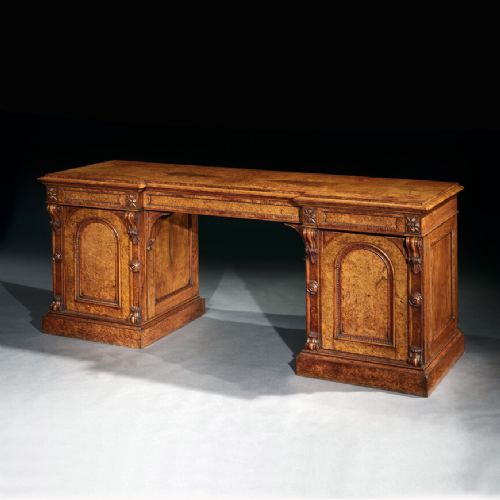
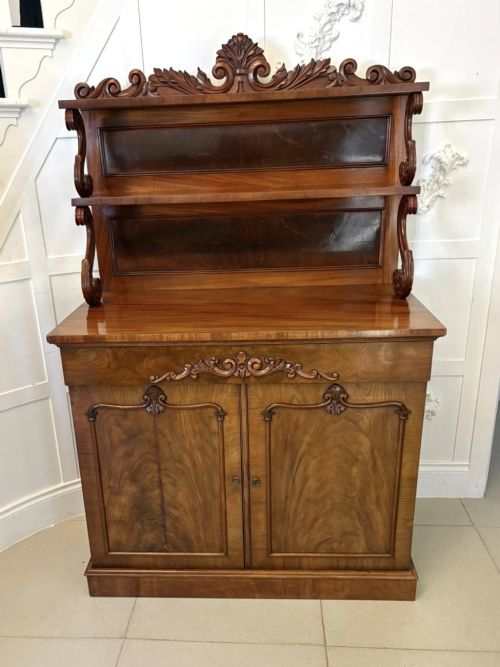
Victorian Dining Sideboard
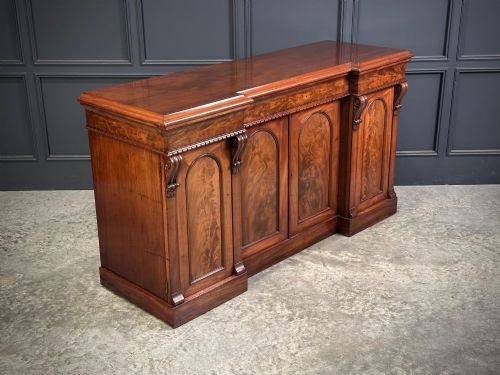
A victorian dining sideboard brings weight and dark timber into a room, designed to hold silver and serve meals with nineteenth-century substance.
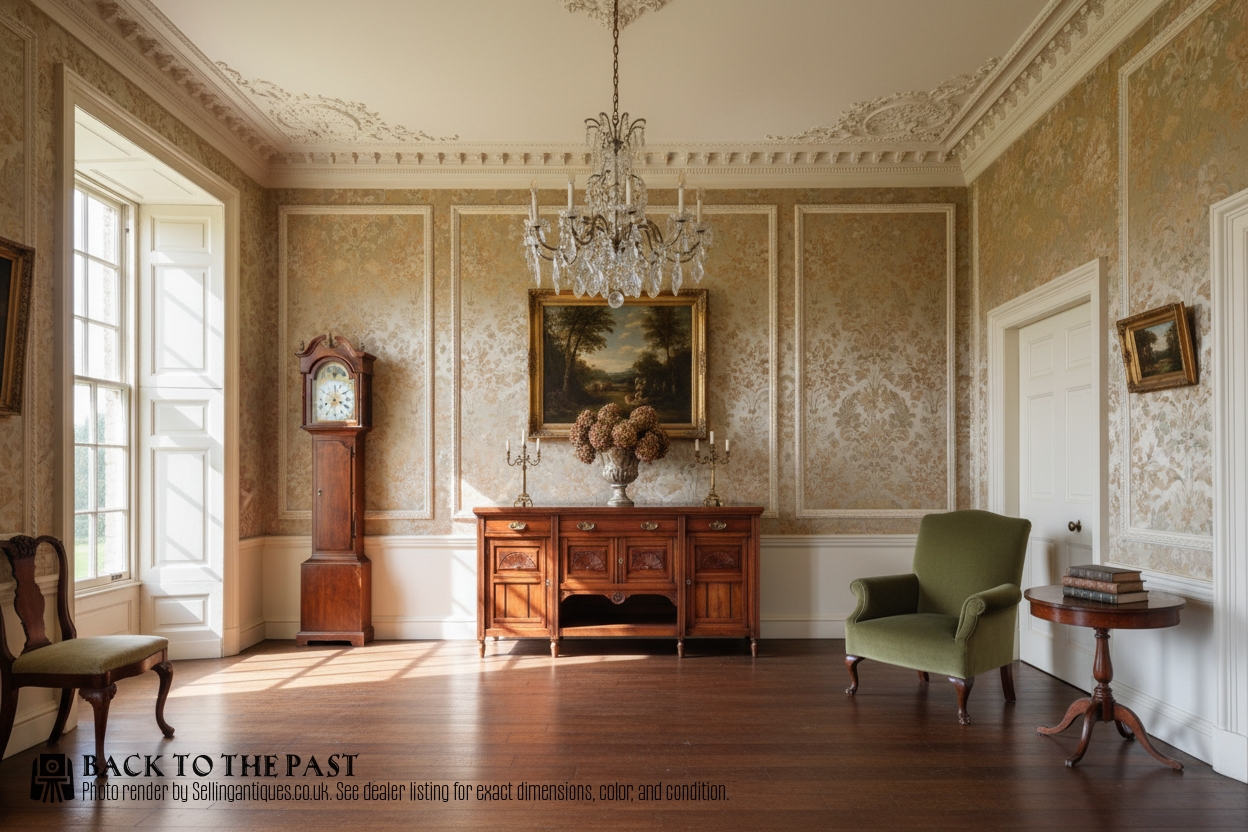
Victorian Dining Sideboard
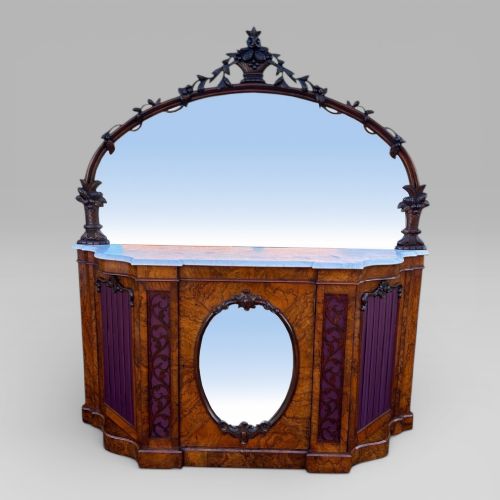
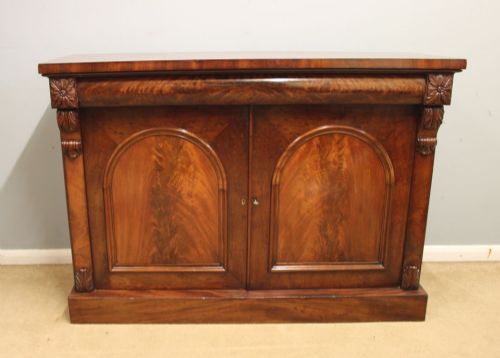
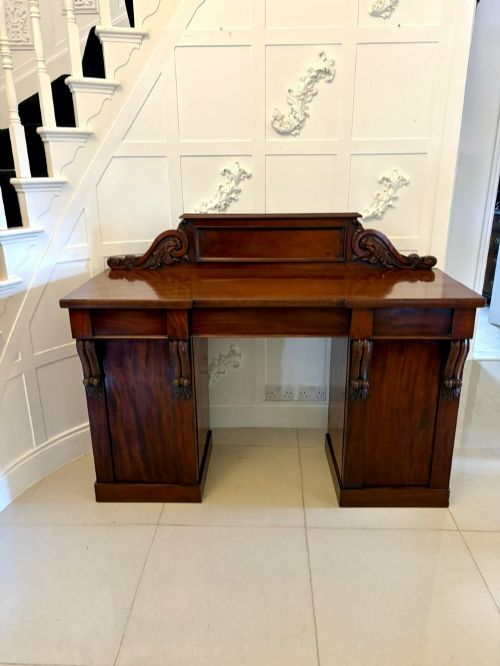
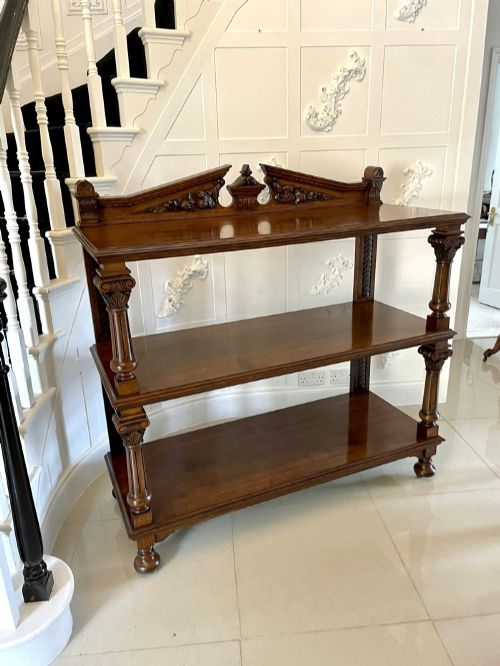
A victorian dining sideboard is a heavy functional cabinet built to anchor a dining room during the nineteenth century. The pieces gathered here span the Victorian era, alongside related nineteenth century serving tables, chiffoniers, and dumbwaiters.
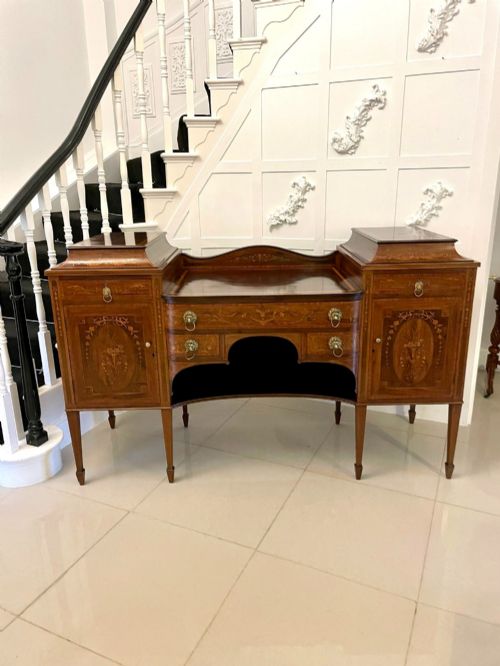
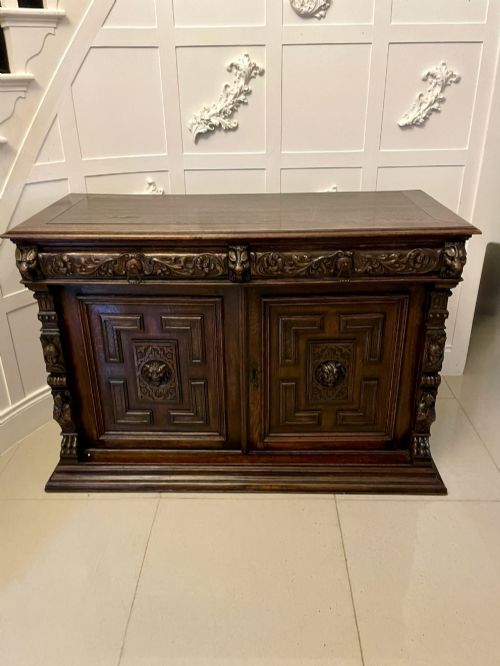
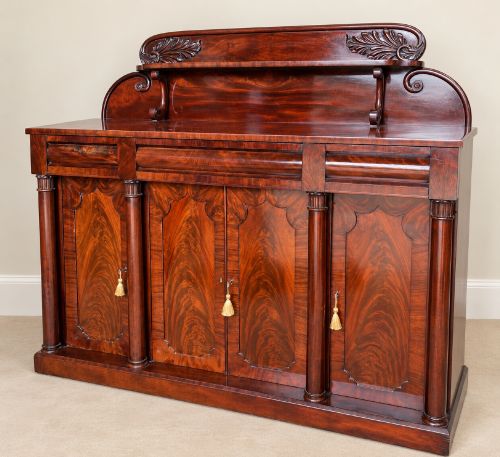
Mahogany and oak dominate the forms, appearing alongside burr walnut and rosewood in configurations ranging from mirror-backed pedestals to simpler two-tiered server cabinets. Many examples incorporate deep drawers, cupboards, and carved woodwork typical of the period.
The selection ranges from early nineteenth century iterations through to later revival styles, capturing the shift in domestic dining habits over several decades. These items served practical purposes in the dining room, storing heavy ceramics and assisting with service before meals.
Materials and Technique
Cabinetmakers constructed these sideboards using solid timbers such as mahogany, oak, and walnut, frequently applying figured veneers like burr walnut or flame mahogany to primary surfaces. Carved details, mirror backs, and inlaid marquetry required specialist joinery techniques passed through nineteenth-century workshops.
Marble tops and brass hardware appear on select pieces, adding durable work surfaces and decorative contrast to the dark wood constructions. Structural integrity relied on robust framing methods to support heavy slab tops and mirrored superstructures without warping.
Victorian Dining Sideboard Retail Price Guide 2026
Typical asking prices for victorian dining sideboard among the pieces listed under this phrase on Sellingantiques today, from the lower quarter to the upper quarter. They describe what is for sale here now, not the wider market.
Listings feature mahogany, oak, burr walnut, and rosewood across various revival styles including Gothic, Renaissance, and Sheraton.
Standards of Construction
Quality rests upon the selection of timber figure, the depth and crispness of carved ornament, and the integrity of the underlying joinery. Superior examples demonstrate careful matching of flame mahogany or burr walnut veneers across large door panels and drawer fronts.
The integration of secondary elements such as original marble inserts, bevelled mirror glass, and substantial brass mounts elevates certain pieces above standard utilitarian production. Finer items exhibit precise drawer dovetailing and solid timber framing that withstands centuries of use.
Hewetsons London·Gillows
The Victorian Dining Sideboard Glossary
- Chiffonier
- A compact low sideboard or cabinet, frequently fitted with a shelf or mirror on the upper superstructure. These pieces became common in nineteenth-century interiors for smaller reception spaces.
- Burr walnut
- A distinctive timber harvested from walnut tree growths, prized for its swirling grain patterns. Cabinetmakers used it as a decorative veneer on high-status nineteenth-century furniture.
- Marquetry
- The art of applying pieces of veneer to a structure to form decorative patterns or pictures. Craftsmen utilised contrasting woods to create geometric or floral motifs.
- Dumbwaiter
- A tiered serving table without doors, used to hold dishes during a meal. Examples from this period often feature revolving or fixed circular trays on a central pillar.
Victorian Dining Sideboard: Frequently Asked Questions
What is a victorian dining sideboard?
A victorian dining sideboard is a large nineteenth-century timber cabinet used to store cutlery, linen, and china in the dining room.
These pieces often include cupboards, drawers, and sometimes a raised mirror back or shelf tier for display.
How were these sideboards used?
Dining rooms relied on these cabinets for surface space during large meals and for keeping serving dishes close at hand.
Lower cupboards and drawers held heavy silver, porcelain, and table linen when the table was clear.
How do I fit one into a modern home?
These sideboards function well as storage credenzas in living rooms or hallways due to their deep cupboards and surface area.
Their dark timber tones anchor a room, pairing effectively with plain walls and minimalist interior surroundings.
How do I identify different revival styles?
Revival styles draw on earlier historical motifs, such as Gothic arches, Renaissance carving, or Jacobean panelling applied to Victorian carcases.
Examining the specific ornament types helps separate Gothic Revival or Renaissance Revival pieces from standard Victorian designs.