

Victorian Desktop Drawers
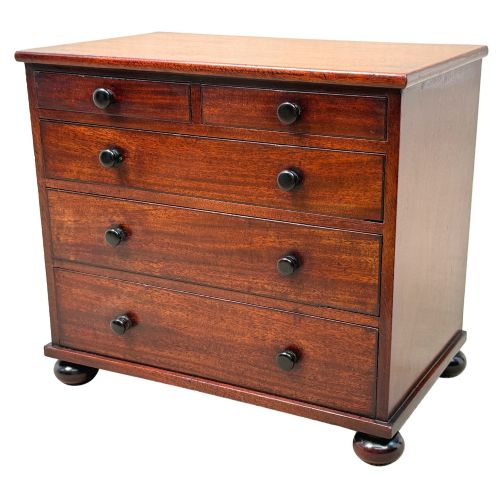
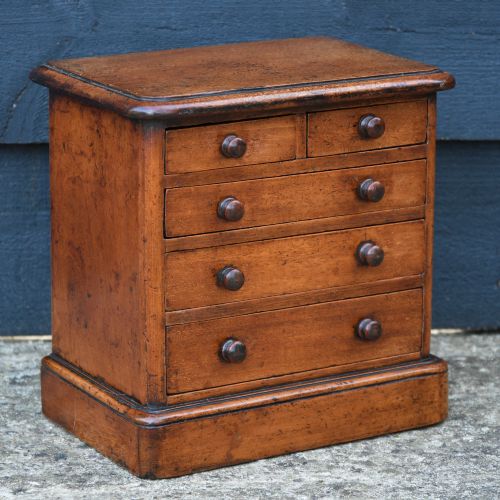
These victorian desktop drawers bring neatness to a work space, offering small-scale storage for letters, trinkets and specimens.
Victorian Desktop Drawers
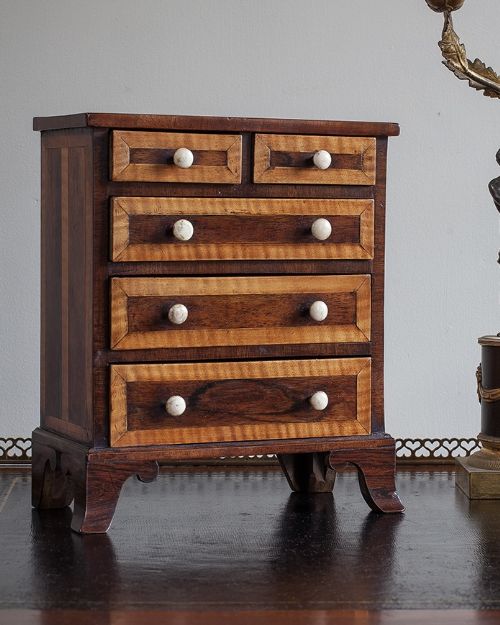
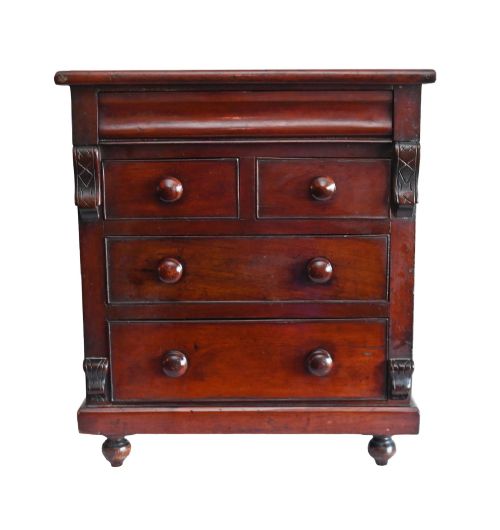
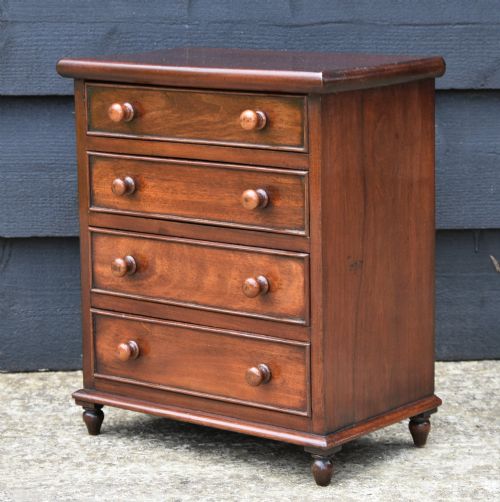
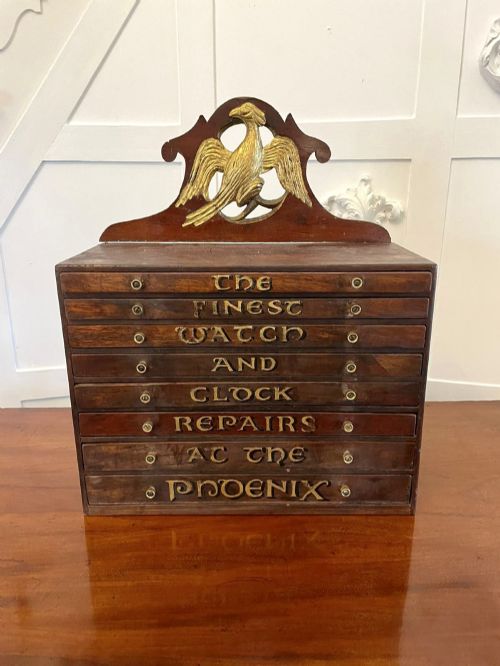
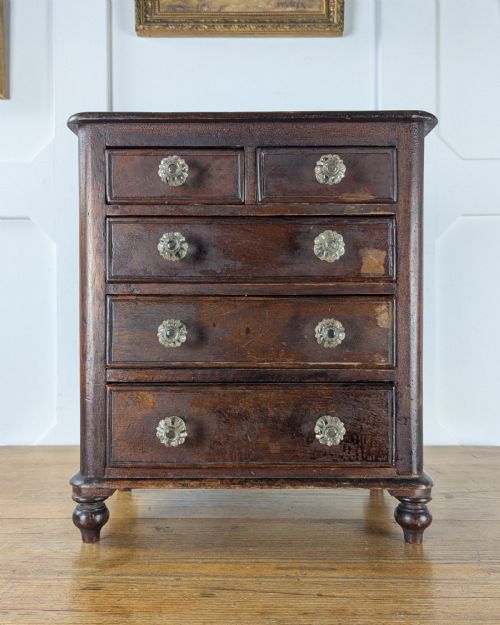
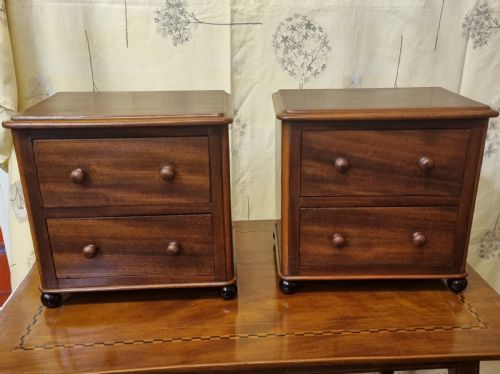
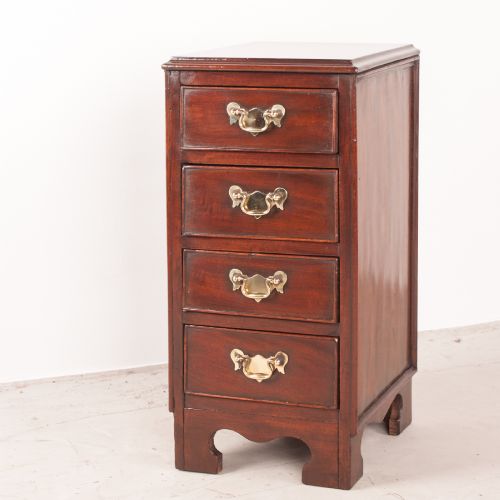
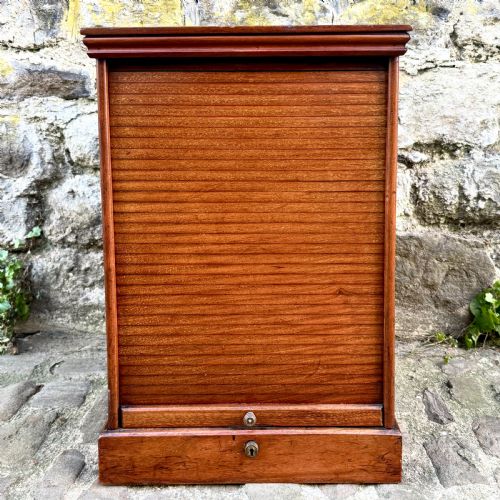
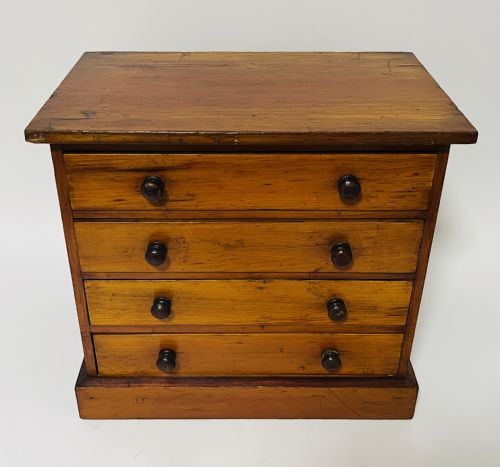
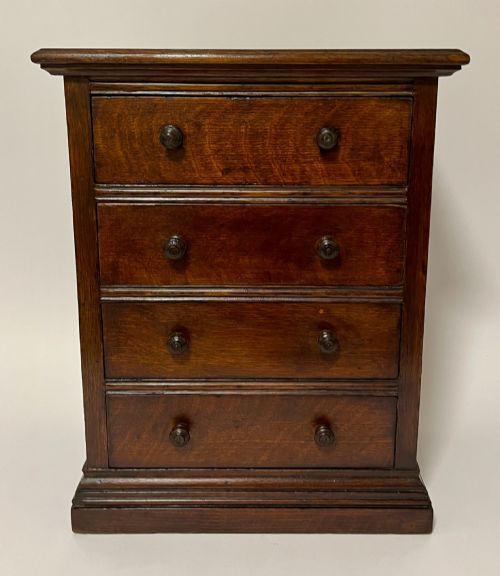
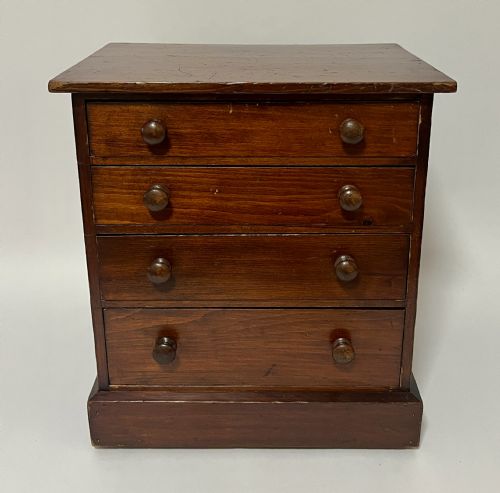
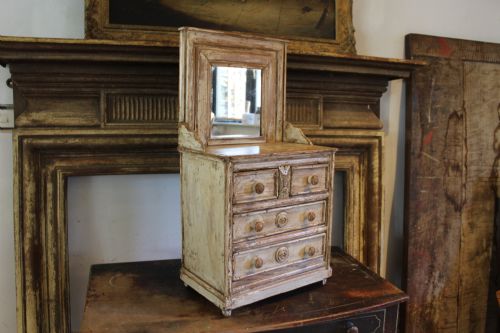
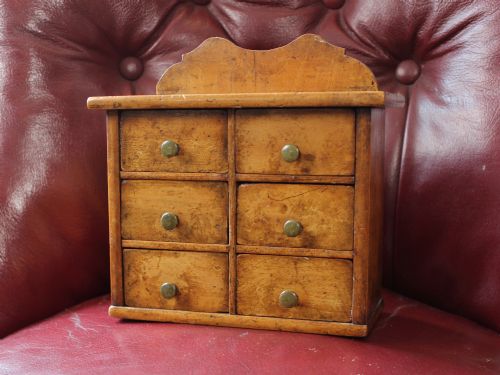
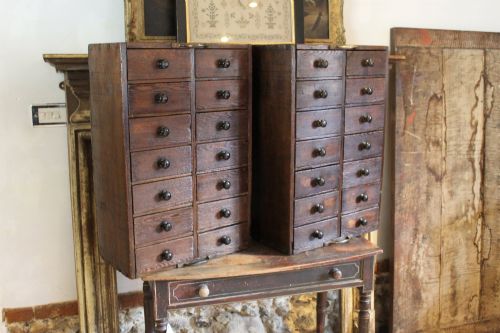
Victorian desktop drawers encompass miniature chests, specimen cabinets and table top boxes designed to sit on a writing surface or table. You will frequently find mahogany miniature chests of drawers alongside oak and walnut collectors cabinets from the nineteenth century.
The selection ranges from Scottish apprentice pieces and bowfront chests to table cabinets and small filing units. These compact pieces served various domestic and professional purposes, from storing correspondence to housing natural history specimens.
Materials and Construction
Cabinet makers utilised dense hardwoods such as mahogany, walnut and oak, often pairing them with secondary woods like pine. Surfaces display rich grain figures, including burr walnut and satin walnut, matched with brass handles, escutcheons and campaign mounts.
Construction methods involve dovetailed drawer boxes, turned feet and applied mouldings, with occasional inlaid details. Certain pieces incorporate secret compartments, glass panels or brass binding for added security and travel utility.
Victorian Desktop Drawers Retail Price Guide 2026
Typical asking prices for victorian desktop drawers among the pieces listed under this phrase on Sellingantiques today, from the lower quarter to the upper quarter. They describe what is for sale here now, not the wider market.
Listings feature woods including mahogany, oak, walnut, fruitwood, palmwood, pine and satin walnut alongside brass and glass.
Quality and Proportion
Quality rests in the precision of the cabinet work, particularly the tight tolerances of the dovetail joints and the smooth action of the drawers. Superior examples maintain correct architectural proportions and feature finely figured veneers rather than plain surfaces.
The choice of secondary timbers and the crispness of turned feet or brass hardware distinguish standard utility boxes from exhibition-grade specimen cabinets and finely finished apprentice pieces.
Short and Mason·D Napier and Sons
The Victorian Desktop Drawers Glossary
- Apprentice piece
- A small item demonstrating a craftsman's skill to attain master status. These miniature chests replicate full-sized furniture designs.
- Specimen cabinet
- A multi-drawer cabinet built to store natural history collections, coins or small artefacts. Interiors often feature shallow drawers.
- Wellington chest
- A tall, narrow chest of drawers secured by a hinged locking stile on one side. This design locks all drawers simultaneously.
- Writing slope
- A portable desk that opens to form a slanted writing surface. These objects frequently conceal secret drawers and stationery compartments.
- Bowfront
- A convex curved front facade popular in nineteenth-century cabinet making. This shape softens the corners of small chests.
Victorian Desktop Drawers: Frequently Asked Questions
How do I date a desktop cabinet?
Dating relies on observing timber choices, construction techniques and hardware styles characteristic of the nineteenth century. Mahogany and oak dominate earlier pieces, while Edwardian examples often show lighter utility formats.
Secondary indicators include drawer joint construction, such as hand-cut versus machine-cut dovetails, and the presence of brass campaign mounts.
What is a specimen cabinet?
A specimen cabinet contains multiple shallow drawers designed specifically for holding geological, botanical or entomological collections. The interior layout prioritises flat, dust-resistant storage.
These pieces usually feature tight-fitting panelled doors or glass fronts to protect delicate contents while allowing visibility.
Are secret drawers common?
Secret drawers appear in several nineteenth-century writing slopes, campaign chests and table cabinets. Makers concealed these small compartments behind false bottoms or removable partitions.
They provided a secure hiding place for confidential papers, jewellery or currency.