
Victorian Desktop Chest
These compact pieces bring orderly storage to a desk, and a victorian desktop chest offers practical compartmentalisation with distinct period character.
Victorian Desktop Chest
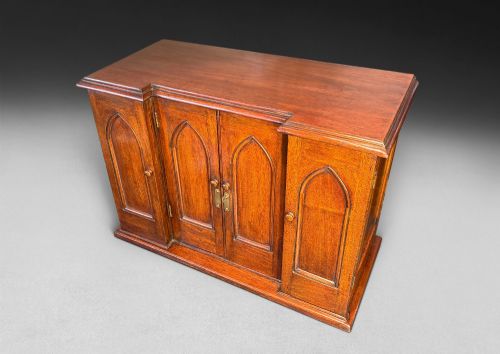
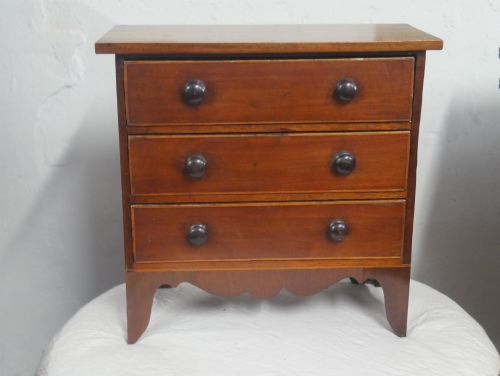
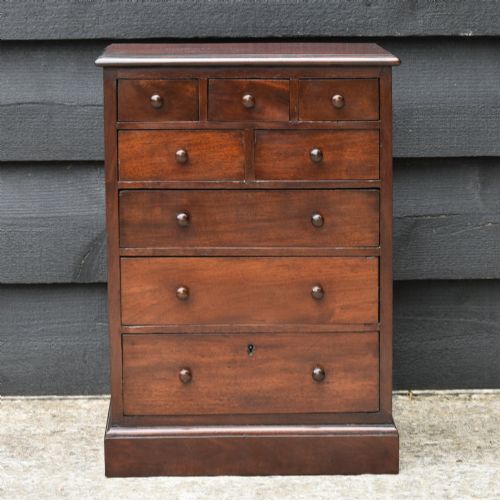
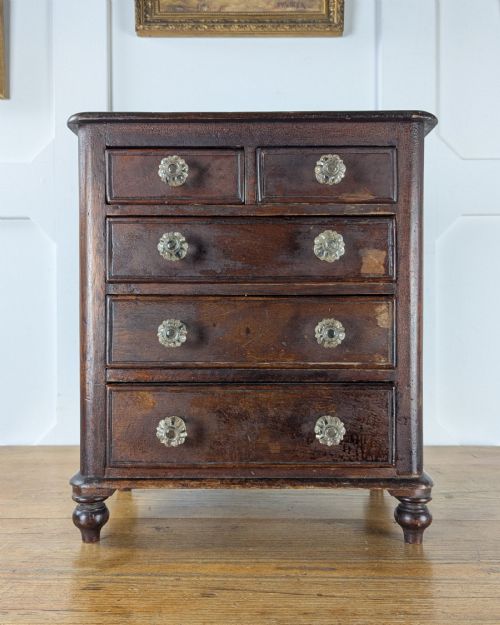
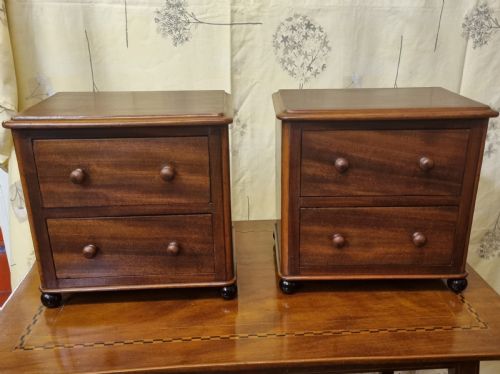
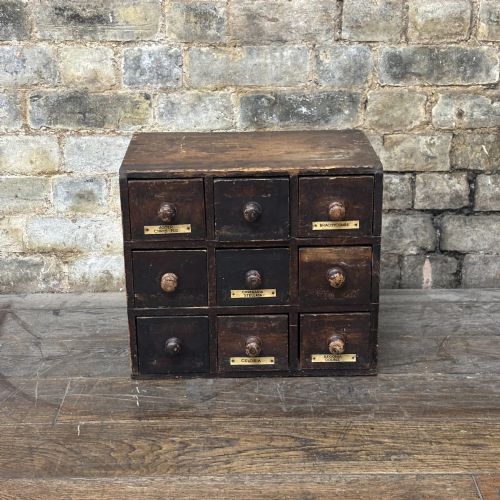
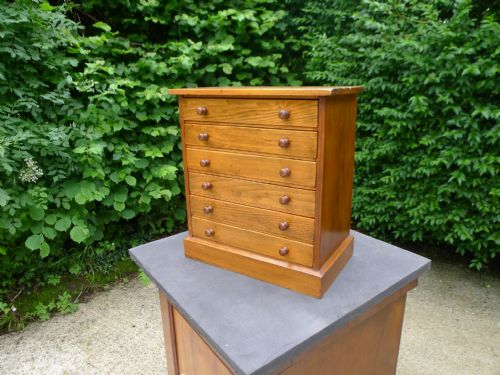
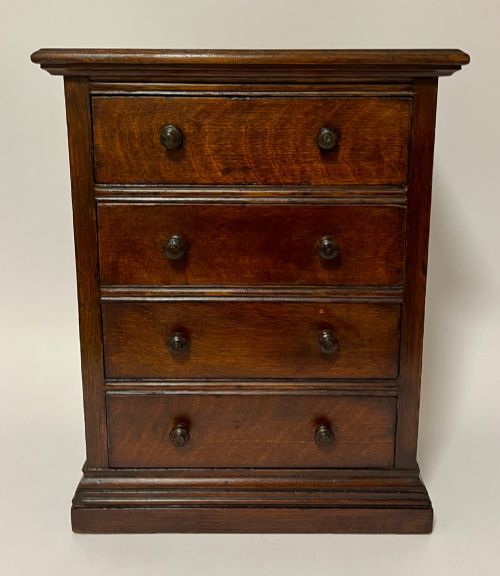
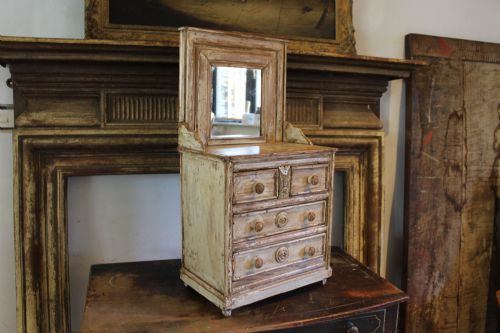
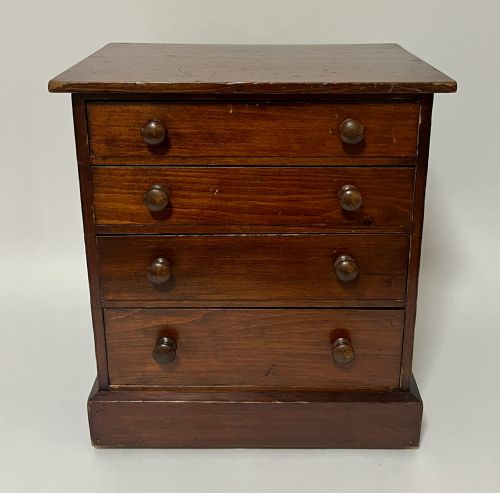
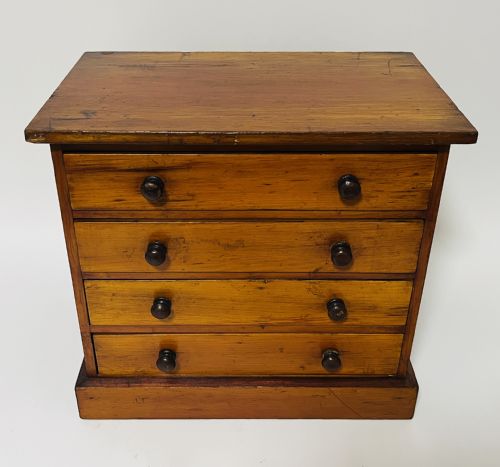
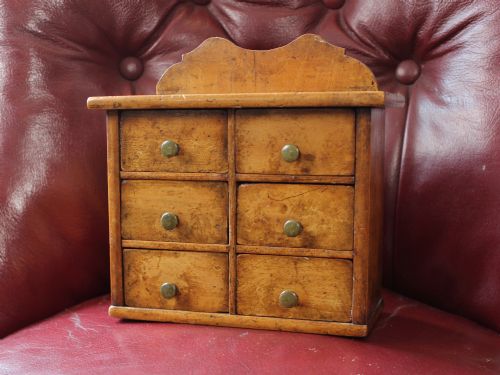
A victorian desktop chest provides small-scale storage designed to sit upon a table, desk, or surface rather than stand on the floor. These items range from miniature chests of drawers and apprentice pieces to specialised collectors cabinets and stationery boxes.
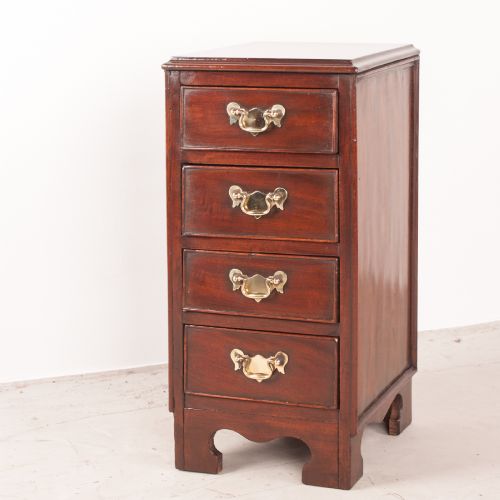
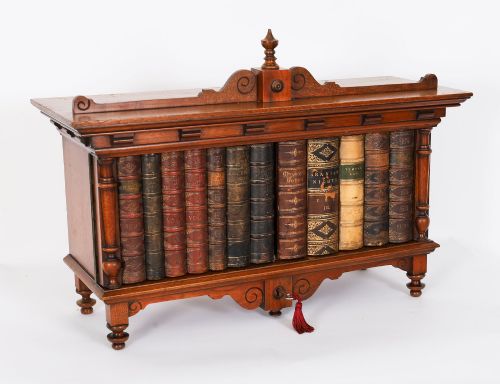
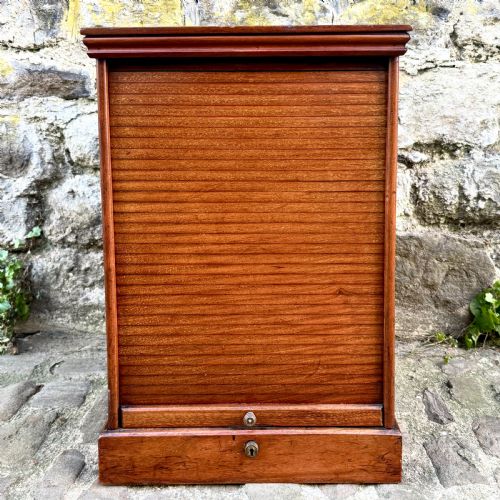
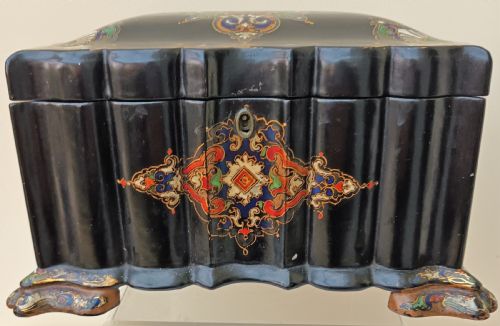
The pieces on this page span the nineteenth century and the Edwardian era, taking many functional forms including bowfront chests, spice drawers, and desktop campaign chests. Mahogany, walnut, and oak dominate the construction, reflecting the prevailing cabinet-making materials of the period.
Materials and Technique
Makers utilised dense timbers such as mahogany, walnut, burr walnut, and oak, often pairing them with brass handles, locks, and escutcheons. Fine details like ebonised moulding, string inlay, and turned feet appear across the smaller chest and cabinet formats.
Construction methods mirror full-sized furniture of the era, employing dovetailed drawer construction and secondary softwoods for internal framing. Surfaces receive polished finishes that highlight the natural grain of figured woods like burr walnut and pollard oak.
Listings incorporate woods such as mahogany, oak, pine, burr walnut, and fruitwood alongside brass and glass.
Distinguishing Quality
Quality rests in the choice of timber veneer and the precision of the small-scale joinery. Pieces featuring figured burr walnut, pollard oak, or matched mahogany flames demand greater skill from the cabinet-maker than plain pine or stained alternatives.
The refinement of internal elements, such as smoothly operating dovetailed drawers, fitted pen trays, and original brass locking mechanisms, separates standard utility pieces from finer display and collector items.
Manoah Rhodes & Sons Ltd·D Napier & Sons
The Victorian Desktop Chest Glossary
- Apprentice piece
- A small item demonstrating skill created by a craftsman seeking master status. These often replicate full-scale furniture forms in miniature.
- Bowfront
- A curved front facade curving outwards at the centre. This shape appears frequently on miniature mahogany chests of drawers from the nineteenth century.
- Collectors cabinet
- A small multi-drawer housing designed to organise natural history specimens, coins, or small objects. They often feature shallow drawers to protect delicate items.
- Wellington chest
- A tall, narrow chest of drawers secured by a locking side stile that fastens over the drawer edges. Named after the Duke, this form appears in scaled-down desktop versions.
- Escutcheon
- A protective plate surrounding a keyhole, usually fashioned from brass. They accent the timber facades of desktop boxes and cabinets.
Victorian Desktop Chest: Frequently Asked Questions
What were victorian desktop chests used for?
These small chests served diverse organisational purposes in studies, offices, and drawing rooms. Owners stored correspondence, writing instruments, tobacco, and small collections within their fitted drawers.
Specialised variants functioned as specimen cabinets for natural history items, seed chests for florists, or secure storage for valuable personal documents.
How do I date a desktop chest?
Dating relies on observing timber choices, construction techniques, and hardware styles. Mid-nineteenth-century examples frequently employ solid mahogany or rich walnut veneers with hand-cut dovetails.
Later Victorian and Edwardian pieces often introduce stained pine, simpler brass work, or alternative configurations like A4 filing formats reflecting changing office needs.
Are miniature chests the same as apprentice pieces?
While the terms are often used interchangeably, miniature chests simply refer to small-scale furniture produced for desktop use or dollhouses. Traditional apprentice pieces specifically denote demonstration items made by journeymen.
Both categories share the meticulous scaling and fine joinery typical of nineteenth-century cabinet-making traditions.
How do I care for a wooden desktop chest?
Keep wooden chests away from direct heat sources and strong sunlight to prevent the timber veneers from drying and cracking. Maintain a stable indoor humidity level to protect delicate joints and brass fittings.
Apply a traditional beeswax polish occasionally to nourish the wood and preserve the historic patina.