




Victorian Desk Casket
A victorian desk casket is a sturdy tabletop container built to organise letters and writing tools, bringing handsome craftsmanship directly into a modern study.
Victorian Desk Casket
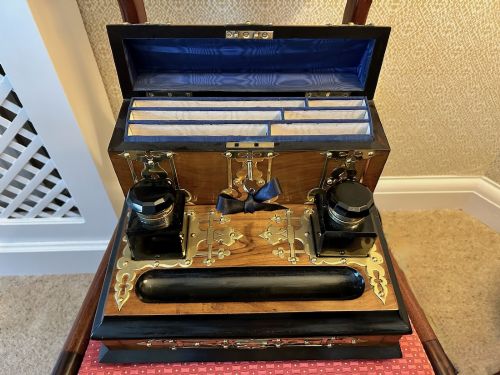
When you search for a victorian desk casket, you encounter sturdy desktop containers designed to hold letters, stationery, and writing implements. The most common examples on this page take the form of stationary boxes and letter cases, often featuring sloping lids or hinged doors that open to reveal partitioned interiors.
Most pieces date from the nineteenth century, spanning eras from the mid-Victorian period to the turn of the twentieth century. Alongside standard stationery boxes, the selection includes related desk accessories and decorative caskets fashioned from sturdy timbers.
Makers designed these caskets for daily service on writing tables and library desks. Their varied internal layouts accommodate envelopes, pens, and sealing wax, reflecting the correspondence habits of the period.
How They Were Made
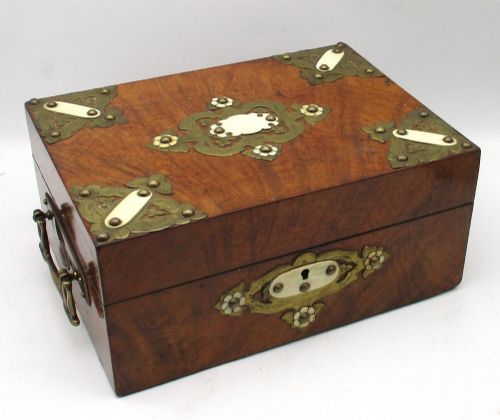
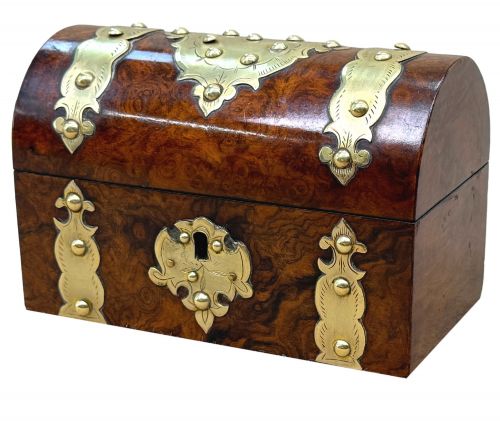
Cabinet makers built these pieces using dense hardwoods like walnut, burr walnut, coromandel, and oak as foundational materials. Artisans often enhanced these timber surfaces with brass mounts, strapwork, and bound corners to strengthen the structure and add decorative contrast.
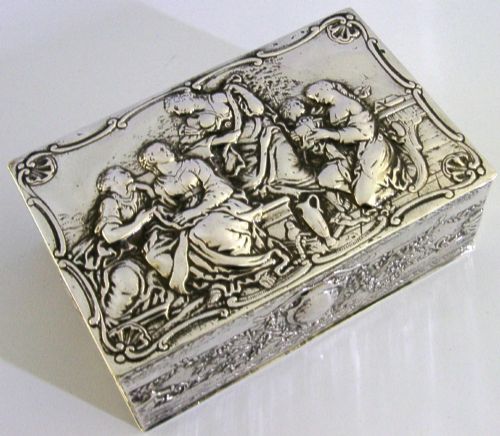
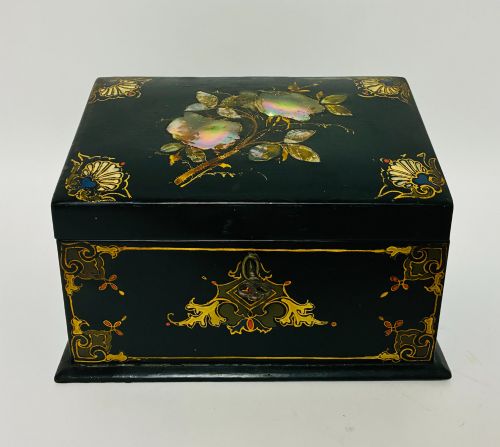
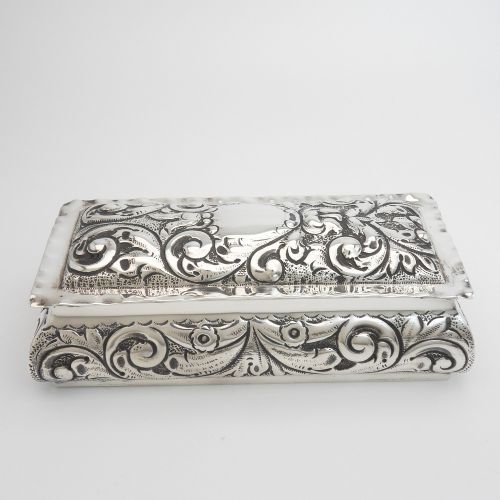
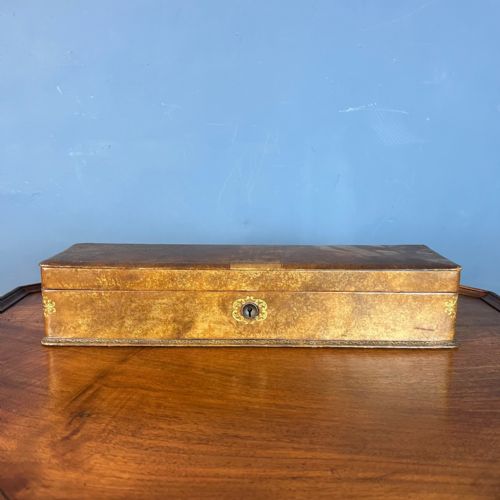
Finer examples incorporate specialist decorative techniques such as Tunbridge ware, marquetry inlay, or tooled leather panels. Metal elements like ormolu and copper repoussé appear alongside glass and bone details, showing a mix of materials deployed across the nineteenth century.
Some nineteenth-century writers kept their secrets behind locked sloping lids and tiny brass keys.
What Varies in Quality
The choice of primary timber and decorative veneer dictates the initial tier of quality. Dense exotic woods like coromandel and highly figured burr walnut elevate a piece above standard oak or mahogany alternatives.
Construction detail separates ordinary desk boxes from exceptional ones. Heavier gauge brass mounts, precise marquetry, fitted interior compartments, and intact linings indicate skilled workshop production.
A & J Zimmerman Ltd·Jane Brownett Alexander Jones
The Victorian Desk Casket Glossary
- Stationery box
- A desk accessory designed specifically to hold writing paper, envelopes, and correspondence. These boxes frequently feature tiered slots or sloping lids.
- Coromandel wood
- A dense, heavily figured dark timber imported from Asia, prized by nineteenth-century cabinet makers for luxury caskets. It often shows contrasting pale streaks.
- Ormolu
- Gilt bronze mounted onto furniture or decorative boxes. It provides a bright metallic contrast against dark wood surfaces.
- Tunbridge ware
- Woodworking technique involving tiny mosaic tiles made from different coloured woods to form geometric or pictorial patterns. It appears on select Victorian boxes.
- Repoussé
- Metalworking method where an artist hammers a design from the reverse side to form a raised relief on the front. This technique decorates Arts and Crafts copper boxes.
Victorian Desk Casket: Frequently Asked Questions
What fits inside a stationery box?
These boxes accommodate folded letters, writing paper, and standard envelopes within their wooden partitions.
Many examples include slots for stamps and pen rests built directly into the interior framework.
How were desk caskets used?
Owners placed them on library tables and writing desks to keep correspondence tidy and private.
They provided secure storage for writing materials before the widespread use of manufactured envelopes.
Are brass mounts original?
Cabinet makers applied brass corners, straps, and escutcheons during the initial construction to protect edges and reinforce joints.
Heavier brass mounts usually indicate a higher grade of nineteenth-century workshop production.
How do I date a wooden casket?
Makers relied on prevailing nineteenth-century styles, transitioning from plain walnut bodies to Gothic revival details and Arts and Crafts copper work.
Timber choice and interior paper linings also offer clues to the specific decades of manufacture.