





Decorative Brass Casket
A decorative brass casket offers a secure yet ornamental repository for keepsakes, bringing tactile weight and metallic sheen to a desk or dressing table.
Decorative Brass Casket
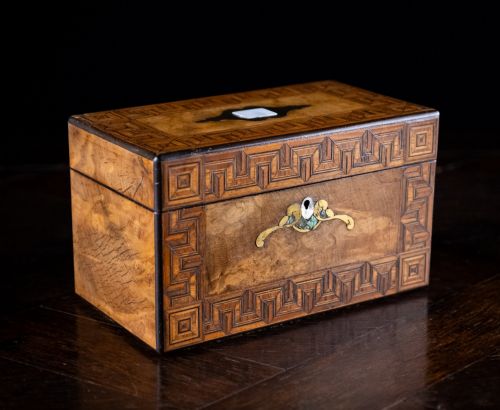
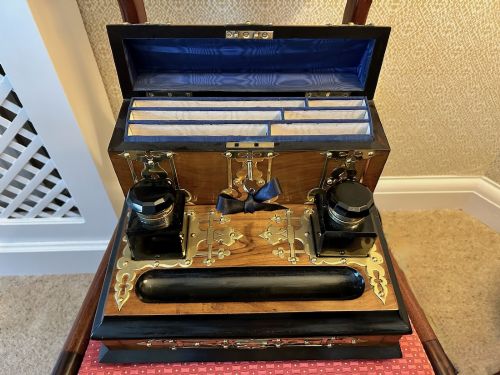
A decorative brass casket typically takes the form of a heavily mounted wooden box designed to hold jewellery, stationery, or writing accessories. These pieces span the nineteenth century, including Victorian and Regency iterations, alongside later continental European examples. You will frequently encounter brass-bound wooden bodies, fitted interiors, and hinged lids built for domestic use.
The objects serve various functional roles, functioning as sewing cases, games boxes, desk stands, and letter caskets. Many incorporate specific structural shapes such as the sarcophagus form or domed lids, reflecting the prevailing taste of their respective decades. Their primary purpose remains the containment of personal valuables with considerable visual presence.
On this page, the pieces lean heavily towards nineteenth-century British and French manufacture, incorporating auxiliary materials alongside the core metalwork. Walnut, burr walnut, rosewood, and coromandel frequently form the primary structure upon which the brass mounts and inlays sit. Buyers seek these containers for their combination of fine cabinetry and robust metal ornamentation.
Materials and construction methods
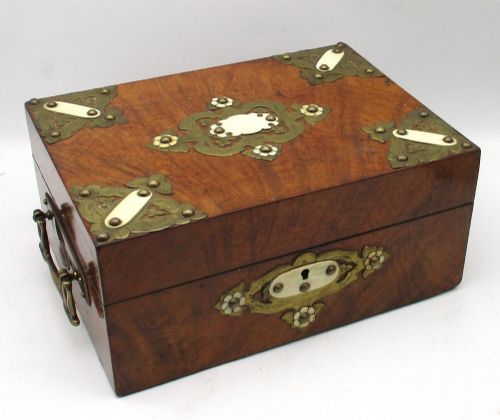
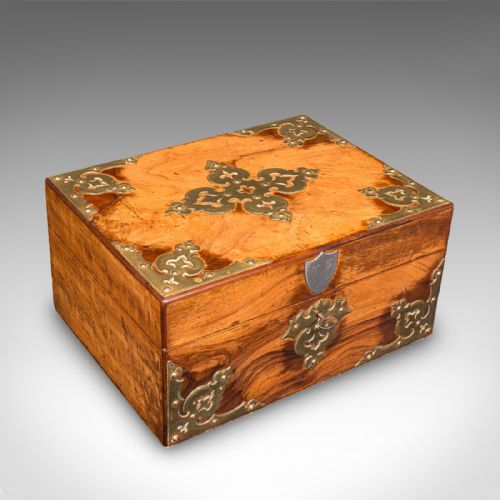
Makers built these containers using dense hardwoods such as walnut, coromandel, and rosewood as a foundation, applying brass through straps, banding, and cast mounts. Artisans secured metal components with small pins and screws to reinforce corners and lids. This combination of timber and metal provided structural rigidity while offering a contrasting play of warm wood grain against polished brass.
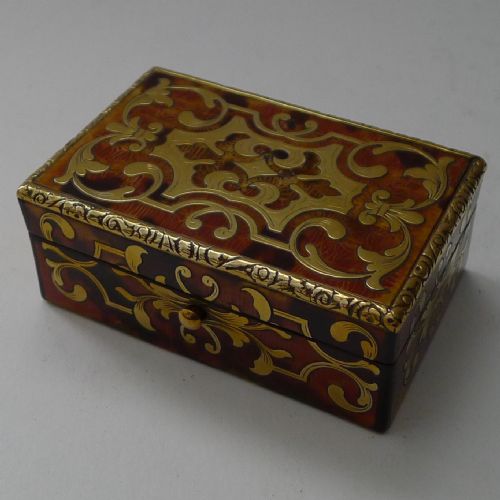
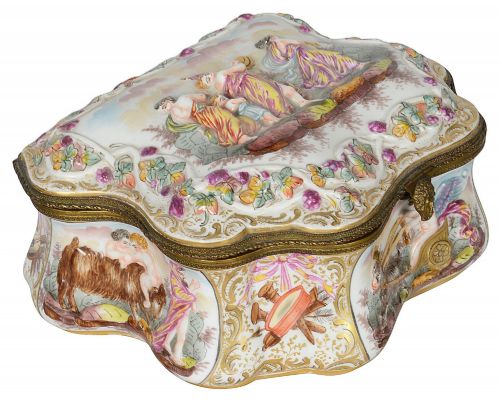
Surface decoration often involved intricate inlay techniques, integrating mother of pearl, enamel, malachite, agate cabochons, and specimen bone into the wood or metal framework. French pieces frequently utilised Boulle work or applied porcelain plaques, while other examples employed cloisonné enamel or leather coverings. The interiors typically featured velvet, silk, or fitted wooden compartments designed for specific domestic tools.
Listings feature nineteen-century periods predominantly, alongside early twentieth-century examples utilising brass, walnut, bone, and enamel.
Distinctions in quality and execution
The standard of a piece rests largely on the precision of its brass mounting and the complexity of its secondary inlays, such as malachite or pietra dura. Finer examples display seamless integration between the metal straps and the timber substrate, with hand-chiseled detailing on the cast brass elements. Poorer execution reveals uneven gaps around metal inlays and simplistic, unadorned wooden carcasses.
Interior fittings and secondary materials further distinguish superior items, particularly those featuring comprehensive writing slopes, secret drawers, or undamaged silk linings. The choice of exotic woods like burr walnut and coromandel dictates the baseline status of the object before metalwork is applied. Overall coherence between the exterior brass decoration and the internal architecture defines the upper tier of these works.
ERHARD AND SOHNE·C.G. HOPE HASTINGS
The Decorative Brass Casket Glossary
- Boulle
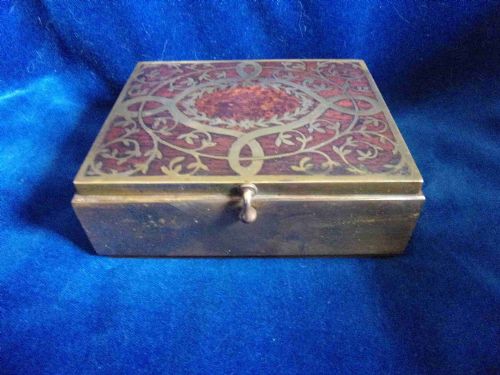
- A method of marquetry using brass and tortoiseshell, named after French cabinetmaker André-Charles Boulle. It creates an ornate surface pattern of metallic contrast against a dark background.
- Coromandel
- A dense, heavily grained timber from Asia used extensively in high-end nineteenth-century box making. Its rich brown colour and dark stripes make it a prized substrate for brass binding.
- Cloisonné
- An enamelwork technique where metal wire forms small compartments on a surface, which are then filled with coloured paste and fired. It appears on select decorative caskets from the early twentieth century.
- Pietra dura
- An artistic technique using cut and fitted polished coloured stones to create pictorial or geometric inlay designs. It frequently ornaments the lids of superior Victorian stationery boxes.
- Sarcophagus
- A box shape featuring a sloped, gabled lid resembling an ancient stone coffin. Regency and Victorian makers frequently applied this profile to sewing and tea caddies.
Decorative Brass Casket: Frequently Asked Questions
What were decorative brass caskets used for?
These containers served practical domestic functions, holding items such as writing materials, sewing implements, and personal jewellery. Their sturdy construction protected fragile keepsakes from dust and damage while remaining visually prominent in reception rooms.
Over time, their roles expanded to include games storage and specialised desk accessories. They sat on tables and desks as both functional utilities and displays of household refinement.
How do I identify a Victorian brass box?
Victorian examples typically rely on substantial brass banding, escutcheons, and corner brackets affixed to dark hardwoods like walnut or coromandel. Look for robust construction, often accompanied by fitted velvet interiors and manufacturer stamps on the lock plates.
Stylistic cues include Gothic Revival influences, heavy brass handles, and occasionally inlaid mother of pearl or malachite. The joinery and weight of the metal components generally point towards mid-to-late nineteenth-century British manufacturing methods.
Are Regency caskets different from Victorian ones?
Regency pieces often display lighter, more classical proportions with characteristic shapes like the sarcophagus profile. They frequently utilise rosewood or leather coverings, such as red Russia-leather, with restrained brass stringing rather than heavy corner mounts.
Victorian boxes subsequently favoured heavier mounting, bolder wood grains like burr walnut, and more eclectic revival styles. The transition reflects a shift from neoclassical elegance to the more exuberant tastes of the later nineteenth century.
How should I care for a wood and brass box?
Keep the box away from direct sunlight and extreme humidity changes to prevent the timber from warping and the wood veneers from lifting. Regular dusting with a dry, soft cloth protects the polished surfaces without introducing moisture.
Brass elements can be left with their natural aged patina, avoiding harsh metal cleaners that might damage the surrounding wood or inlay materials. Conditioning the wood occasionally with appropriate wax helps maintain the lustre of species like walnut and rosewood.