


Victorian Desk Bell
When you handle a Victorian desk bell, you hold a functional piece of nineteenth-century communication that summoned staff across grand country houses and busy shops.
Victorian Desk Bell
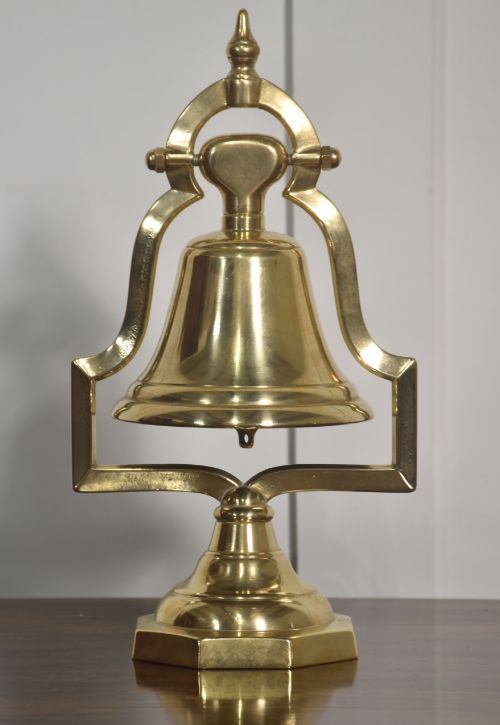
A victorian desk bell serves as a practical desktop accessory designed for summoning assistance in domestic and commercial settings. The selection ranges from simple brass counter models to ornate sterling silver table pieces and novelty forms.
Most examples originate from the nineteenth century, with brass and bronze standing as the most common materials for heavy-use counter bells. Domestic versions often feature silver plating or solid sterling silver alongside glass elements.
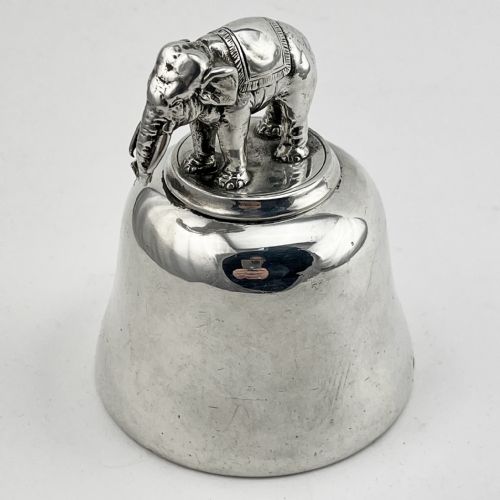
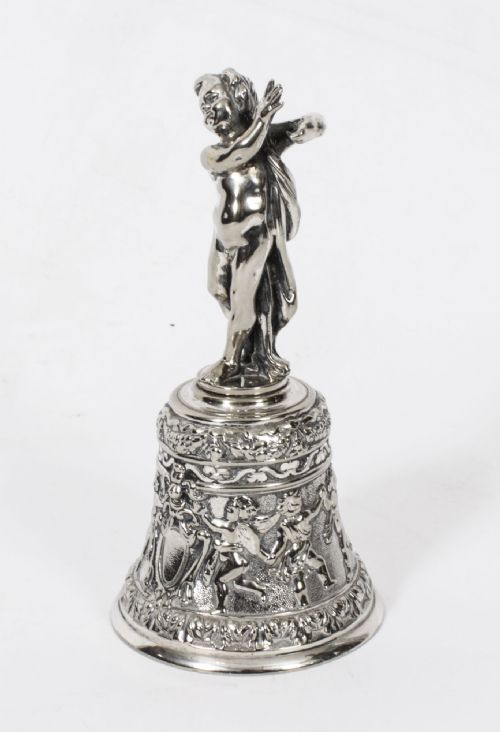
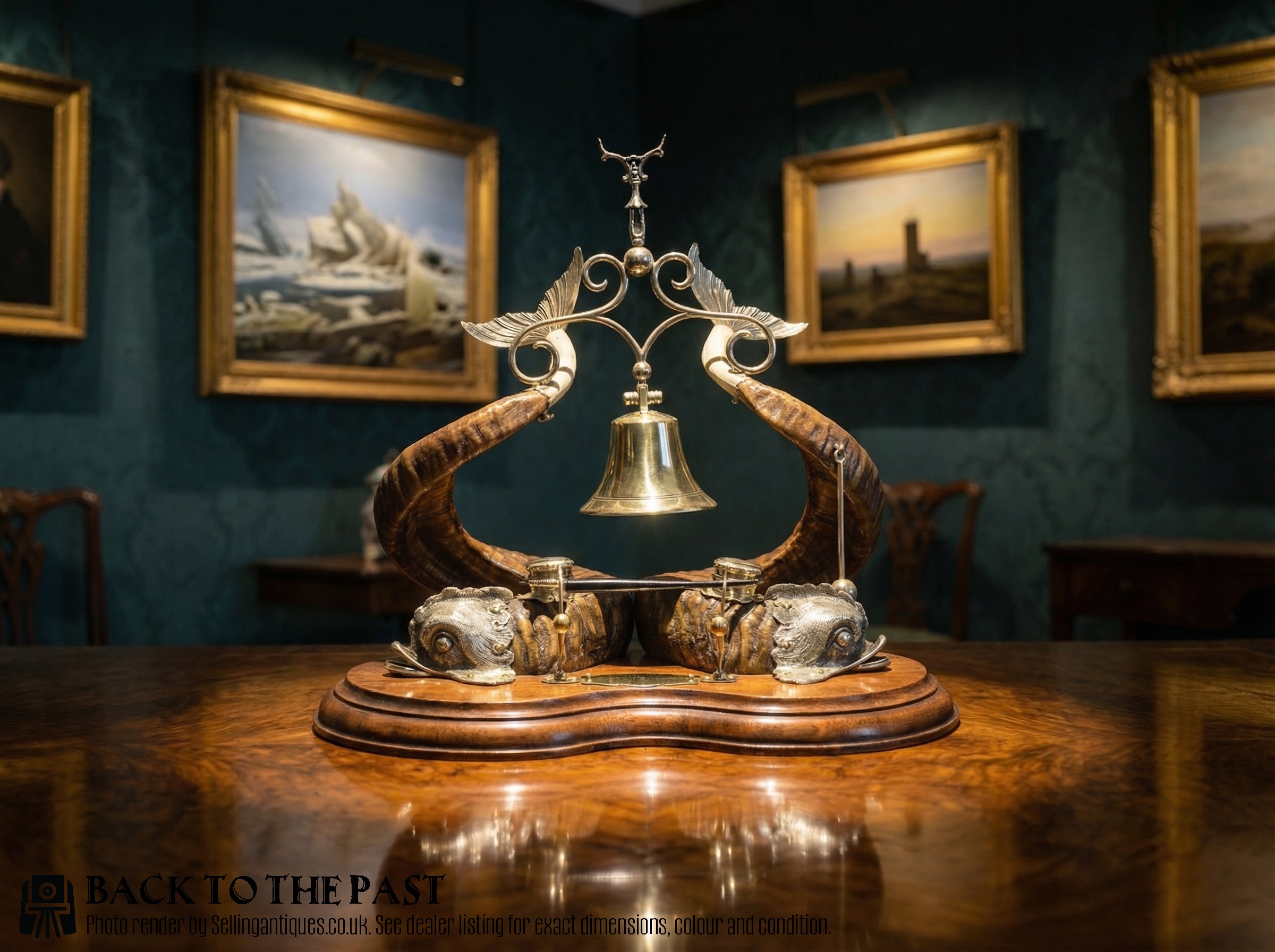
Forms vary from standard plunger desk bells to hand-rung schoolmaster styles and elaborate figural designs incorporating cherubs or animals. Buyers frequently encounter desk accessories paired with inkwells or mounted on wooden stands.
How they were made
Metalworking techniques dominate the production of these objects, utilising cast brass, bronze, and silver plate to create resonant domes and sturdy bases. Artisans shaped metal through casting and polishing, applying ornate detailing to figural handles and mountings.
Combined media pieces incorporate glass bodies with sterling silver mounts or utilise wooden bases for stability. Silver elements often bear hallmarks that indicate the year of manufacture and the assay office responsible for testing.
Victorian Desk Bell Retail Price Guide 2026
Typical asking prices for victorian desk bell among the pieces listed under this phrase on Sellingantiques today, from the lower quarter to the upper quarter. They describe what is for sale here now, not the wider market.
Listings feature brass, bronze, and sterling silver as the primary materials for desk bells across the nineteenth century.
What varies in quality
The resonance and clarity of the chime depend entirely on the alloy composition and the casting precision of the bell dome. Solid cast brass and sterling silver examples produce a cleaner, more sustained tone than plated or mixed metal alternatives.
Detailing in the handle and base separates standard utility items from high-end pieces, particularly in figural designs featuring animals or cherubs. Heavier weight and substantial metal thickness indicate superior construction intended for daily commercial use.
Dwerrihouse And Bell·Peerless Mathias Bauerle·Mathias Bauerle·E White Of Manchester·Henry Marc
The Victorian Desk Bell Glossary
- Counter bell
- A spring-loaded bell designed to be struck on top for immediate service in shops and hotels. These items usually feature a heavy brass base to prevent movement during use.
- Sterling silver
- An alloy containing ninety-two point five percent silver by mass, frequently utilised in domestic table bells. This material carries official hallmarks for identification.
- Figural handle
- A grip shaped into a recognizable human, animal, or mythical form rather than a plain stem. These decorative elements indicate a higher grade of manufacture.
- Silver plate
- A thin layer of silver applied over a base metal such as brass or copper. This technique offered the appearance of solid silver at a lower production cost.
- Bronze
- An alloy consisting primarily of copper combined with tin, prized for its durability and acoustic properties. It appears frequently in heavier bells and gongs.
Victorian Desk Bell: Frequently Asked Questions
How do these bells work?
Most desk bells operate via an internal spring mechanism where pressing the top plunger strikes the interior clapper against the dome.
Hand-held varieties rely on swinging the entire bell body to strike the internal suspended clapper manually.
Where were they used?
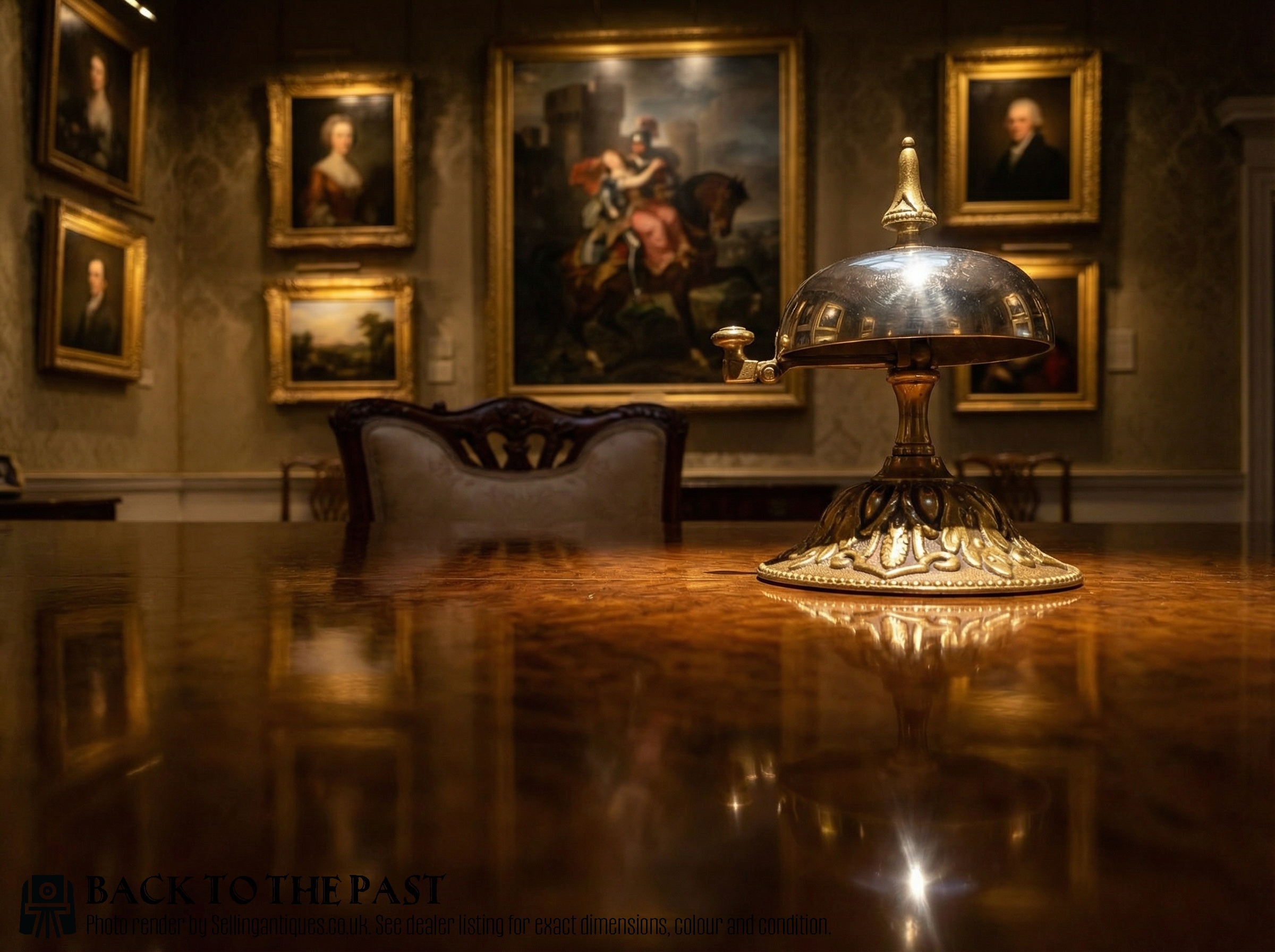
These items stood on merchant counters, hotel reception desks, and writing tables in wealthy country houses to summon attendants.
Commercial versions handled heavy daily use by customers and staff in busy Victorian shops.
How do I clean the metal?
Polishing requires appropriate metal creams applied gently with a soft cloth to preserve surface detail and original patination.
Avoid abrasive cleaners that remove silver plating or scratch the underlying brass and bronze.
Are older bells marked?
Sterling silver examples carry British hallmarks indicating the date letter, maker, and assay office for precise dating.
Brass and bronze models rarely feature maker marks, requiring stylistic comparison to determine the period of origin.