


Vintage Writing Set
A vintage writing set gathers the essential tools for correspondence onto a desk stand, combining cut glass, brass, and precious metals for daily use.
Vintage Writing Set
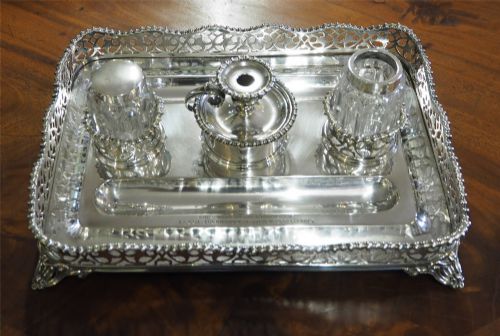
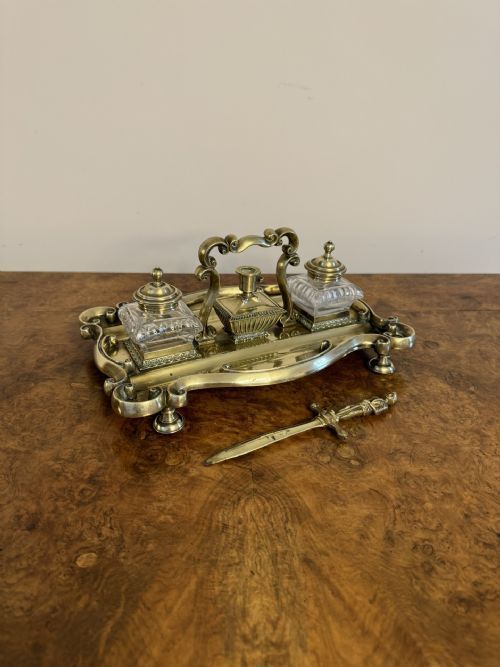
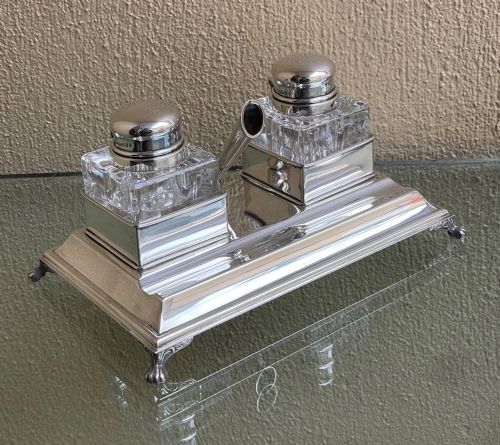
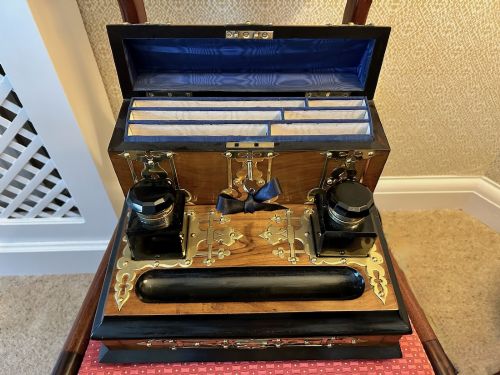
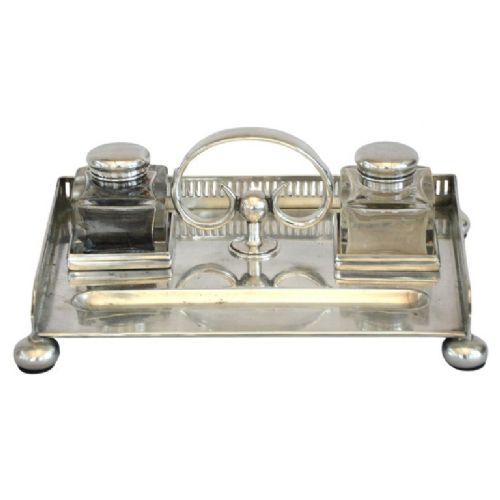
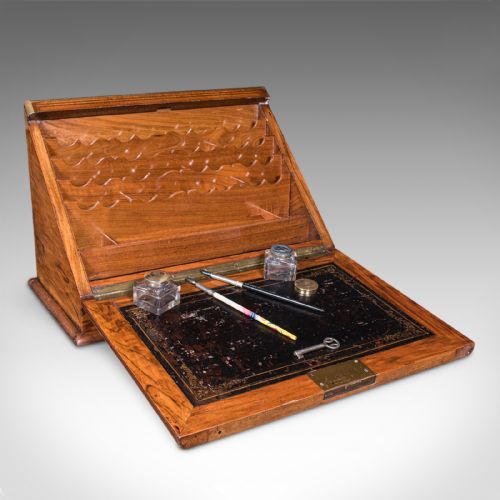
A vintage writing set takes many forms on the desk, appearing as fitted inkstands, double inkstands with glass inkwells, stationery cases, and desktop tidies. These pieces span the eighteenth century, the Victorian and Edwardian eras, up to the Art Deco period and the mid twentieth century.
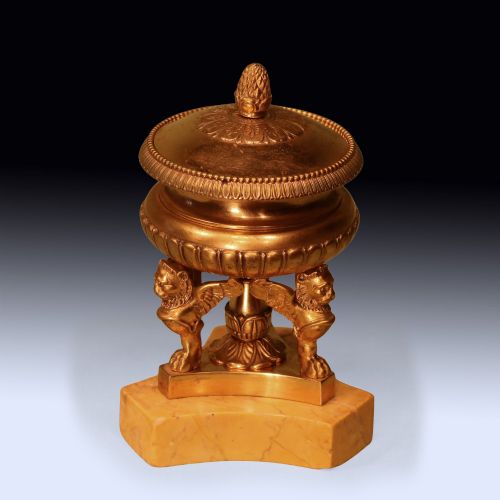
Makers fashioned these accessories in various regional traditions, producing English silver plated stands, French ormolu mounts, Dutch Delft faience, and Anglo-Indian or Kashmiri papier-mâché pieces. Buyers frequently encounter brass and mahogany desk stands alongside solid silver inkstands and porcelain inkwells.
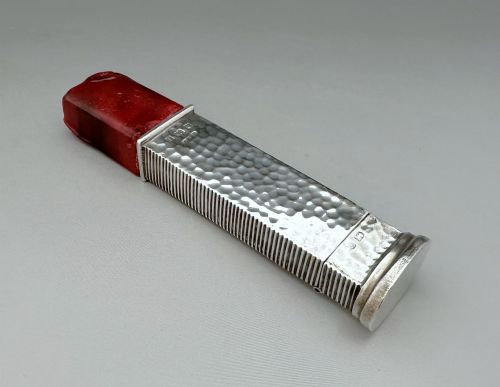
The contents of a vintage writing set often extend beyond simple ink pots to include vesta cases, sealing wax holders, candlesticks, rocker ink blotters, and intaglio coloured glass seals. Each configuration reflects the writing habits and stationery needs of its original period.
Materials and Construction
Craftsmen built the foundations of these sets from dense timbers such as mahogany, walnut, coromandel, rosewood, and ebony, frequently mounting them with brass, ormolu, or gilt bronze. Wood surfaces often received intricate carving, marquetry inlay, or brass banding to frame the central ink bottles.
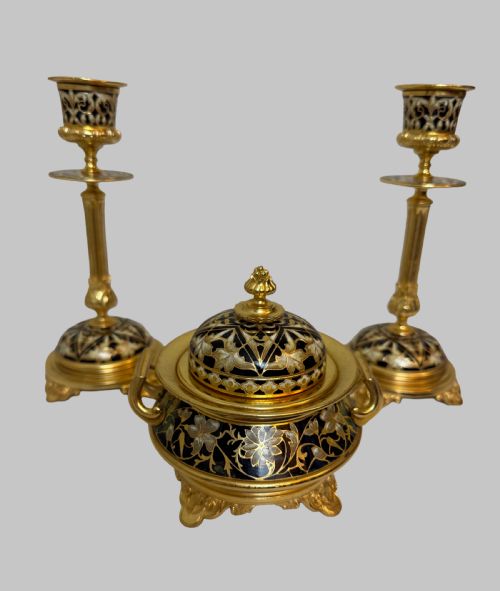
Metal components involved silver plating, sterling silver, silver gilt, and cast brass, often shaped into ornate frames or heavy capstan inkwells. Workshops utilised champleve enamel and porcelain from factories like Minton and Meissen to add colour and decoration to the desk surface.
Glassmakers produced heavy cut glass and crystal inserts for inkwells, fitted with hinged silver or brass lids to prevent evaporation. Natural stones including Sienna marble, Ashford marble, green onyx, lapis lazuli, and various marbles provided stable, weighty bases for the desk stands.
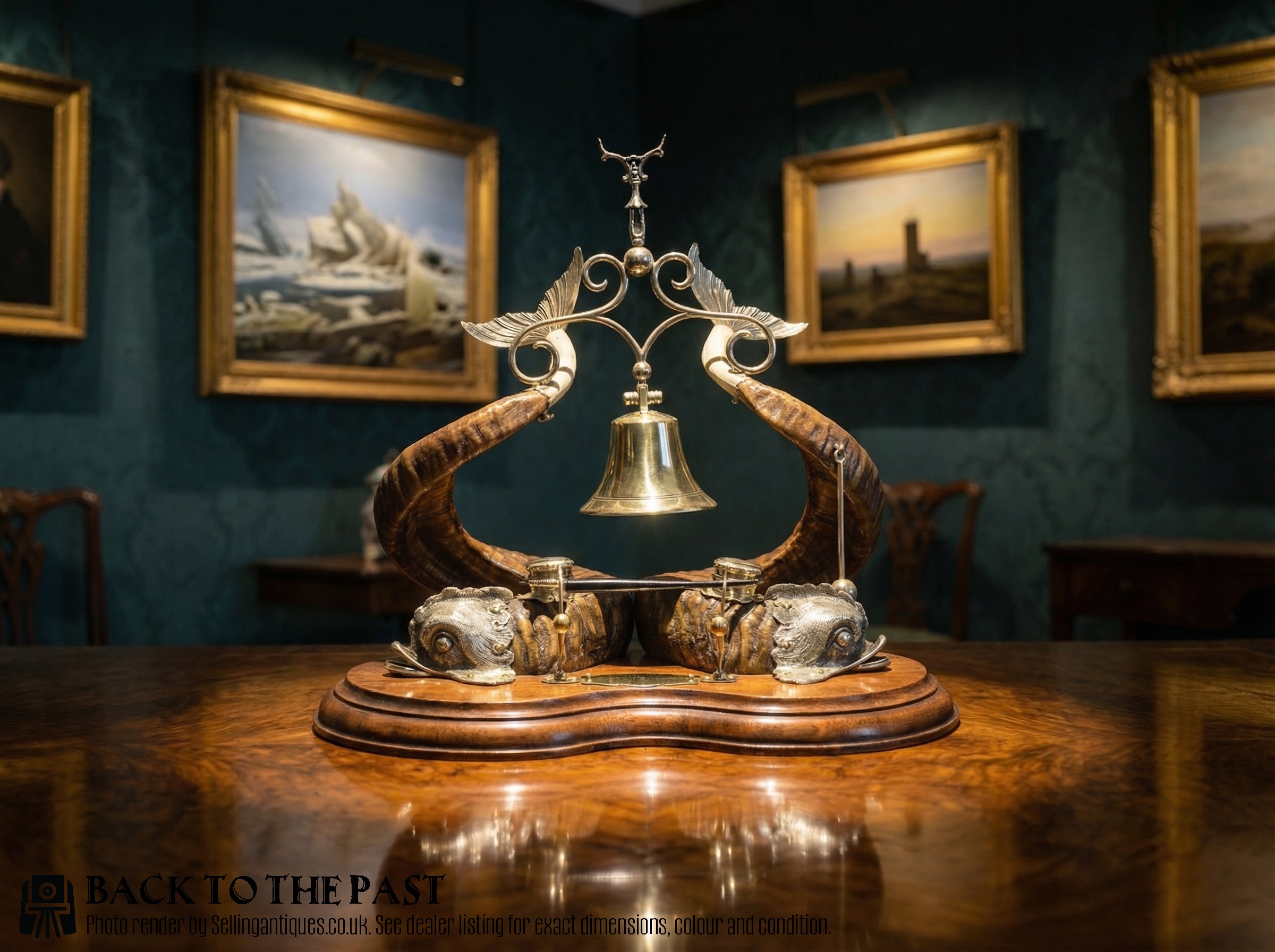
An Admiral's writing station allows a busy sea captain to maintain correspondence without rolling across the cabin floor.
Distinctions in Execution and Materials
Quality rests upon the choice of materials and the integrity of the fitted components, separating standard production items from exceptional workshop output. Heavy cast ormolu, solid sterling silver mounts, and native hardwood bodies indicate superior manufacture compared to lighter plated alternatives.
The presence of original, matching elements defines the better examples on the desk. Sets retaining their original cut glass ink bottles, matching seals, and integrated candlesticks or clocks demonstrate a higher degree of initial design and preservation.
Elkington·Walker And Hall·Marson & Jones·James Cartland & Sons·Minton·Meissen
The Vintage Writing Set Glossary
- Inkstand
- A tray or stand holding one or more inkwells, often with dedicated pen rests and space for sealing wax. These portable writing stations kept desktop equipment organised.
- Vesta case
- A small pocket or desk box designed to hold matches, typically fitted with a striking surface on the base. They match the materials of the wider writing set.
- Champleve
- An enamelling technique where troughs are carved into a metal surface and filled with vitreous enamel before firing. It appears frequently on nineteenth-century brass and bronze mounts.
- Intaglio
- A design carved into the face of a stone or glass seal so that it leaves a raised impression in wax. Sets often include multiple interchangeable seals.
- Papier-mache
- A composite material made from paper pulp or layers of paper bound with glue, then painted and lacquered. Kashmiri and Victorian pieces utilise this technique for lightweight desk tidies.
Vintage Writing Set: Frequently Asked Questions
What is included in a vintage writing set?
A vintage writing set typically includes an inkstand or tray, one or more glass inkwells with hinged lids, and dedicated rests for pens. Many examples incorporate companion pieces such as stamp boxes, vesta cases, rocker blotters, and sealing wax.
Larger configurations found on this page may also feature candlesticks, pocket watches mounted in capstan inkwells, or technical drawing instruments. Each element served a specific function in the preparation and dispatch of handwritten letters.
How do I date a brass desk stand?
Dating a brass desk stand involves examining the casting quality, the style of decoration, and the construction of the accompanying inkwells. Pieces from the early nineteenth century often display Regency or Georgian neoclassical motifs, while items from the 1880s and 1890s frequently show ornate Victorian ornamentation or early Art Nouveau tendrils.
Markings on the metal, maker stamps, and the presence of registration numbers or hallmarks provide more precise chronological markers. The material of the ink bottle inserts, from heavy hand-cut lead crystal to later machine-pressed glass, also assists in determining the decade of manufacture.
Can I still use an antique inkwell?
Antique inkwells can hold modern fountain pen ink, provided the glass or ceramic liner is free of cracks and the metal lid closes tightly. Users should inspect the interior for historical ink corrosion and wash the glass thoroughly before filling.
Metal components, particularly silver plate and brass, require protection from wet ink spills to prevent tarnishing and corrosion of the hinges. Many collectors prefer to display these sets as decorative desk accessories rather than exposing them to daily writing use.
What is Ashford marble?
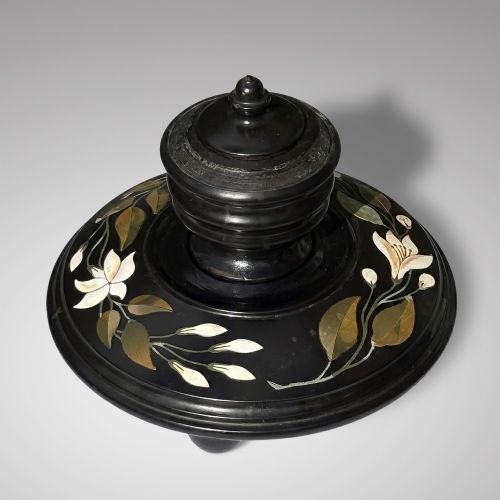
Ashford marble is not a true marble, but a dense, dark local limestone from Derbyshire that takes a high black polish. Craftsmen inlaid this stone with colourful mosaic motifs composed of fluorspar, malachite, and other minerals in the nineteenth century.
Desk stands and inkwells made from this material showcase Florentine-inspired geometric or floral patterns set directly into the black stone base. This specialised technique flourished during the Victorian era for high-end souvenir and desktop items.