





Victorian Decorative Clock
These Victorian decorative clock pieces bring domestic timekeeping into the parlour through elaborate brass, porcelain, and gilt bronze.
Victorian Decorative Clock
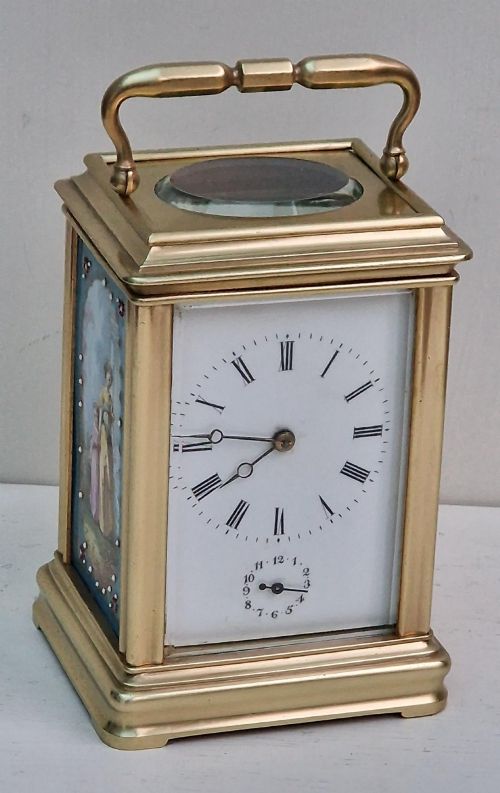
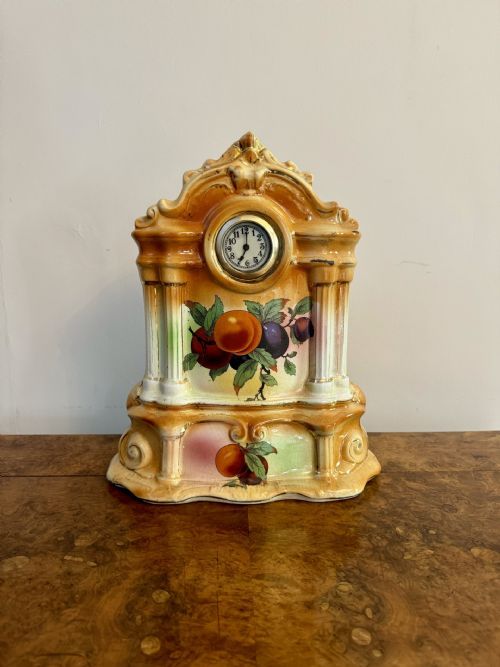
A victorian decorative clock is primarily a mantel or carriage timepiece designed to dominate a room through ornamentation. Buyers searching this phrase encounter French mantel clocks, carriage clocks, and occasional wall clocks from the nineteenth century.
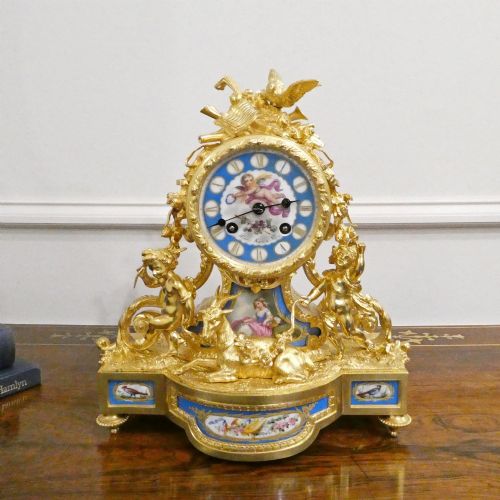
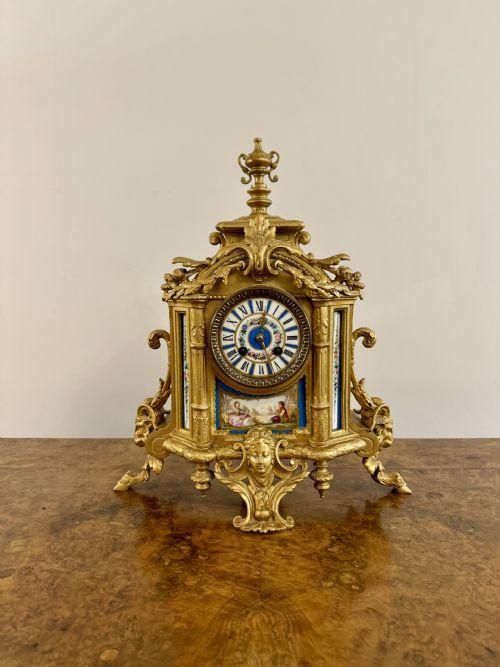
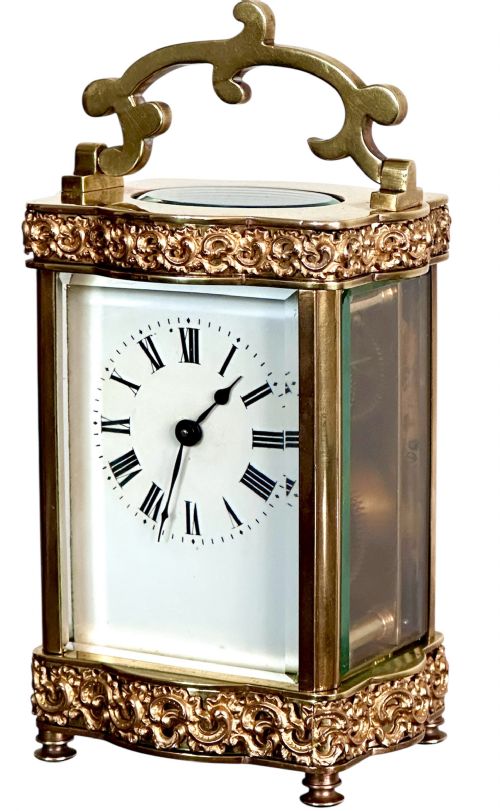
The assortment on this page relies heavily on French production, particularly gilt bronze, ormolu, and porcelain mantel clocks alongside brass carriage clocks. Cuckoo clocks, skeleton clocks, and garniture sets also appear among the Victorian examples.
Makers and workshops from the nineteenth century produced these pieces in styles ranging from Rococo Revival and Louis XVI Revival to plain ebonised wood or mahogany. The core appeal remains the combination of mechanical movement and elaborate decorative housing.
Materials and Construction
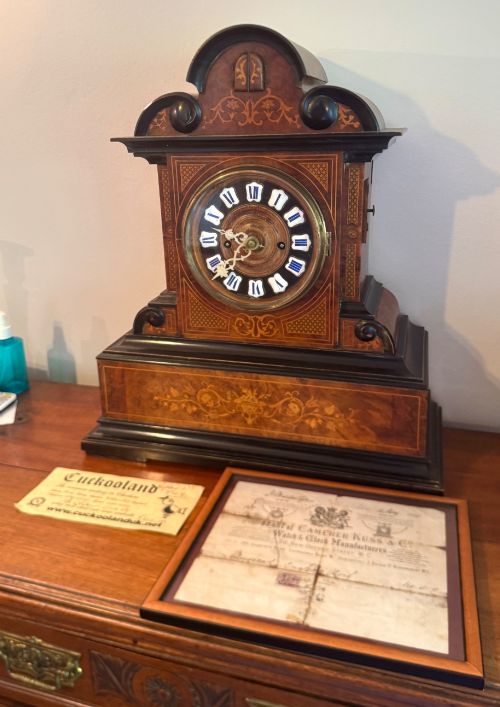
Makers constructed these clocks using brass, gilt bronze, ormolu, and porcelain panels housed within wooden cases of walnut, mahogany, or ebonised timber. Glazed display domes and cloches often protected the more delicate carriage and skeleton clocks.
Enamel dials and hand-painted porcelain plaques provided the visual focal point, frequently framed by champleve enamel or cast metal mounts. Mechanical movements utilised traditional brass gears and escapements, occasionally featuring repeaters and striking mechanisms.
Periods represented span from the eighteen-fifties through to the mid-twentieth century, with a concentration on Victorian and French nineteenth-century styles.
Distinctions in Quality
Quality separates mass-produced items from pieces bearing the signature of known makers such as Henry Marc, PH Mourey, or Duverdrey & Bloquel. The crispness of the gilt bronze casting and the depth of the ormolu finish dictate the visual standard.
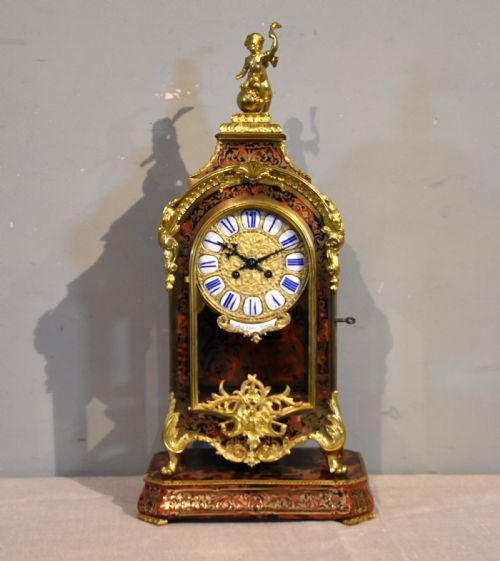
Complexity of the movement, such as repeating mechanisms or enamel paintings, elevates the standard of a carriage clock or mantel clock. Intricate case details like marquetry, Boullework, or hand-carved elements distinguish superior examples.
Henry Marc·Duverdrey & Bloquel·Delépine-Barrois·PH Mourey·KPM Berlin
The Victorian Decorative Clock Glossary
- Ormolu
- Gilded bronze used extensively for decorative mounts on nineteenth-century French clocks. The technique involves applying a mercury and gold amalgam to a bronze base.
- Carriage clock
- A small, portable spring-driven timepiece designed for travellers during the nineteenth century. They are typically housed in brass cases with glass panels.
- Garniture set
- A clock accompanied by matching side ornaments such as urns or vases. These sets were designed to sit centrally on a mantelpiece.
- Skeleton clock
- A timepiece with an open framework that exposes the gear train and movement. They are often displayed beneath glass domes.
- Champleve
- An enamelling technique where troughs are dug into a metal surface and filled with vitreous enamel. This method appears frequently on nineteenth-century clock dials and bezels.
Victorian Decorative Clock: Frequently Asked Questions
What is a French carriage clock?
A French carriage clock is a portable spring-driven timekeeper housed in a brass and glass case, often featuring a swing handle. These pieces were originally designed for travel during the nineteenth century.
Today, they function primarily as desk or mantel pieces, celebrated for their visible mechanical movements and enamelled dials.
How do I identify a clock garniture?
A clock garniture consists of a central mantel clock accompanied by two matching side pieces, such as vases or urns. They were designed to create a symmetrical decorative arrangement on a fireplace mantel.
Materials usually match across the entire set, combining porcelain, ormolu, or gilt bronze to form a cohesive display.
How are these clocks powered?
These timepieces rely on spring-driven or weight-driven mechanical movements regulated by pendulums or balance wheels. Many feature eight-day movements requiring a key for winding.
Some advanced examples include striking trains or repeater mechanisms that chime the hours and quarters.