




French Bronze Cherub Clock
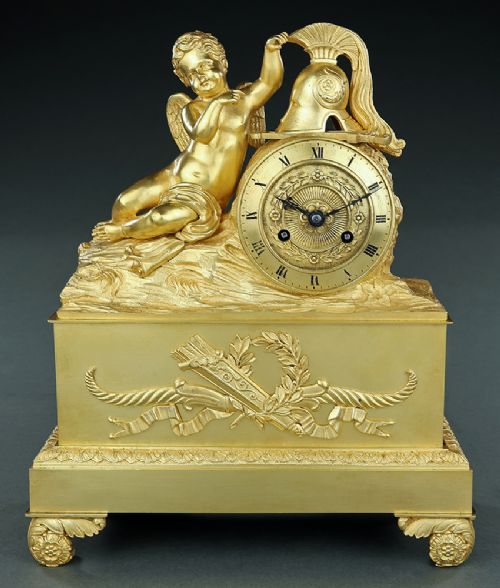
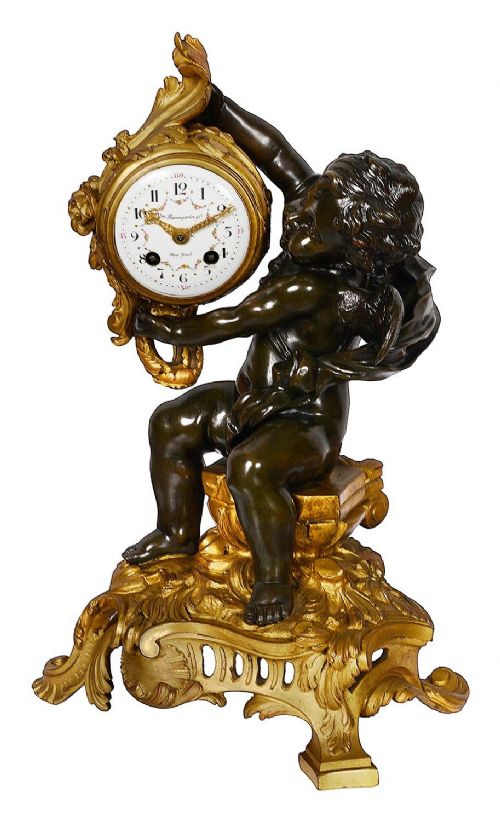
A french bronze cherub clock combines figurative casting with mechanical timekeeping, offering the charm of putti alongside nineteenth-century horology.
French Bronze Cherub Clock
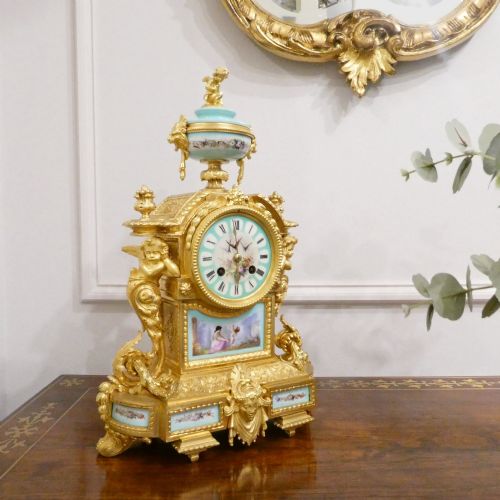
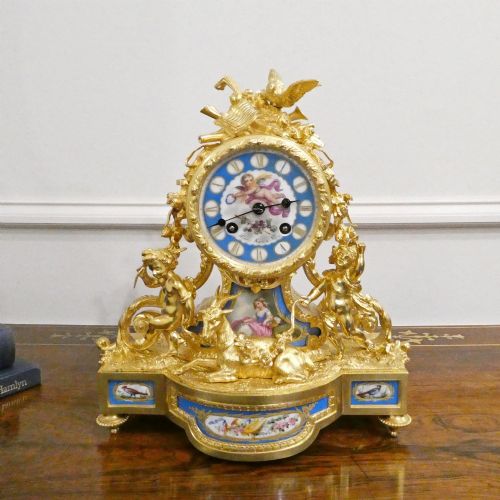
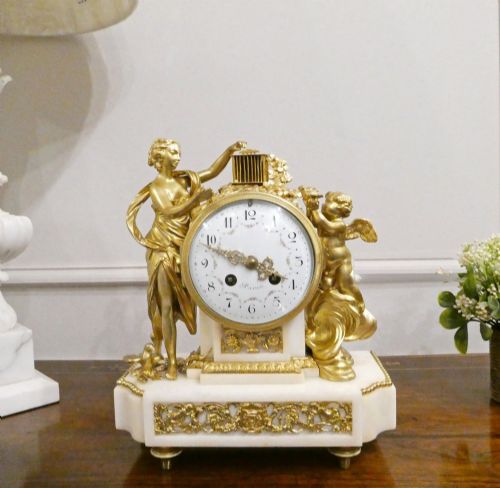
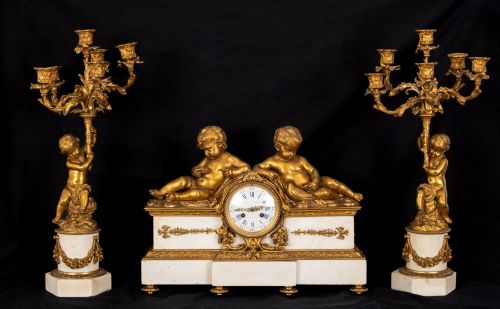
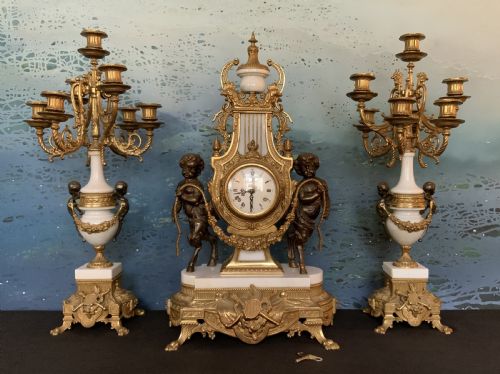
A french bronze cherub clock is typically encountered as a mantel clock or part of a larger clock garniture set, often accompanied by matching candelabras. These pieces date predominantly from the nineteenth century, spanning periods such as the Victorian era, the Second Empire, and various revival styles like Louis XVI and French Rococo.
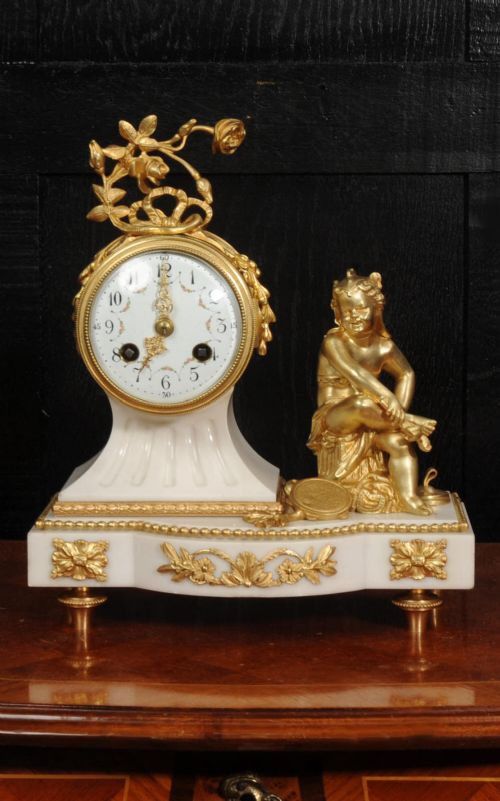
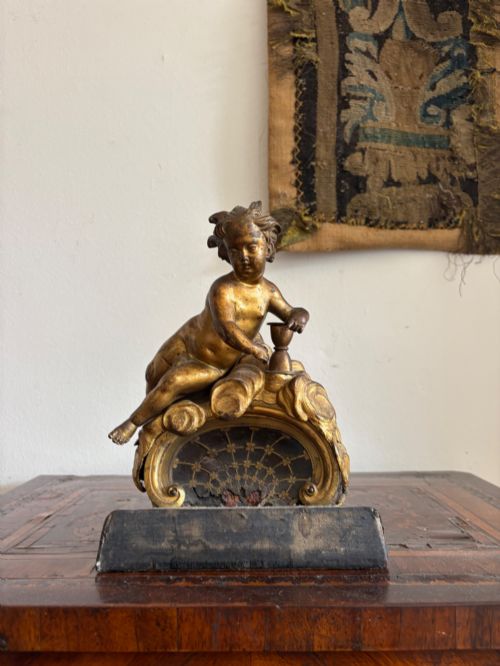
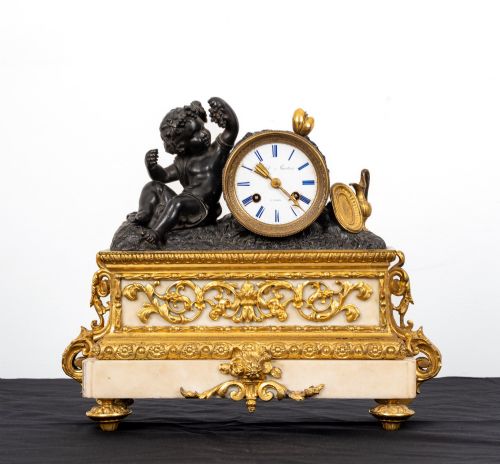
The format usually centres on a central timepiece featuring cast bronze or ormolu figures of putti, cherubs, or winged infants. These figures appear seated upon marble bases, leaning against clock drums, or operating as finial ornaments above the dial.
Materials and Construction
The construction of these pieces relies heavily on cast bronze, ormolu, and white or coloured marble plinths. Gilt bronze and fire-gilded ormolu provide the luminous finish characteristic of French workshops, frequently contrasted with patinated dark bronze figures.
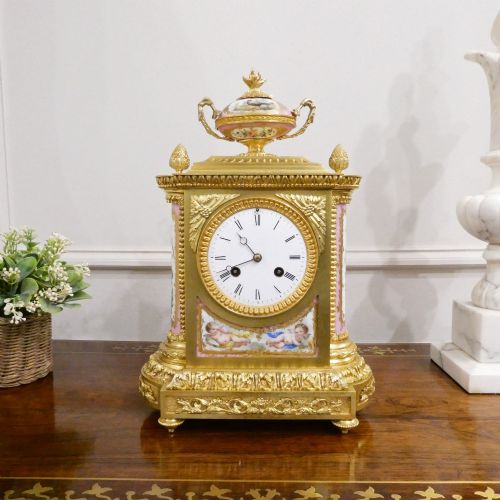
Dial work often incorporates hand-painted porcelain panels or enamel cartouches to mark the hours. Mechanical movements housed within these brass frames typically originate from established French makers and drive eight-day striking trains.
Listings feature nineteenth-century pieces spanning the Victorian era, incorporating materials such as ormolu, white marble, enamel, and Sevres porcelain.
Assessing Quality and Execution
The distinction between standard production and exceptional work lies in the crispness of the bronze chasing and the depth of the gilding. Finer pieces exhibit meticulous hand-finishing on the cherub figures, where hair, feather, and facial details remain sharp rather than softened by worn moulds.
Integration between components also signals higher merit, such as heavy marble plinths properly fitted to substantial bronze mounts and matched garniture sets sharing identical patination and casting signatures.
Jean-Baptiste Delettrez·Henry Marc·Siffel and Cartier·Henry Dasson·Japy Freres·Leon Message·Jollet et Cie·Samuel Marti·Achille Brocot·H Luppens Paris
The French Bronze Cherub Clock Glossary
- Ormolu
- Gilt bronze produced by applying a mercury-gilding amalgam to a cast brass or bronze base. This technique creates a rich, durable golden surface seen on many nineteenth-century French clock cases.
- Putto
- A plump, naked male child figure often depicted with wings in classical art. In these horological pieces, putti serve as the titular cherubs draped over marble bases or flanking the dial.
- Garniture
- A set of decorative matching objects for a mantelpiece, consisting of a central clock flanked by matching items such as candelabras or vases. They share materials like marble, bronze, and ormolu.
- Cartouche
- A small enamel plaque or section on a clock dial bearing an individual numeral. These are often assembled individually around a central painted porcelain face.
- Finial
- A decorative ornament placed at the uppermost top of a clock case or architectural element. In these pieces, small bronze putti frequently occupy this prominent position.
French Bronze Cherub Clock: Frequently Asked Questions
What is a french bronze cherub clock?
A french bronze cherub clock is a mechanical timepiece featuring cast bronze or ormolu figures of cherubs or putti. These decorative objects date primarily from the nineteenth century.
They combine timekeeping movements with sculptural art, often set upon marble bases and accompanied by matching side garnitures.
How do you wind and set them?
Most of these clocks utilise an eight-day mechanical movement wound via key holes on the dial face. Care must be taken not to overwind the mainspring.
Moving the hands should be done following the rhythm of the escapement, avoiding rapid adjustments that might damage the internal striking train.
Are these clocks fully working?
Many surviving examples retain their original movements and are restored to full working order. Some pieces are offered as decorative timepieces or require professional servicing.
Checking the individual listing details clarifies whether a movement has been recently cleaned, serviced, or restored.
How do I identify the period?
Dating relies on stylistic clues, materials, and maker signatures stamped on the brass movement plates. Nineteenth-century pieces frequently display revival aesthetics such as Louis XVI or Rococo.
Marble types, dial construction, and casting techniques also help narrow the manufacturing decade.