


Victorian Cut Glass Cruet
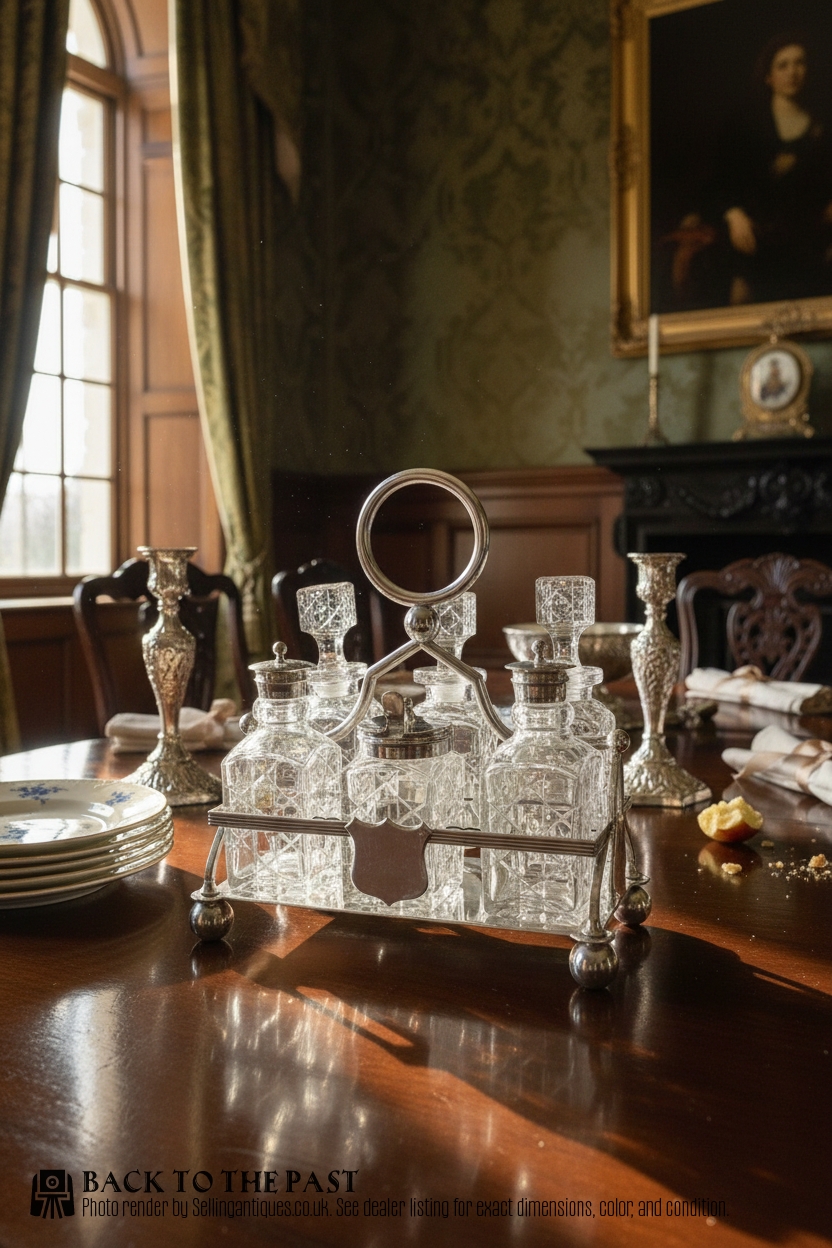
A victorian cut glass cruet brings heavy facet-cut glass and bright metal frames to the dining table, holding condiments with heavy nineteenth-century presence.
Victorian Cut Glass Cruet
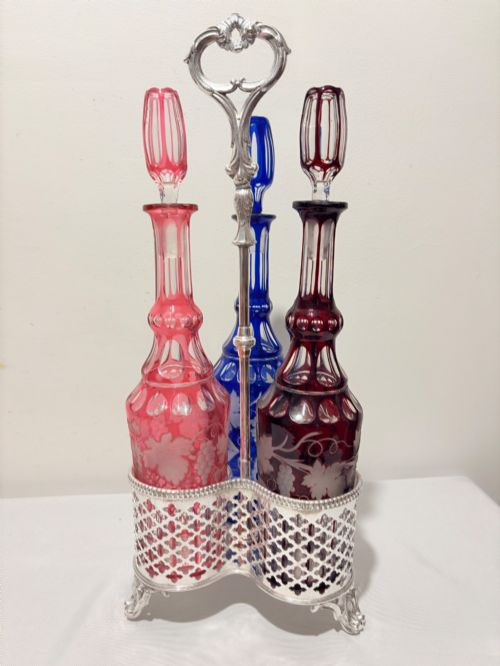
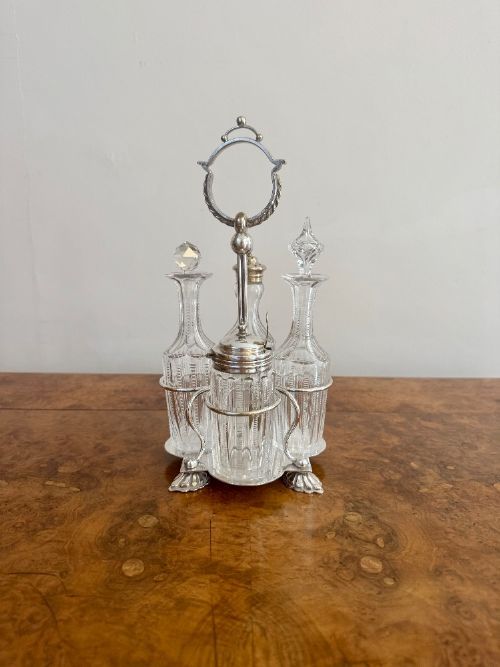
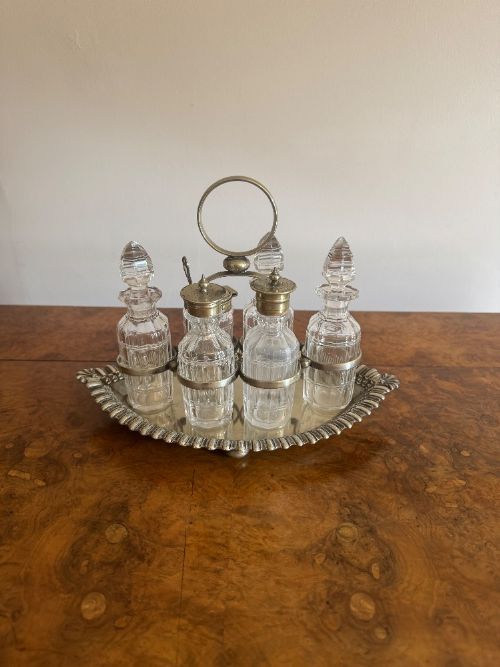
A victorian cut glass cruet combines heavy moulded or wheel-cut glass bottles with structured metal frames, designed to hold condiments such as oil, vinegar, mustard, and pepper at the formal dining table. The pieces range from small bachelor sets with two bottles up to grand seven-bottle frames fitted with handles and central rings.
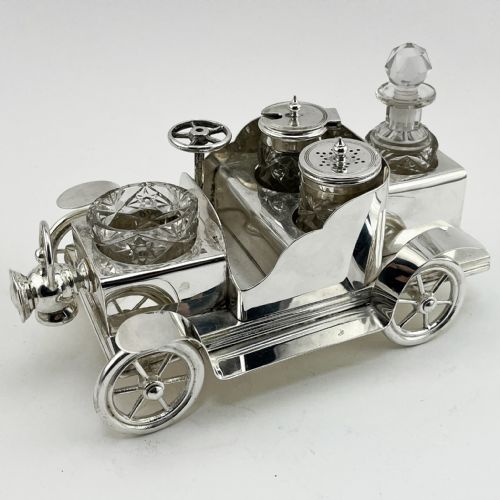
Most examples found on this page date from the later nineteenth and early twentieth centuries, spanning the Victorian and Edwardian periods. Alongside complete sets, the selection includes related forms such as decanter stands, individual oil and vinegar bottles, and novelty frames styled as vintage cars or butlers' trays.
Materials combine clear or coloured cut glass with silver plate, sterling silver, and occasionally oak accents. The glass bottles typically feature distinct facet cutting or prism patterns to catch the light, seated securely in shaped metal bases.
Materials and construction
The bottles are formed from heavy glass, often shaped by blowing into moulds before undergoing deep wheel-cutting to create sharp facets, flutes, and prism patterns. This thick glass gave the vessels the necessary weight to remain stable within metal frames during transit around the table.
Frames and mounts are fashioned from silver plate or sterling silver, sometimes housing wooden elements like oak trays or handles. Metalwork involved casting, stamping, and soldering structural wireframes, handles, and bottle collars to match the contours of the glass inserts.
Listings feature items spanning the nineteenth and early twentieth centuries, utilising cut glass, sterling silver, silver plate, and oak.
Judging the range
Quality rests primarily on the depth and crispness of the glass cutting and the structural integrity of the metal frame. Sharply defined facets and heavy, clear metal frames indicate superior manufacture compared to light, thin castings and shallow surface engraving.
Completeness also dictates standing, as retaining the original matching set of bottles with their correct stoppers marks the upper echelon of surviving pieces. Novelty frames and named makers introduce additional distinction through complex engineering and refined decorative chasing.
Mappin Brothers·Walker & Hall·Elkington & Co·William Hutton & Sons·Wade Wingfield Wilkins
The Victorian Cut Glass Cruet Glossary
- Cruet set
- A matched assembly of glass bottles or jars held within a dedicated metal frame for table condiments. These frames usually feature a central carrying handle and designated rings for each bottle.
- Silver plate
- A layer of pure silver fused to a base metal, commonly used for nineteenth-century frames. This technique provided the brilliance of solid silver at a lower manufacturing cost.
- Bachelor set
- A smaller cruet configuration, typically holding two to four bottles, designed for intimate dining or individual use. They appeared frequently in the late Victorian and Edwardian periods.
- Prism cut
- A geometric glass-cutting style featuring linear facets that refract light into spectral colours. It adds weight and brilliance to nineteenth-century cruet bottles.
- Novelty cruet
- A frame manufactured in a playful or unusual shape, such as a vehicle, figure, or tray. These pieces combine utility with decorative whim.
Victorian Cut Glass Cruet: Frequently Asked Questions
What bottles belong in a cruet set?
A set typically includes bottles for oil, vinegar, pepper, and mustard, often fitted with stoppers or silver-plated pierced lids.
The number of receptacles ranges from small two-bottle bachelor settings up to grand seven-bottle dining table centerpieces.
How do I date a silver plated cruet?
Dating relies on maker marks, patent registry numbers, and stylistic shifts in the silver-plated frame and glass cutting.
Heavier frames with geometric prism cutting usually point toward the Victorian era, while lighter aesthetic forms often align with the Edwardian period.
Are replacement bottles hard to find?
Finding exact match replacement bottles for antique frames can prove challenging due to variations in individual mouth-blown dimensions.
Collectors generally seek out sets where the glass bottles and stoppers match the original fitted frame.
How should I clean cut glass cruets?
Warm water and mild soap safely clear residue from inside the heavy cut glass bottles without harming the material.
Harsh abrasives and prolonged soaking must be avoided to protect both the delicate wheel-cut glass and the underlying silver plate.