
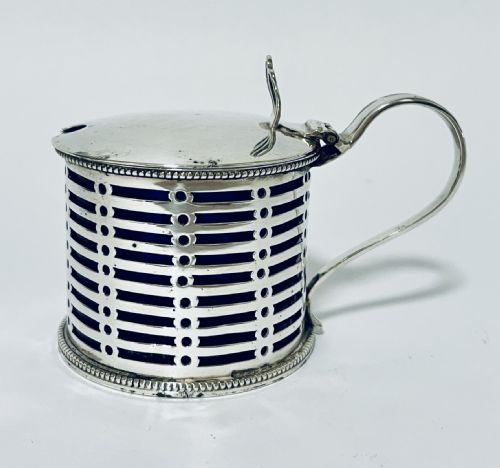


Vintage Condiment Holder
A vintage condiment holder brings functional elegance to the table, combining cut glass, silver plate and mahogany in forms made for everyday dining.
Vintage Condiment Holder
A vintage condiment holder encompasses cruet sets, preserve dishes and decanter stands designed to hold sauces, mustards and seasonings at the dining table. These pieces range from compact mustard pots and twin preserve bowls to substantial six bottle cruet stands.
The selections span several periods, with Edwardian silver plated sets sitting alongside Victorian novelty designs and earlier Georgian pieces. Buyers encounter both metal frames fitted with cut glass bottles and turned wooden holders from the eighteenth century onwards.
How they were made
Silversmiths and electroplaters utilised silver and silver plate over base metals to construct sturdy frames, handles and mounts for these tabletop accessories. Cut glass vessels were shaped to fit snugly into metal rings, often featuring ground stoppers or collars.
Cabinetmakers turned denser timbers such as mahogany and ebonised wood for frames, while specialised glasshouses produced cranberry glass and clear pressed or cut vessels. Bone mounts and fitted metal hardware completed the construction of functional holders.
Listings feature items spanning the eighteenth century, Victorian era, Edwardian period and the Art Deco style.
What varies in quality
The calibre of a vintage condiment holder rests upon the weight of the metal frame and the clarity of the glass bottles it carries. Heavier silver plating and crisply cut glass indicate higher manufacturing standards during the period of production.
Intricacy of design also separates standard tableware from finer examples, particularly in Victorian novelty pieces or Edwardian cruet sets with matched original bottles. Completeness of the set and the retention of original silver mounts elevate the standing of any piece.
Wade Wingfield Wilkins
The Vintage Condiment Holder Glossary
- Cruet set
- A collection of glass bottles or jars mounted in a metal or wooden stand for holding condiments at table. These sets typically include receptacles for mustard, oil, vinegar and pepper.
- Silver plate
- A thin layer of silver fused or electroplated onto a base metal such as copper or Britannia metal. This technique provided the appearance of solid silver at a lower cost.
- Cranberry glass
- A distinctive pinkish red glass coloured by the addition of gold chloride during manufacture. It was frequently utilised for decorative preserve bowls and glassware.
- Treen
- Small handmade wooden objects produced by turning on a lathe or through domestic woodworking. Pieces in this material include utilitarian holders and stands.
- Edwardian
- Pertaining to the reign of King Edward VII, spanning the early twentieth century. Objects from this era often display refined metalwork and lighter proportions.
Vintage Condiment Holder: Frequently Asked Questions
What goes inside a vintage condiment holder?
These holders accommodate glass bottles for vinegar, oil and pepper alongside open pots for mustard and preserve dishes. Each fitted section matches the specific vessel designed for it.
Original sets often retain matching glass inserts that sit securely within the metal or wooden framework during service.
How do I date an Edwardian cruet set?
Edwardian cruet sets typically date from the opening decade of the twentieth century and often feature registration marks or maker stamps on the silver plate.
The lighter styling and specific plating techniques help distinguish them from heavier Victorian and earlier Georgian pieces.
Can I use these sets for daily dining?
Many people use vintage condiment holders on the dining table today, provided the glass and metal parts receive gentle hand washing.
Care should be taken with silver plated surfaces and older glass bottles to preserve the finish during regular use.