


Cut Glass Oil Decanters
These cut glass oil decanters are functional vessels from the eighteenth and nineteenth centuries designed to hold and pour oils at the dining table.
Cut Glass Oil Decanters
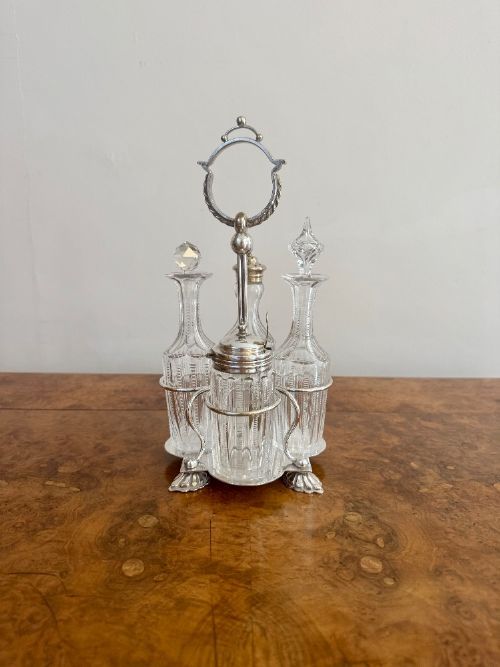
Cut glass oil decanters appear in various forms on this page, including standalone ewers, vinegar bottles and individual vessels housed within larger cruet sets. These pieces range from the Georgian period through the Victorian and Edwardian eras, reflecting changing dining habits over more than a century.
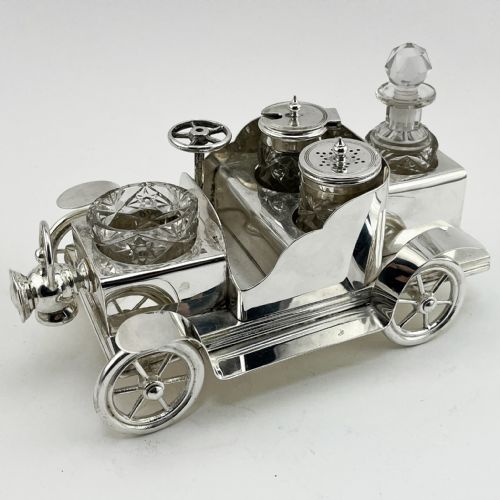
Buyers encountering cut glass oil decanters will notice forms that span simple single bottles to multi-bottle cruet stands mounted in silver plate or sterling silver. The selection includes domestic tableware alongside more specialised items such as novelty car cruet sets.
How they were made
The primary material is clear glass and crystal, shaped and deeply faceted by hand to catch the light on the dining table. These glass bodies are frequently combined with mounts, stoppers and stands fashioned from sterling silver or silver plate.
Makers also integrated secondary materials such as mahogany in supportive frames and stands, ensuring stability for the heavy glass bottles. Metal mounts were shaped, hallmarked and fitted to the glass necks to secure stoppers and pouring lips.
Listings on this site span the Georgian, Victorian, and Edwardian periods, incorporating materials from clear glass to sterling silver and mahogany.
What varies in quality
Quality in these pieces is determined by the crispness and depth of the glass cutting, which ranges from simple linear fluting to intricate geometric patterns. Heavier, more brilliant crystal bodies and well-balanced proportions distinguish superior examples from standard tableware.
The standard of the metalwork also divides the range, particularly the weight and craftsmanship of the silver or silver-plated mounts and stands. Complete sets with matching original bottles and clearly struck hallmarks represent the higher tier of manufacture.
Charles Thomas Fox·Hester Bateman·Wade Wingfield Wilkins
The Cut Glass Oil Decanters Glossary
- Cruet set
- A collection of glass bottles or decanters held in a fitted frame for condiments, oil and vinegar. These stands often incorporate handles and feet cast in silver or silver plate.
- Ewer
- A large jug with a wide spout and looped handle, used historically for pouring water or wine. In this context, it describes larger standalone decanter vessels.
- Sterling silver
- An alloy containing ninety-two point five percent silver and seven point five percent other metals, typically copper. It appears on hallmarked mounts and stands from the Georgian and Victorian periods.
- Silver plate
- A base metal coated with a thin layer of silver, widely utilised for nineteenth-century cruet frames and mounts. It offered the appearance of solid silver at a lower cost.
- Hallmark
- An official stamp or series of marks applied to precious metals to indicate purity, origin and year of manufacture. These stamps provide reliable dating for silver-mounted pieces.
Cut Glass Oil Decanters: Frequently Asked Questions
What are cut glass oil decanters used for?
These vessels were traditionally filled with oil and vinegar to dress food at the dining table. They allowed hosts to serve condiments directly from the bottle during formal meals.
Today, many buyers utilise them as decorative table objects or retain them within their original cruet stands for display.
How do I date a cut glass oil decanter?
Dating relies on examining the style of the glass cutting, the shape of the vessel, and any accompanying metal mounts. Georgian pieces often feature simpler, heavier forms, while Victorian and Edwardian examples show greater variety in decoration.
If the piece has silver mounts, the stamped hallmarks provide an exact year and location of manufacture.
What is the difference between crystal and glass?
Crystal contains lead oxide, which increases the weight, refractive index, and clarity of the material compared to standard glass. This composition allows for deeper, sharper facet cutting that sparkles brightly under candlelight.
Many antique decanters described as cut glass utilise this heavier lead crystal formulation.
Are these decanters safe to use for food?
Most antique glass decanters remain structurally sound for holding liquids, provided the interior is cleaned thoroughly. However, older silver plate and lead glass require gentle hand washing rather than immersion in harsh detergents.
Buyers intending to use them daily should check the condition of the interior and the fit of the stopper.