
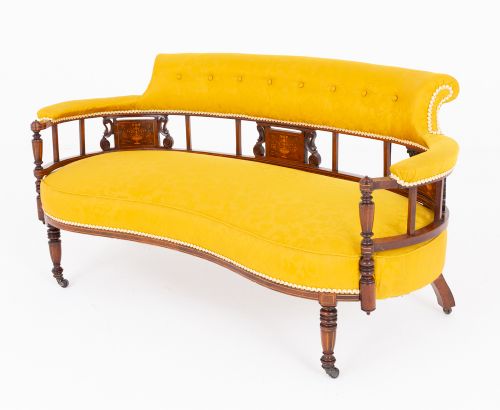
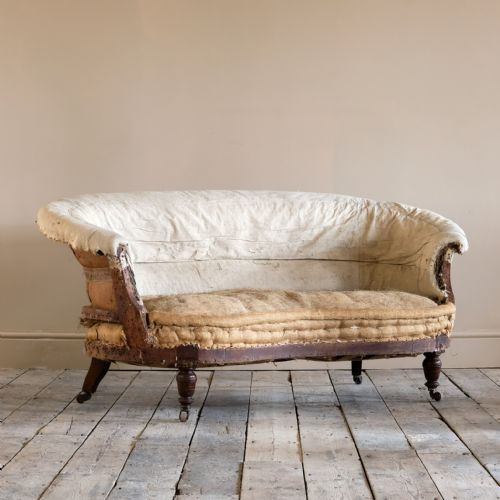


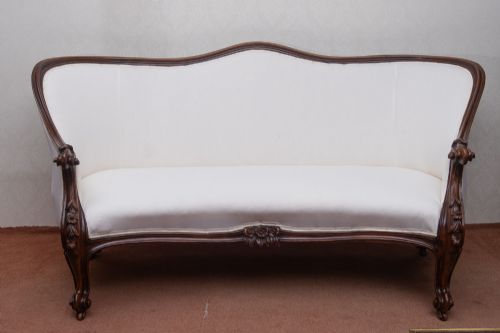


Victorian Curved Back Sofa
These Victorian curved back sofa pieces combine deep-buttoned comfort with expressive timber frames, offering a striking centrepiece for a traditional drawing room.
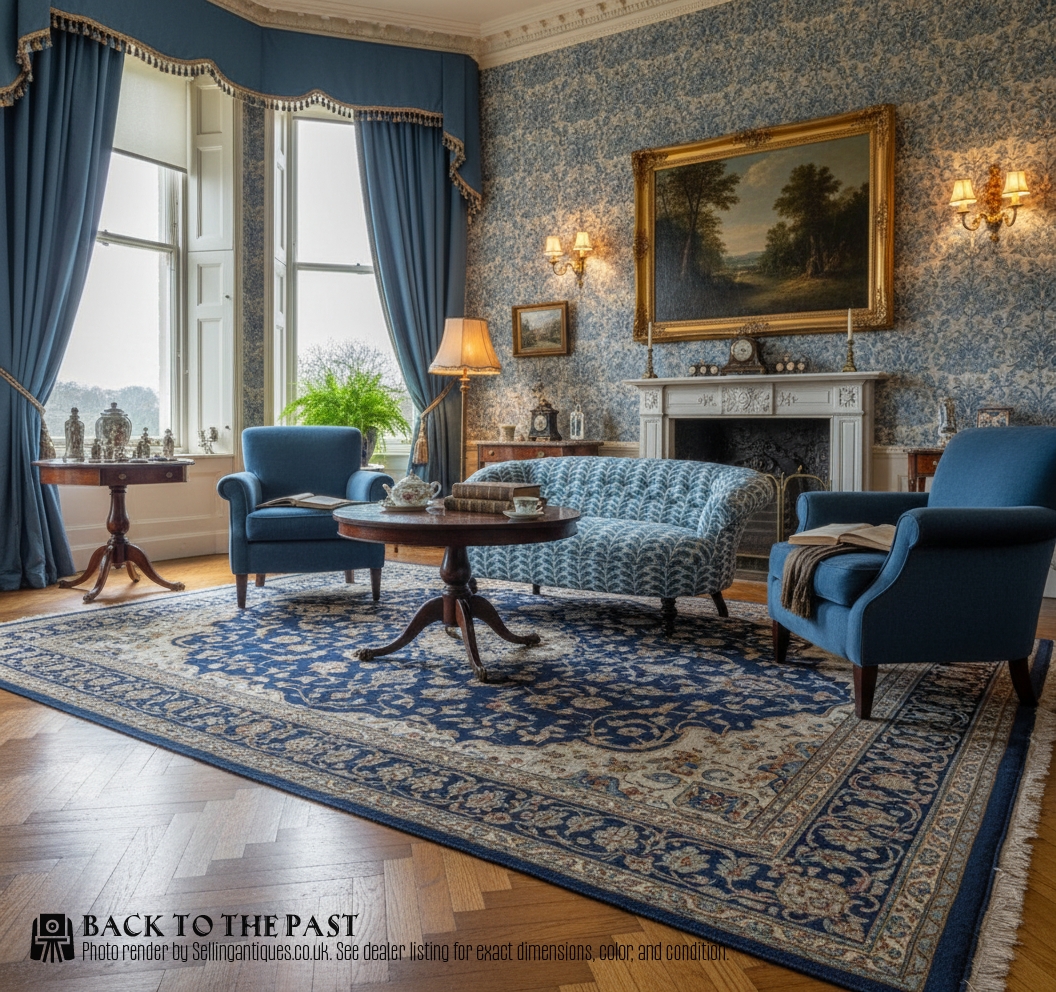
Victorian Curved Back Sofa
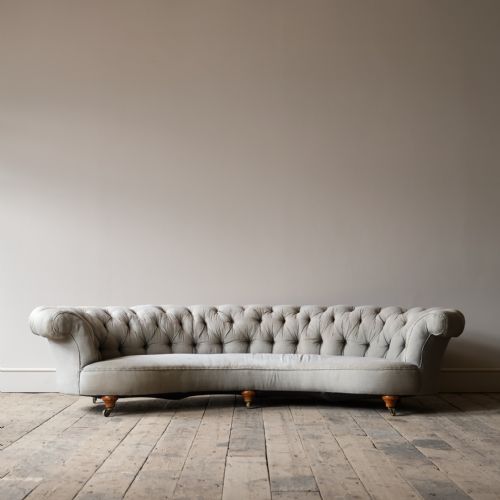
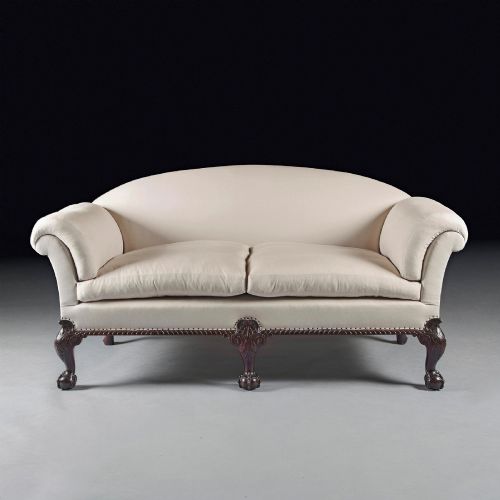
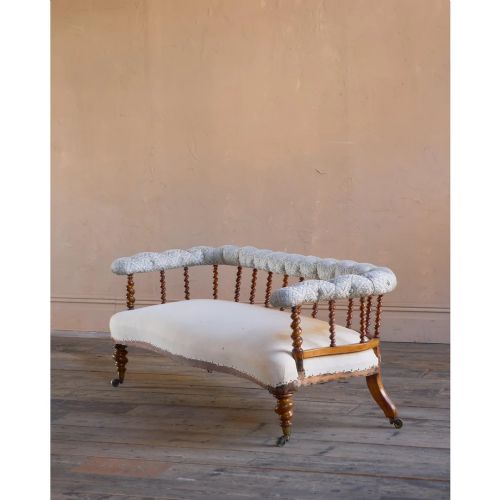
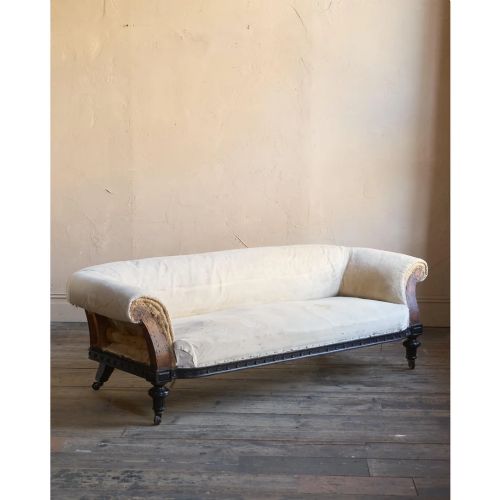
A victorian curved back sofa typically presents as a generous upholstered settee, salon sofa, or horseshoe-shaped leather Chesterfield designed for nineteenth-century reception rooms. Buyers encounter various forms on this page, ranging from mahogany and rosewood framed salon pieces to deep-buttoned leather Chesterfields.
The materials span sturdy hardwood and mahogany structures paired with plush velvet, fabric, or leather upholstery, often accented by brass castors. Makers and workshops of the period utilised distinct regional styles, producing everything from Aesthetic Movement designs to French-influenced chateau settees.
Materials and construction methods
Makers constructed the structural frames of a victorian curved back sofa from dense timbers including mahogany, rosewood, and general hardwood. These woods were carved, turned, and polished to form supportive backs and exposed framework.
Upholstery involved heavy fabric, leather, or velvet pulled tight over deep padding, frequently secured with buttoning techniques. Brass elements such as castors often completed the lower assembly of these nineteenth-century seats.
The inventory encompasses styles from the Aesthetic Movement to French provincial designs.
Distinctions in quality
Quality in a victorian curved back sofa rests upon the selection of timber and the precision of the frame's joinery. Dense rosewood and finely figured mahogany denote superior original work compared to standard hardwood alternatives.
The execution of the upholstery work further separates examples, particularly the uniformity of deep buttoning and the choice of premium leather or velvet coverings. Maker attribution also elevates certain pieces, distinguishing standard workshops from notable firms.
Howard & Sons·C. Hindley & Sons·Hampton & Sons
The Victorian Curved Back Sofa Glossary
- Chesterfield
- A large upholstered sofa characterised by deep buttoning and rolled arms of equal height to the back. This form appears frequently in nineteenth-century leather and fabric iterations.
- Button back
- An upholstery method where depressions are created in the padding by pulling thread through to the wooden frame, secured with fabric-covered buttons. This technique provides both structural tension and a decorative surface.
- Chaiselongue
- An elongated seat designed for reclining, combining elements of a chair and a sofa. These pieces often feature an asymmetrical curved backrest.
- Aesthetic Movement
- A nineteenth-century design style that emphasised visual beauty and artistic expression over historical revivalism. Pieces from this movement often incorporate refined lines and distinct decorative motifs.
- Canape
- A French-inspired decorative settee with an exposed wooden frame and upholstered seat and back. They commonly date to the Victorian period within British collections.
Victorian Curved Back Sofa: Frequently Asked Questions
How do I clean leather upholstery?
Maintenance requires gentle dusting with a soft dry cloth and the occasional application of specialist leather conditioner to preserve suppleness.
Harsh chemical cleaners and excessive moisture should be avoided to protect the nineteenth-century finish.
Where were these sofas placed?
Original nineteenth-century placement centred on formal drawing rooms, libraries, and large domestic salons where guests gathered.
Their finished backs often allowed them to sit away from walls as freestanding room dividers.
How do I identify a Victorian piece?
Examination of the internal framing, timber selection, and upholstery tacking generally reveals nineteenth-century manufacturing methods.
Specific stylistic indicators include Aesthetic Movement motifs, rosewood frames, and deep buttoning characteristic of the period.
Are these sofas suitable for daily use?
Solid hardwood frames and durable leather or velvet coverings ensure these antique seats withstand regular domestic sitting.
Routine care of the springs and padding maintains structural support over time.