


Blue Fabric Victorian Sofa
A blue fabric victorian sofa brings nineteenth-century comfort and traditional English character into a room, upholstered in durable cotton and damask.
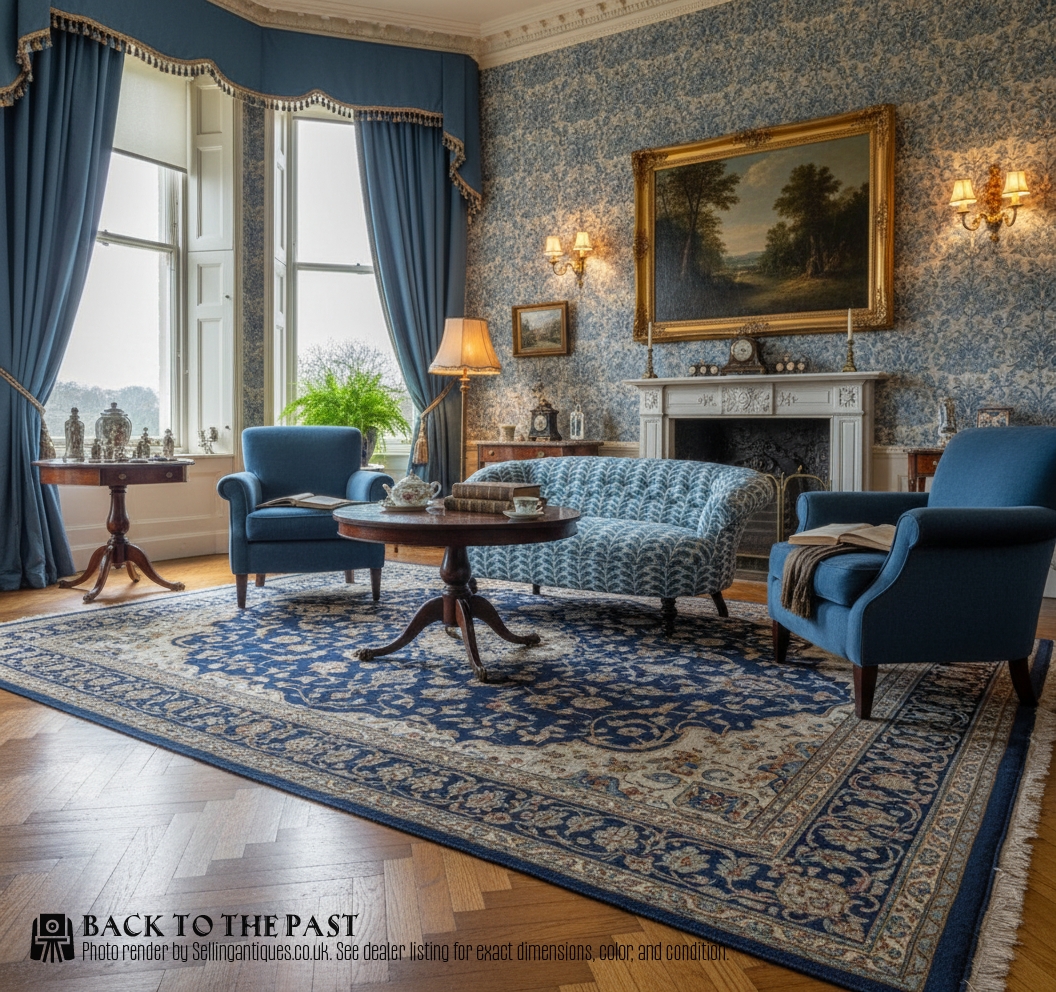
Blue Fabric Victorian Sofa
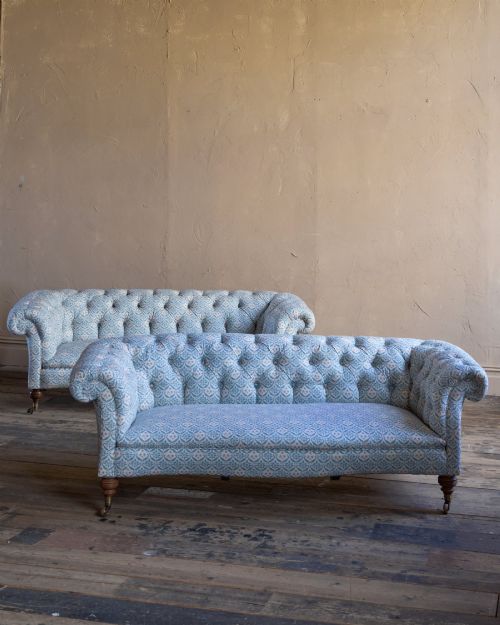
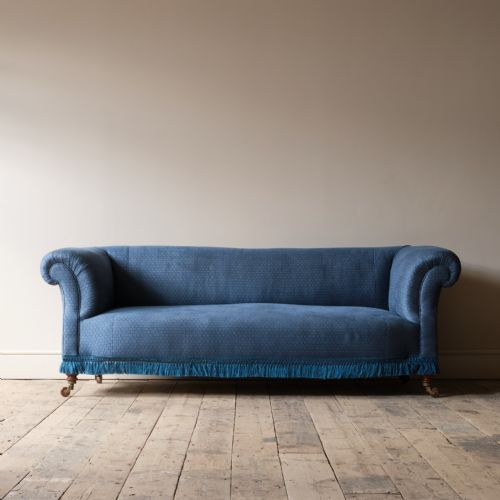
A blue fabric victorian sofa encompasses nineteenth-century seating including Chesterfields, day beds, settees, and chaise longues. These pieces emerge from the Victorian period, including items dated to eighteen ninety and the English country house style.
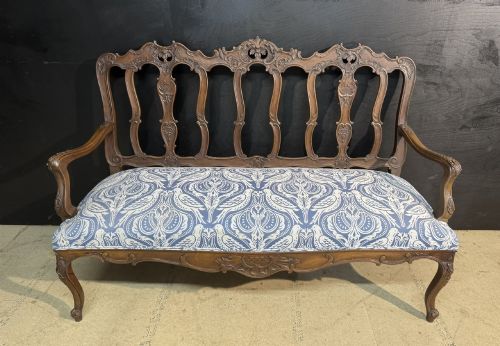
The versions most likely to appear on this page include button back canapes and drop arm sofas upholstered in blue damask, flora soames fabric, or cotton. They span various forms such as three seater couches and serpentine Chesterfield sofas.
Makers and makers' styles represented in these listings include Howard and Sons alongside Hampton and Sons. They sit on wooden, walnut, mahogany, or timber frames fitted with brass castors.
How they were made
Makers constructed these frames using timber, mahogany, walnut, and wood, often shaping them into serpentine or traditional English forms. Artisans turned the legs and fitted them with brass and metal castors for mobility.
Upholstery involved materials such as cotton, fabric, and blue damask, applied in styles including button back detailing and drop arm mechanisms. Some frames accommodated reupholstering to suit modern interiors.
Listings feature nineteenth-century and eighteen ninety pieces built from walnut, mahogany, timber, brass, and metal.
What varies in quality
Distinction across these sofas lies in the integrity of the wooden framework, whether mahogany or walnut, and the precision of turned legs. The refinement of Rococo Revival detailing and traditional English shaping also sets individual pieces apart.
The quality of the upholstery fabric, from blue damask to flora soames cotton, influences the character of each sofa. Original brass castors and intact structural frames elevate the standing of nineteenth-century examples.
Howard and Sons·Hampton and Sons
The Blue Fabric Victorian Sofa Glossary
- Chesterfield
- A traditional upholstered sofa featuring arms and back of the same height. These nineteenth-century pieces often include deep buttoning and serpentine fronts.
- Chaise Longue
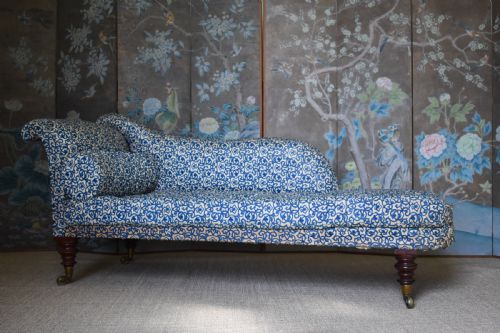
- An elongated chair designed for reclining, popular during the Victorian period. They frequently feature a single raised end and upholstered back.
- Damask
- A reversible figured fabric traditionally used for upholstery and drapery. Blue damask appears on nineteenth-century chaise longues to provide a formal appearance.
- Canape
- An ornamental settee or sofa from the nineteenth century. These pieces often showcase button back upholstery and exposed wooden frames.
- Castor
- A small wheel mounted on a swivel assembly attached to furniture legs. Brass castors allow heavy nineteenth-century sofas and day beds to move across floors.
Blue Fabric Victorian Sofa: Frequently Asked Questions
How do I identify a Victorian day bed?
Victorian day beds typically feature an upholstered deck for reclining, supported by turned wooden legs and original metal or brass castors. They date from the nineteenth century and reflect traditional English domestic seating.
These pieces often showcase detailed woodwork in walnut, mahogany, or timber alongside durable fabric covers.
What is a button back canape?
A button back canape is a nineteenth-century settee featuring deep button tufting across the upholstered backrest. This technique secures the padding while creating a textured pattern.
Makers paired these decorative backs with exposed wooden frames and turned legs.
Are these sofas suitable for daily use?
Nineteenth-century sofas provide sturdy seating built on solid timber, mahogany, or walnut frames. Many pieces accommodate modern living spaces while retaining their original nineteenth-century character.
Some examples arrive ready for reupholstering to match specific interior colour schemes.