


Victorian Cranberry Glass Set
A Victorian cranberry glass set brings rich pink tones to the table through hand-blown jugs, decanters and matched wine glasses.
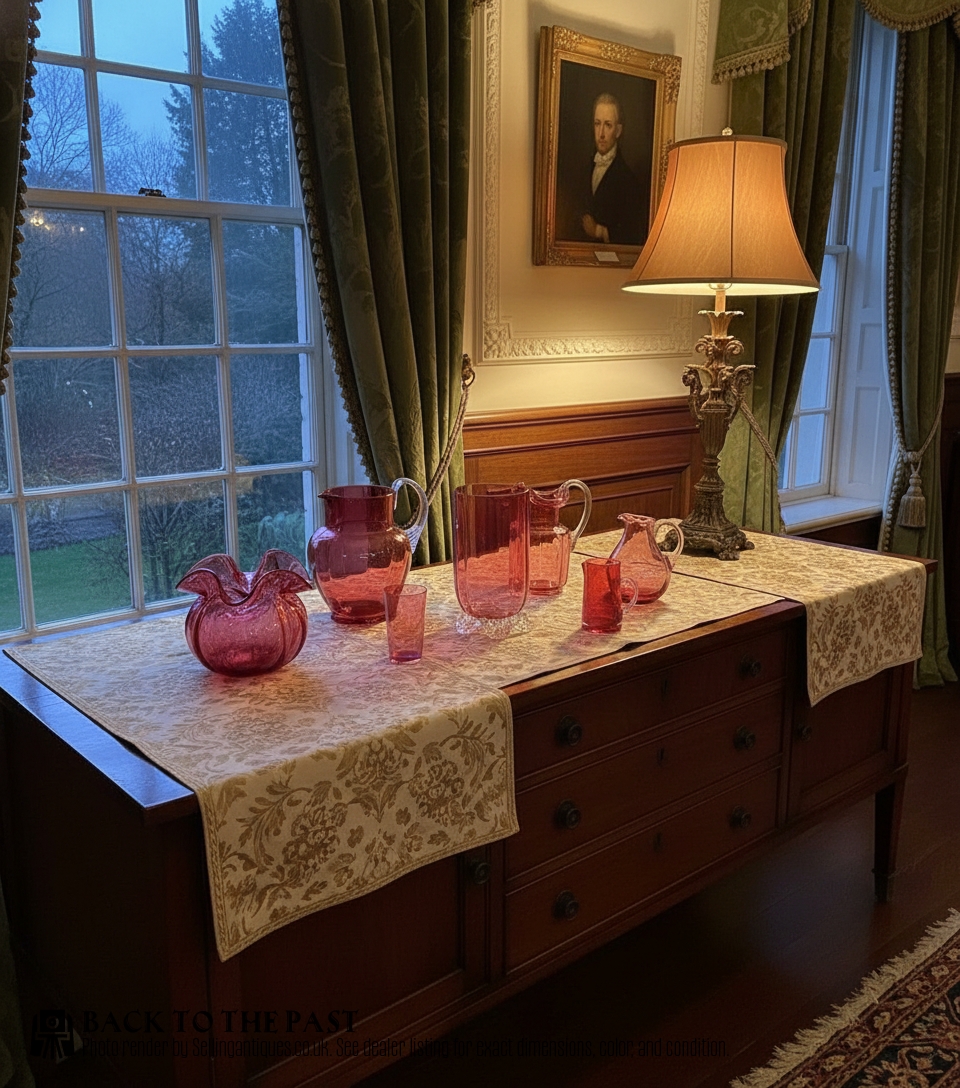
Victorian Cranberry Glass Set
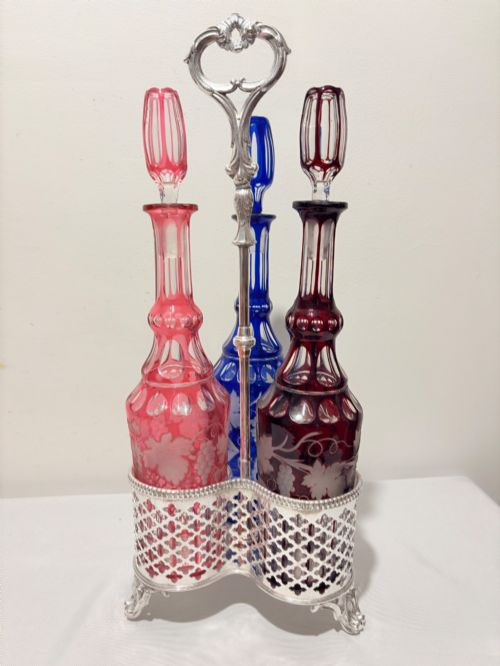
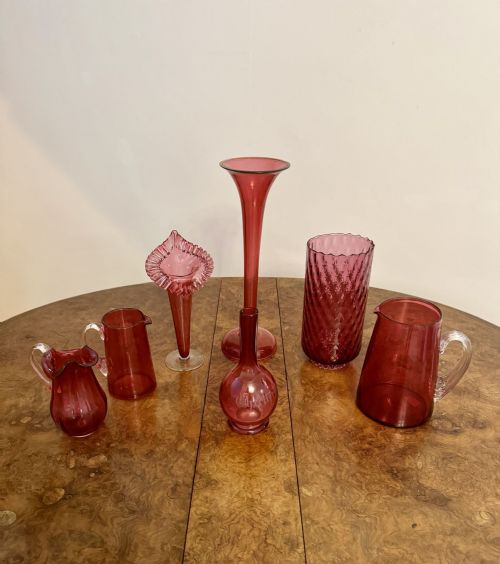
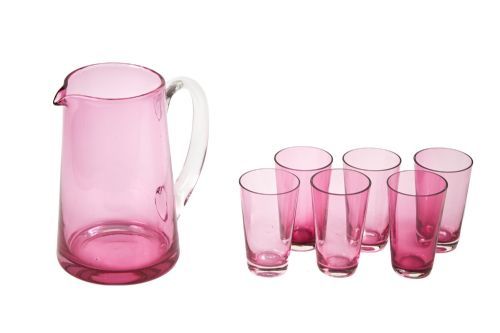
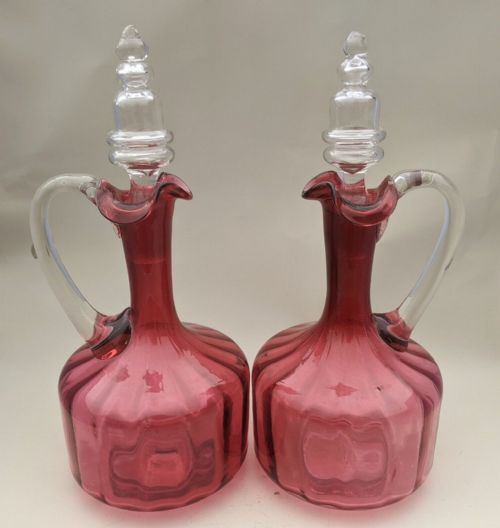
A victorian cranberry glass set brings together matched drinking vessels or serving pieces created during the nineteenth century. These groupings most frequently take the form of wine glasses, water sets with jugs and tumblers, or liqueur stands fitted with silver plate.
The objects span from the 1860s through the Edwardian period, though the core of the range centres on Victorian production. Buyers encounter sets ranging from four glasses up to fifteen pieces, often accompanied by matching decanters or preserve bowls.
How these glass sets were produced
The items rely on glass tinted with gold chloride to achieve the characteristic pinkish-red colour. Artisans shaped the vessels by hand, combining blown glass techniques with applied clear glass handles, feet or rims.
Cut glass decoration and enamel detailing appear across decanters and preserve dishes. Certain pieces incorporate silver plate stands to hold the glass components securely.
Materials span cranberry glass, clear glass, ruby glass, enamel, and silver plate.
Distinctions in quality
Quality rests in the depth and consistency of the glass colour across a matching group of items. Evenness in hand-blown walls and crispness in cut facets separate standard production from finer work.
The integrity of silver plate mounts and the precision of applied clear glass details influence the standing of a set. Matched sets with uniform height and tone hold greater cohesion than harlequin collections.
The Victorian Cranberry Glass Set Glossary
- Cranberry glass
- Transparent glass coloured with gold oxide during melting to produce shades from pale pink to deep red. This material defines the entire category.
- Colour over crystal
- A technique where a layer of coloured glass covers a clear crystal core, often cut away to reveal the clear layer underneath.
- Silver plate
- A thin layer of silver applied to a base metal mount or stand. These frames hold decanters or liqueur glasses.
- Vaseline glass
- Glass containing uranium dioxide that produces a yellow-green colour, occasionally found alongside cranberry pieces in preserve dishes.
- Harlequin set
- A collection of glassware assembled from individual pieces that match in colour and type but originate from different sources.
Victorian Cranberry Glass Set: Frequently Asked Questions
How do I clean antique cranberry glass?
Wash the glass by hand in warm soapy water using a soft cloth. Avoid harsh scrubbing or dishwashers to protect the delicate surfaces and any applied elements.
Dry the pieces promptly with a lint-free towel to prevent water spots. Take extra care with items featuring silver plate mounts or enamel details.
Were these sets used daily?
Households employed these glass sets for formal dining, dessert courses and evening entertaining. Wine glasses and decanters appeared during dinner parties, while water sets served guests in private rooms.
Preserve bowls and liqueur stands catered to specific courses and social rituals of the period. Their survival suggests many were reserved for special occasions.
How can I date my glass set?
Examine the pontil mark on the base of blown pieces, as rough scars often indicate nineteenth-century manufacture. Style shifts from mid-Victorian frosted stands to Edwardian forms provide further chronological clues.
Matching the object types against known production decades helps narrow the age. Silver plate mounts often bear marks or styles characteristic of specific years.
Can I mix different glass sets together?
Period collections frequently include harlequin sets assembled from matching vessel types with slight variations in shade. Mixing pieces works well if the glass tone and form share similar proportions.
Displaying varied heights and decanter shapes together creates a traditional table arrangement. Consistency in the cranberry colour remains the key factor for visual harmony.