
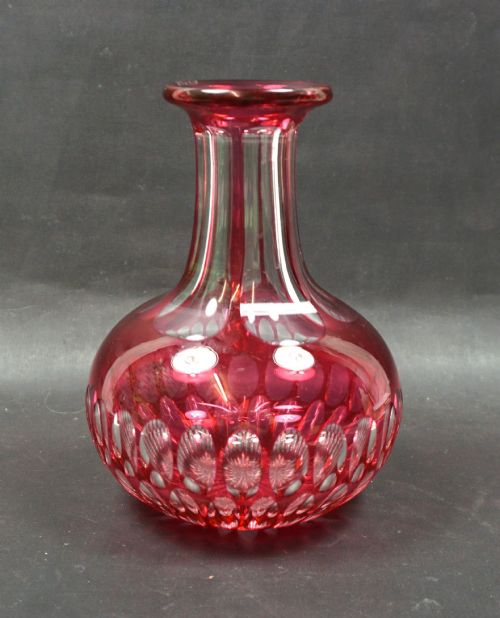


Antique Cranberry Glass Vessel
These antique cranberry glass vessel examples are rich, ruby-hued items spanning the Victorian era through the early twentieth century, prized for their deep colour.
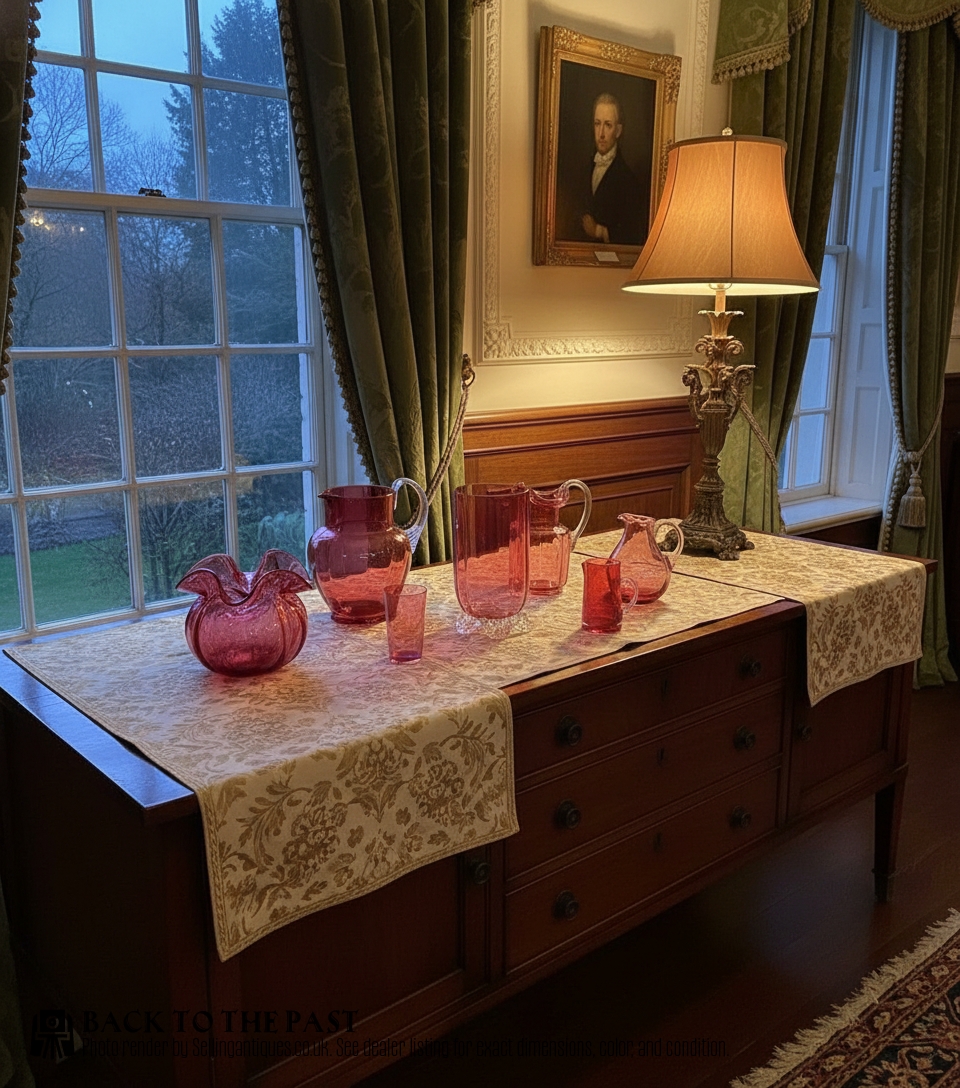
Antique Cranberry Glass Vessel
When you search for an antique cranberry glass vessel, you encounter a range of functional and decorative forms created during the nineteenth and early twentieth centuries. The items available include Victorian trumpet vases, lidded trinket boxes with silver lids, carafes, decanters, and oil lamp bases.
The pieces on this page span the Victorian and Edwardian periods, stretching from eighteen sixty through to nineteen twenty. You will frequently find Bohemian examples alongside English pieces, showing how widespread this rich red glassware was across European households.
How they were made
The distinct colour of a cranberry glass vessel comes from the addition of gold chloride to the molten glass batch. Artisans shaped these objects by blowing and moulding the glass, sometimes employing a clear crystal overlay technique to create layered visual depth.
Decoration on these pieces often involved delicate hand painting, particularly white enamel scenes associated with Mary Gregory styles, or detailed engraving depicting fruiting vines. Metal mounts, brass collars, and silver lids were added to items such as trinket boxes and claret jugs.
Listings feature items spanning the Victorian period, Edwardian era, and early twentieth century, incorporating materials like cranberry glass, clear crystal, gold leaf, enamel, and silver.
What varies in quality
Quality in a cranberry glass vessel rests upon the depth and evenness of the colour throughout the body. Pieces that combine clear crystal overlays or intricate engraved detailing display a higher level of craftsmanship than plain blown glass.
The integration of secondary materials also separates standard items from finer works. Trinket boxes and sugar baskets featuring hallmarked silver lids or mounts demonstrate superior manufacture compared to unmounted glassware.
The Antique Cranberry Glass Vessel Glossary
- Cranberry Glass
- A transparent pinkish-red glass created by adding gold to the molten mixture. It became particularly popular during the Victorian period for decorative tableware and mantle items.
- Mary Gregory
- A style of glassware decoration featuring white enamel silhouettes of children amidst foliage or landscapes. This technique appears frequently on Victorian vases and jars.
- Crystal Overlay
- A glass-making method where a layer of coloured glass is encased in a layer of clear crystal. Cutting through the outer layer reveals the contrasting colour beneath.
- Trumpet Vase
- A slender vessel with a flared, trumpet-shaped rim designed for holding single stems or small bunches of flowers. These often feature ruffled or crimped edges.
Antique Cranberry Glass Vessel: Frequently Asked Questions
What is cranberry glass?
Cranberry glass is a specific type of transparent red or pink glassware produced by introducing gold into the glass melt. It gained immense popularity during the Victorian era.
Craftsmen used this vibrant material to fashion everything from small trinket boxes to large oil lamp vessels and wine jugs.
How do I date a cranberry glass vessel?
Dating these items relies on examining the object type, associated metal mounts, and stylistic markers such as Mary Gregory enamel work. Pieces often date from the mid-nineteenth century up to the Edwardian period.
Silver mounts frequently carry hallmarks with specific city marks and date letters that pinpoint the exact year of manufacture.
What is Mary Gregory glass?
Mary Gregory glass refers to items decorated with hand-painted white enamel figures, usually depicting Victorian children in natural settings. This style is commonly found on cranberry glass vases and jars.
While named after an American artist, most of these decorated pieces were actually produced in Bohemia and England during the late nineteenth century.
How were these vessels used?
These vessels served various domestic purposes ranging from illumination, through oil lamp bases, to serving wine via carafes and claret jugs. Smaller items functioned as decorative trinket containers and sugar baskets.
Their striking colour ensured they were displayed prominently in Victorian and Edwardian reception rooms.