


Silver Lidded Dressing Box
A silver lidded dressing box sits on a dressing table to hold vanity items, bringing polished metal and glass to a morning routine.
Silver Lidded Dressing Box
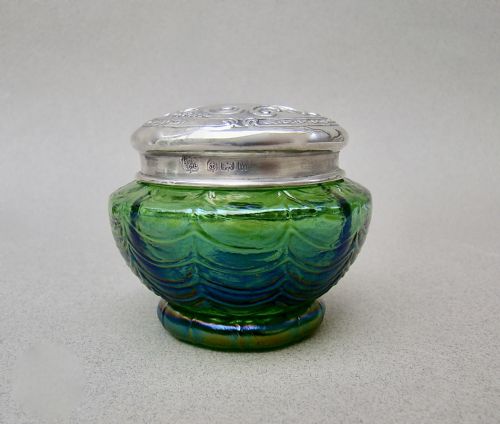
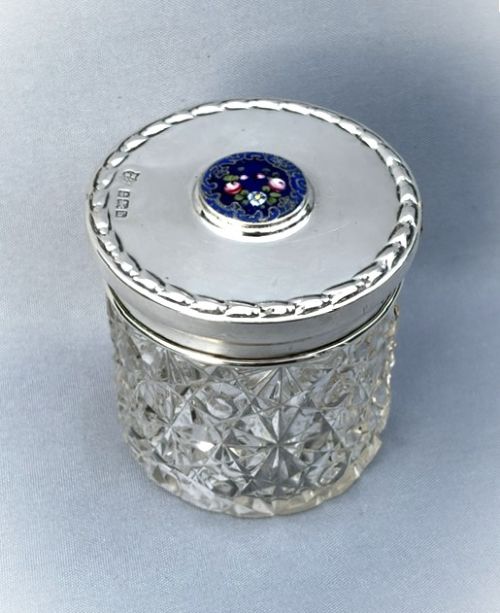
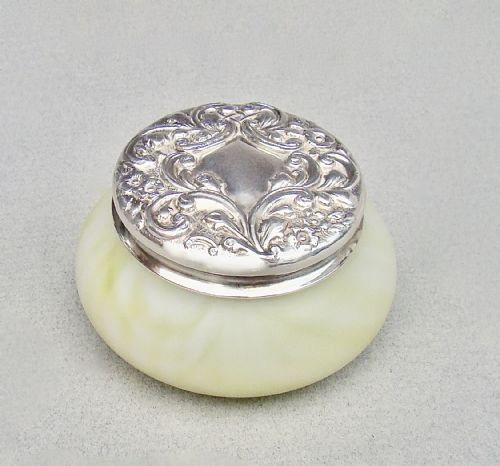
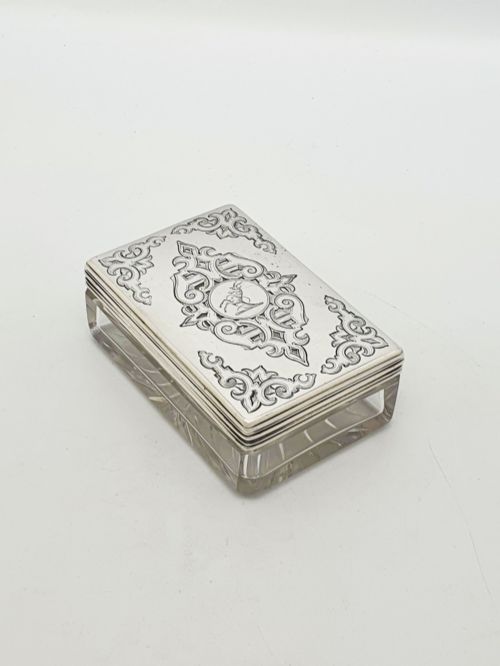
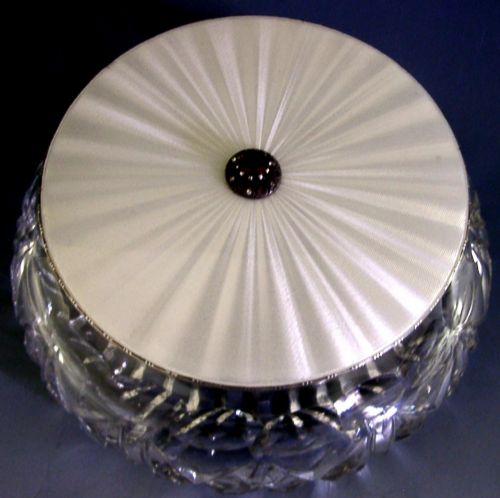
A silver lidded dressing box combines a glass or crystal base with a fitted metal lid, serving to hold pins, powder, and small trinkets. These pieces emerge across the Victorian, Edwardian, and Art Deco periods, shifting from heavy cut glass vessels to geometric enamel designs.
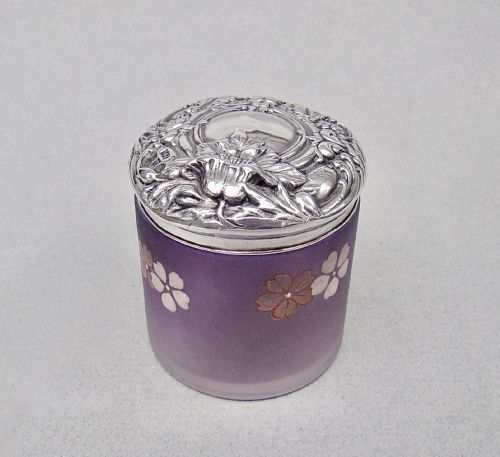
The most common examples on this page are small vanity jars and trinket boxes featuring sterling silver tops paired with cut glass or satin glass bodies. Makers house these containers in various forms including round pots, heart shapes, and tall jars.
Origins span English provincial assay offices such as Birmingham and Chester, alongside London workshops and nineteenth-century French makers. Collectors encounter everything from plain silver covers to ornate enamel and tortoiseshell decorations.
Markers of quality
Quality rests in the weight of the silver lid and the depth of the glass cutting. Thicker crystal bases and heavier gauge metal demonstrate superior manufacture.
Some jars are shaped like tiny hearts, while others are large enough to hold travel cigars.
A. J. Pepper & Co·A. Bromet & Co·Edward Farrell·Goldsmith's and Silversmith's Co.
The Silver Lidded Dressing Box Glossary
- Sterling silver
- A silver alloy containing 925 parts of silver per thousand by mass. This standard metal appears on the vast majority of fitted box lids.
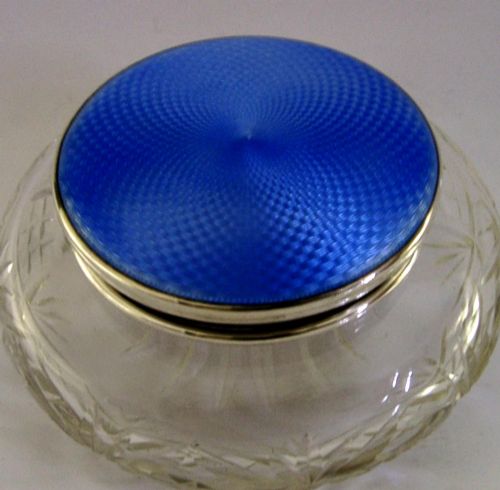
- Guilloche enamel
- A decorative technique where an intricate pattern is engraved beneath a translucent layer of coloured enamel. This finish often adorns Edwardian and Art Deco jar covers.
- Hallmark
- A series of official marks stamped onto precious metals indicating the maker, standard of purity, and year of testing. These stamps allow precise dating of the silver component.
- Cut glass
- Glass decorated by cutting facets or patterns into the surface using a wheel. It provides weight and sparkle to the base of a vanity jar.
- Tortoiseshell
- The shell of certain turtle species used historically for decorative inlays on luxury boxes. It creates a rich, mottled brown surface when polished.
Silver Lidded Dressing Box: Frequently Asked Questions
What is a dressing box used for?
These vessels held small personal items like pins, powder, and trinkets on a Victorian or Edwardian dressing table. They kept delicate vanity accessories organised and protected from dust.
The lidded design also served a decorative purpose, displaying polished silver and cut glass as part of a matching dressing suite.
How do I date a silver lidded box?
Dating relies primarily on the hallmarks stamped into the silver lid, which include assay office symbols and date letters. Comparing the style of the glass and the design period provides additional confirmation.
Art Deco geometric patterns, Edwardian enamel work, and heavy Victorian cut crystal each point to specific decades of production.
Are the glass bases always original to the lids?
Most pieces retain their original matched glass and silver components as created by the silversmith. Collectors check that the lid fits the collar of the glass vessel precisely.
Minor variations can occur over decades of use, but original pairings show consistent wear and matching proportions.
How should I clean the silver and glass?
Silver components require gentle polishing with a soft cloth to avoid disturbing engraved details or enamel work. Standard metal polishes should be kept away from glass bodies and delicate inlays.
Warm soapy water cleans the glass base safely, provided the silver lid is kept dry and separate during washing.