
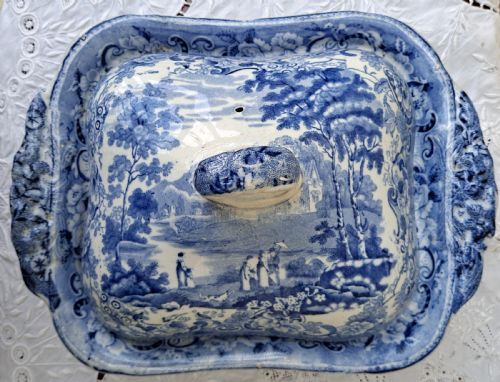


Victorian Covered Vegetable Dish
A victorian covered vegetable dish brings substance to the table, and these lidded servers offer both historical charm and genuine utility.
Victorian Covered Vegetable Dish
When you search for a victorian covered vegetable dish, you encounter substantial lidded vessels designed to keep food warm at the dining table. The pieces available here encompass various iterations of this form, including ironstone tureens, ceramic serving dishes, and silver plated entree dishes spanning the nineteenth century.
The objects take several shapes, from deep blue and white transfer printed earthenware to gleaming metal serving dishes with matching covers. You meet examples decorated with patterns such as Rural Scenery, bamboo motifs, and Imari palettes, alongside crisp white ironstone and polished silver plate.
Many of these covered dishes originate from notable potteries and silversmiths operating during the Victorian era and the decades immediately following. Their survival demonstrates the enduring appeal of these practical dining table accessories.
Materials and Methods
Potters constructed earthenware and ironstone vessels using clay bodies fired at high temperatures, then applied transfer printed designs in blue and white under the glaze. Makers such as Mason's utilised durable ironstone to create robust tureens intended for heavy domestic use.
Metal versions rely on silver plating over base metals like copper, sometimes executed by prominent Sheffield and Birmingham firms using electroplating techniques. Guilders and decorators added finishing touches such as gold leaf, enamel, and hand-painted gilt highlights to ceramic bodies.
Materials recorded across the inventory encompass earthenware, ceramic, silver plate, ironstone, gold leaf, enamel, and gilt.
Standards of Execution
Quality in these covered vessels rests upon the crispness of the transfer printing or the precision of the silversmith's chased and engraved ornament. Finer ceramic examples display clear, deep glaze application and unblemished transfer details, while superior silver plated pieces maintain thick metal deposits over their copper cores.
Proportion and weight also dictate distinction, with superior items offering balanced handles, well-fitting covers that sit flush, and substantial wall thickness. Maker attribution often accompanies elevated quality, as established potteries and silversmiths maintained stricter oversight over their production standards.
James Wallace and Co·Masons Ironstone·Hamilton and Inches·Doulton Burslem·Walker and Hall·Ridgways·Elkington·William Hutton and Sons·Copeland and Garrett·Edward and John Barnard·Hukin and Heath
The Victorian Covered Vegetable Dish Glossary
- Ironstone
- A dense, vitreous type of pottery patented in the nineteenth century to provide a durable alternative to porcelain. It resists chipping and staining remarkably well.
- Transfer Print
- A decoration method where an engraved copper plate transfers a design onto tissue paper, which is then pressed onto the ceramic body before glazing. This technique allowed for intricate, repeatable patterns.
- Entree Dish
- A shallow lidded vessel traditionally used for serving portions of meat or vegetable courses at formal dinners. They frequently feature removable handles to allow the cover to double as an extra serving dish.
- Tureen
- A deep, large serving bowl equipped with a lid, used originally for soups, stews, or boiled vegetables. They often include matching ladles and decorative handles.
- Silver Plate
- A base metal object coated with a thin layer of pure silver, popularised in the nineteenth century through electroplating innovations. It offered the appearance of solid silver at a lower cost.
Victorian Covered Vegetable Dish: Frequently Asked Questions
What is a Victorian covered vegetable dish?
It is a lidded container made of ceramic, ironstone, or silver plate, designed to keep side dishes warm during nineteenth-century meals.
These pieces were essential components of large dinner services, sitting on the dining table or sideboard to serve vegetables, potatoes, or entrees.
How do I clean an antique silver plated dish?
Clean silver plate gently using a dedicated silver cloth or mild, non-abrasive polish designed for plated items. Avoid harsh scrubbing or abrasive scouring pads that can wear away the thin silver layer.
For ceramic or ironstone versions, warm soapy water and a soft cloth suffice to protect the underlying glaze and transfer prints.
Can I use these dishes for daily dining?
Many ceramic and ironstone dishes remain structurally robust enough for regular use, provided you wash them by hand rather than placing them in a dishwasher. Silver plated items also serve well for special occasions, though acidic foods should not be left in them for prolonged periods.
Careful handling preserves both the glaze and any delicate gilt highlights.
How do ironstone and earthenware differ?
Ironstone is a heavier, harder, and more vitreous ceramic material developed to withstand rigorous daily use without absorbing moisture. Earthenware is slightly more porous and traditional, often featuring detailed transfer printed scenes under a glossy glaze.
Both materials were widely utilised across the nineteenth century for kitchen and dining wares.
What does a tureen include?
A tureen typically consists of a deep serving bowl, a fitted cover, and sometimes accompanying elements such as matching ladles or fixed handles. The lid helps retain heat while food is brought from the kitchen to the dining table.
Some entree dish variants feature two-part designs where the lid reverses to serve as an additional shallow dish.