
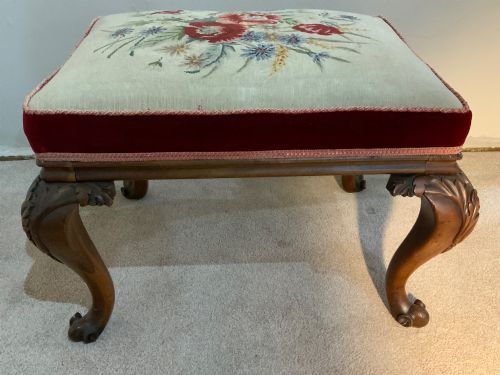
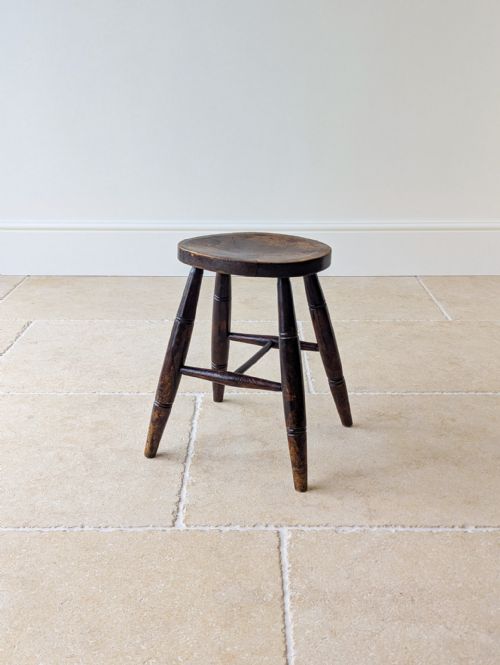
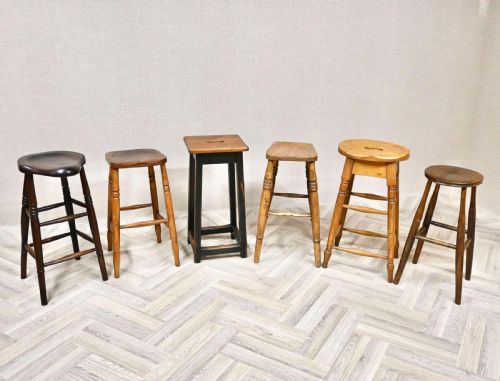
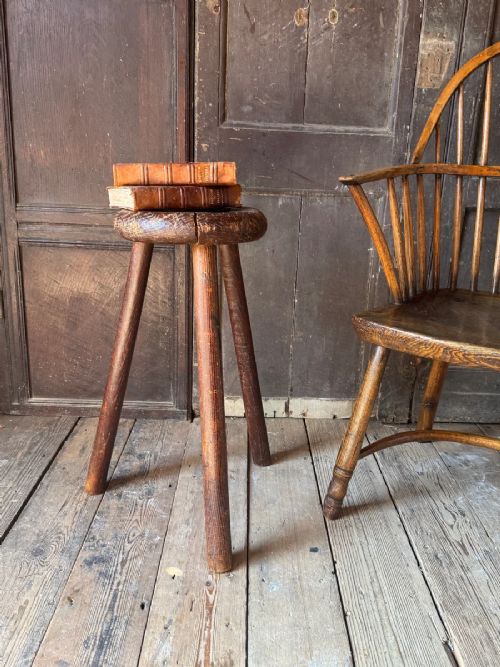

Victorian Country Stool
A victorian country stool brings honest utility and vernacular craftsmanship into a modern interior.
Victorian Country Stool
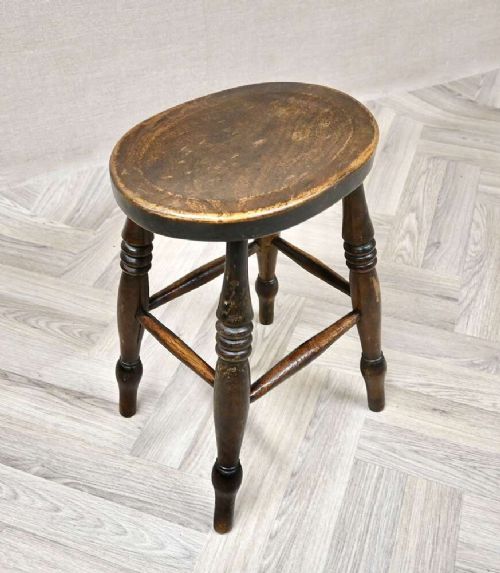
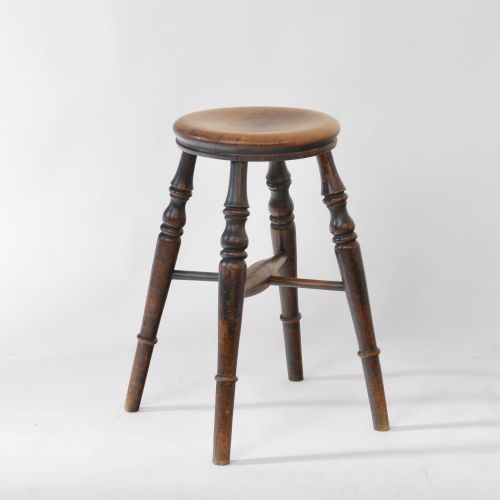
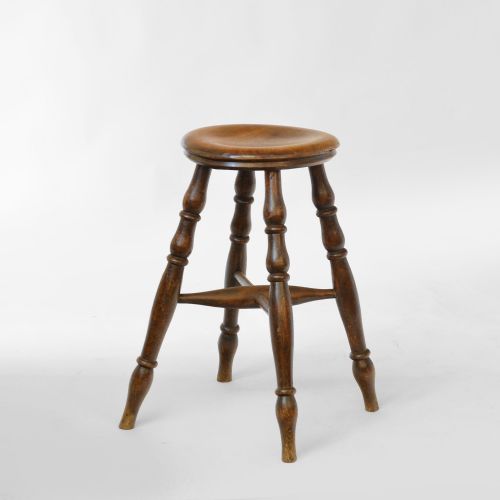
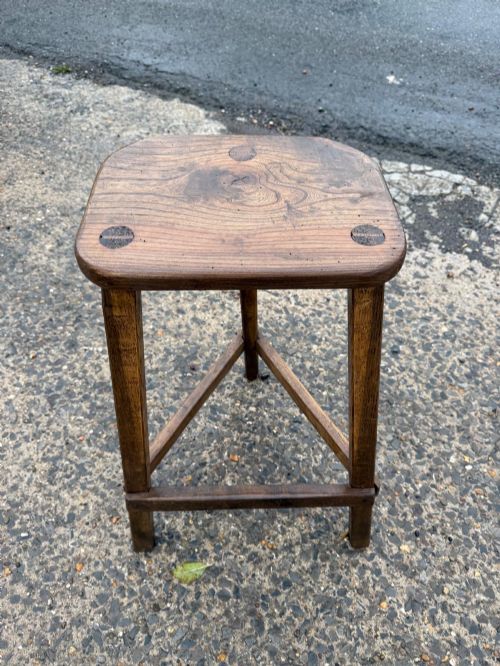
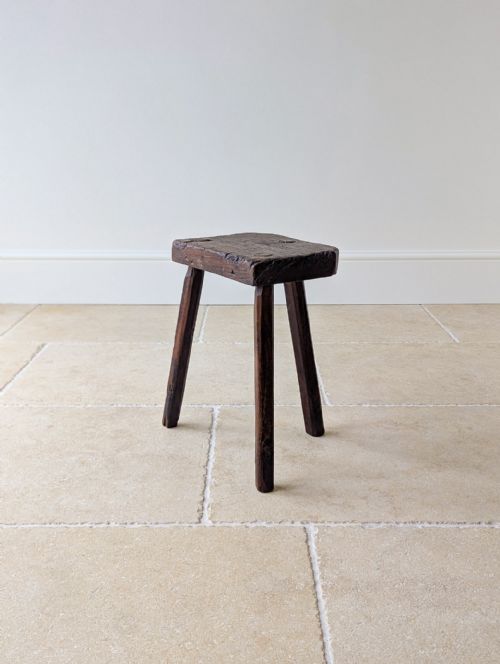
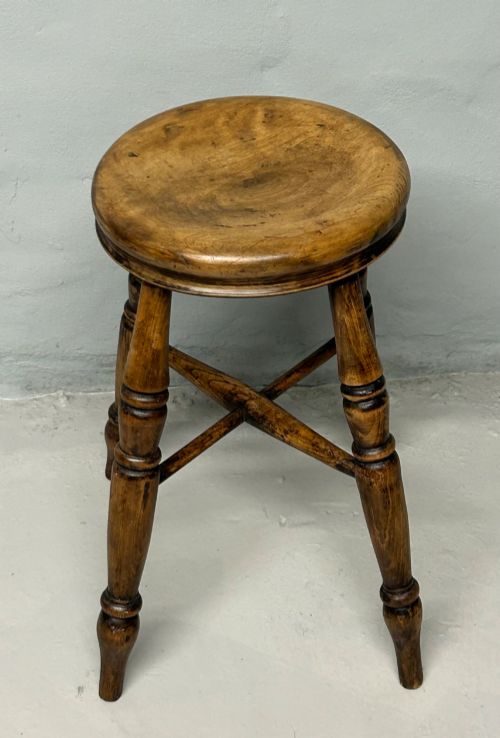
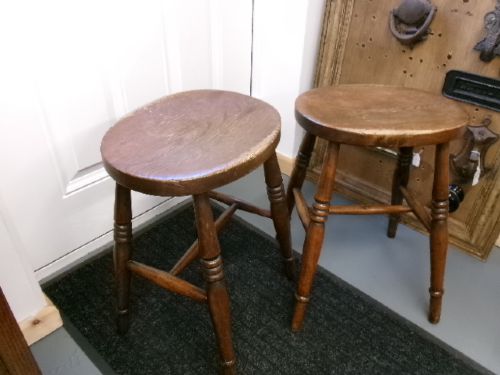
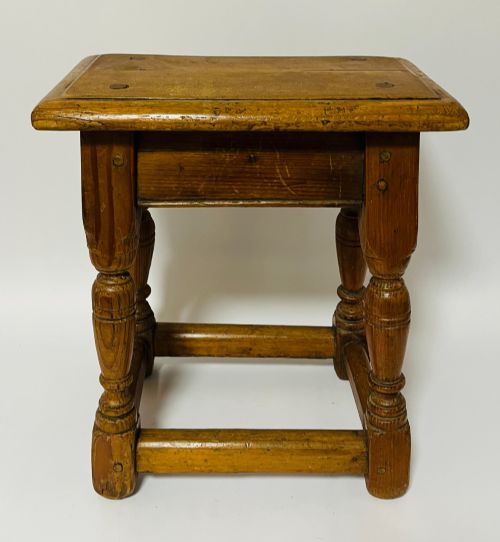
When you search for a victorian country stool, you are looking at practical seating shaped by domestic, tavern, or workshop use during the nineteenth century. These pieces range from simple three-legged milking stands to robust joint stools and tall kitchen or pub benches.
You are most likely to meet elm-topped examples with beech or ash turnings, often showing the unmistakable marks of daily labour and time. Their forms are direct and unpretentious, designed for function rather than formal display.
Materials and construction
These stools rely heavily on native timbers, pairing durable hardwoods like elm or sycamore for seats with beech, ash, or oak for turned legs and stretchers. Seats are frequently dished or saddled through adze work to provide comfort without upholstery.
Makers utilised traditional joinery such as wedged through-tenons and splayed legs for stability on uneven farmhouse flagstones or workshop floors. Surfaces display the honest grain of fruitwood, pine, or walnut, shaped by hand tools rather than industrial machinery.
Victorian Country Stool Retail Price Guide 2026
Typical asking prices for victorian country stool among the pieces listed under this phrase on Sellingantiques today, from the lower quarter to the upper quarter. They describe what is for sale here now, not the wider market.
Some industrious Victorian makers recycled old tavern table tops into remarkably comfortable kitchen perches.
Judging quality in vernacular seating
Quality rests in the integrity of the timber and the harmony of the proportions, particularly the balance between the thickness of the top and the splay of the legs. Dished seats with deep, organic hollows show superior hand-shaping by regional carpenters.
The degree of original surface wear and untouched patination separates an honest survivor from a heavily restored piece. Well-turned stretchers and tight, original wedged joints indicate a higher standard of provincial joinery.
Howard & sons·Hallett & Sons
The Victorian Country Stool Glossary
- Joint stool
- A sturdy wooden stool constructed with mortise and tenon joints pegged together, common in domestic settings before the widespread use of chairs. These pieces were built to endure heavy daily use.
- Dished seat
- A wooden seat scooped or hollowed out into a shallow basin shape to fit the contours of the body. This technique required considerable skill with an adze or scorper.
- Splayed legs
- Legs angled outwards from the centre of the seat to provide greater stability on uneven floors. This is a defining characteristic of many vernacular and Windsor-style country seats.
- Turned stretcher
- A horizontal wooden rod connecting the legs of a stool to reinforce the frame, shaped on a lathe. Turnings range from simple plain spindles to more decorative rings and reels.
Victorian Country Stool: Frequently Asked Questions
How were these stools originally used?
Victorian country stools served versatile roles around the home, dairy, workshop, and tavern. They provided practical seating for milking, manual labour, or gathering by the hearth.
Their robust construction allowed them to be easily moved wherever an extra seat or a quick platform was needed.
Can I use an antique stool as a side table?
Many people use these sturdy wooden stools as bedside tables or low surfaces for books and lamps. Their flat or gently dished tops provide a stable platform for everyday items.
Placing one in a living room or hallway adds warmth and texture to the space without taking up much floor area.
How do I care for an old elm seat?
Keep wooden stools away from direct heat sources and rapid temperature shifts to prevent the timber from splitting. A light application of quality beeswax helps nourish the dry grain.
Buff the surface gently with a soft cloth to maintain its natural sheen and protect the historic patination accumulated over generations.
How can I tell the period?
Dating relies on observing tool marks, timber choices, and construction methods like hand-turned legs versus later machine-cut components. Earlier nineteenth-century pieces often feature wider boards and more pronounced adze work.
Comparing the wear patterns and fasteners helps place the stool within the Victorian era or slightly beyond.