



Small Rustic Stool
A small rustic stool offers humble utility and honest timber, showing the marks of everyday country life.
Small Rustic Stool
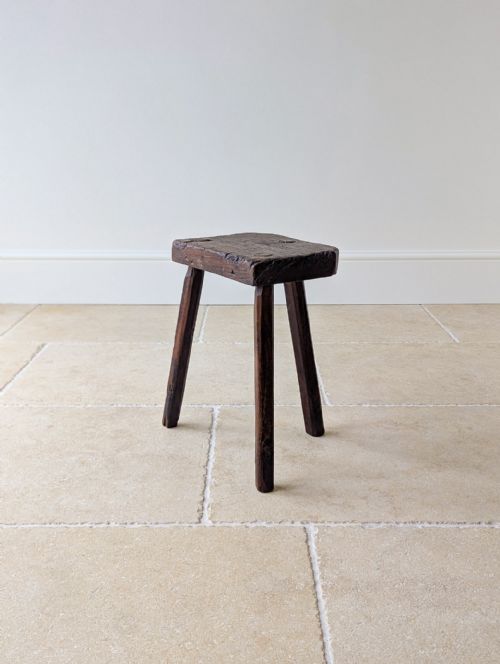
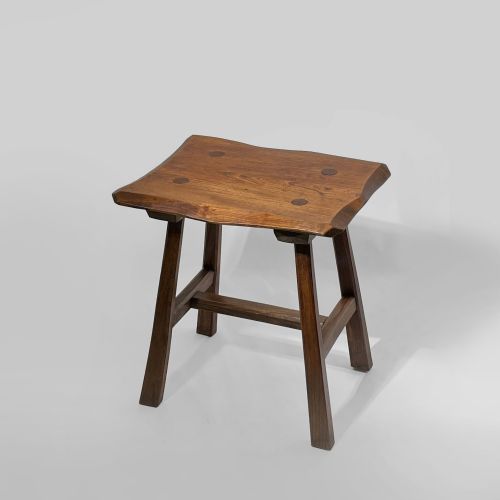
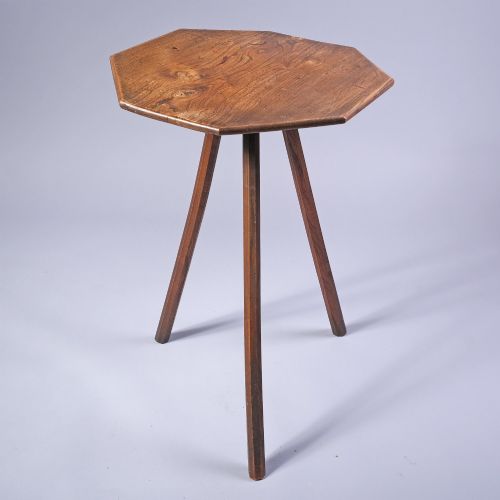
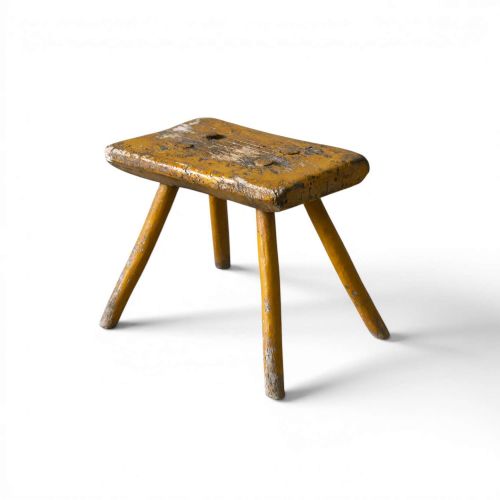
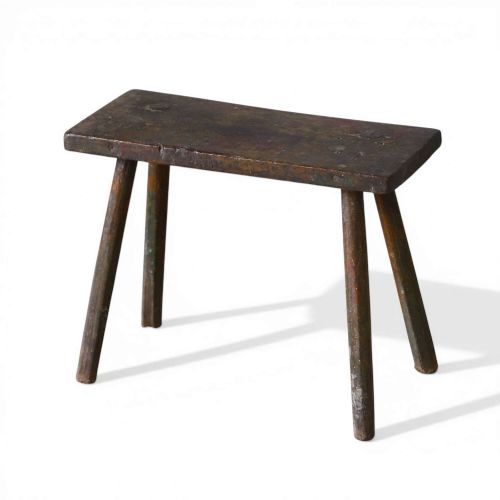
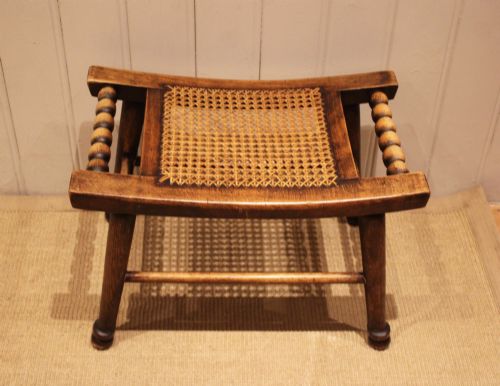
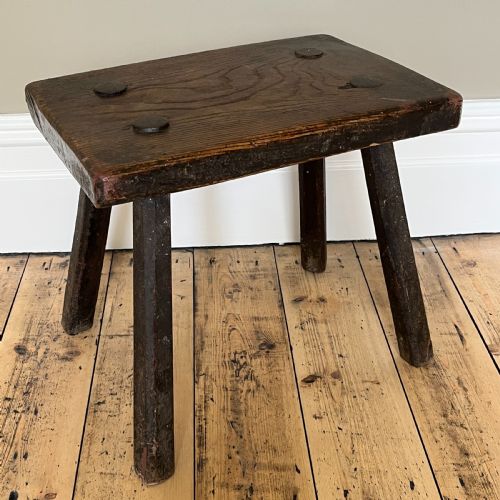
When searching for a small rustic stool, buyers encounter low seating born of utility rather than formal parlour display. The selection relies heavily on country forms from the nineteenth century, including three-legged milking stools, diminutive vernacular designs with sculpted seats, and boarded five-plank construction.
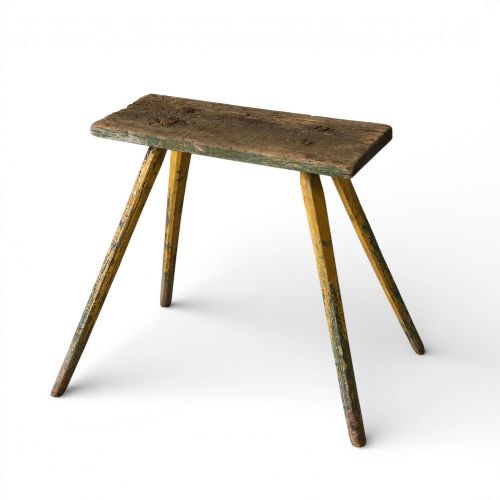
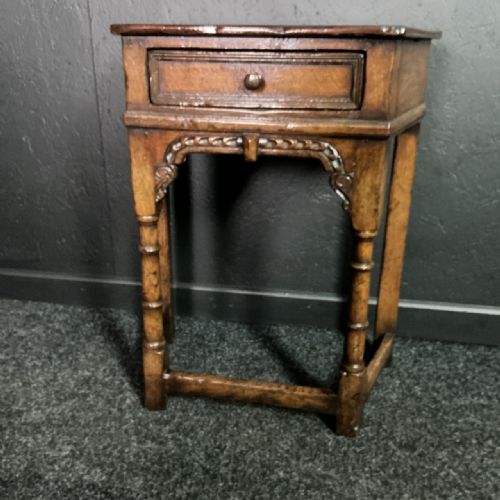
These pieces often blur the line between seating and low occasional tables, serving multiple practical purposes in compact spaces. Examples range from English country workshops to Northern and Eastern European rural traditions, frequently retaining original painted surfaces or plain timber patination.
How they were made
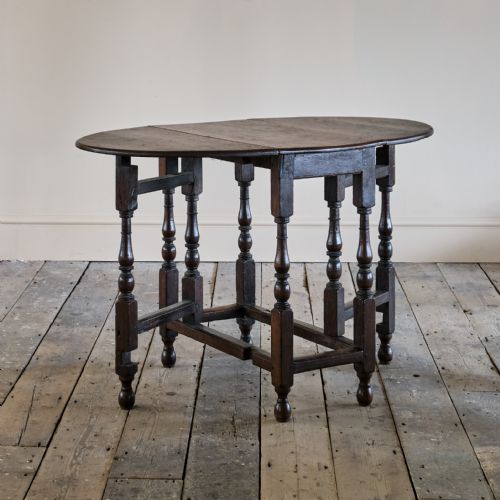
Construction relies on solid hardwoods selected for toughness and local availability, principally oak, elm, ash, and beech. Makers utilised pegged joints, turned legs, and three-legged tripod bases designed to sit steady on uneven flagged or earthen floors.
Surface finishes vary from unadorned timber showing natural grain to surviving coats of original ochre, green, or white paint. Details such as sculpted rounded seats, rush weaving, and cane work demonstrate straightforward manual methods suited to vernacular furniture making.
Listings feature woods including oak, elm, ash, beech, pine, walnut, and burr yew across the nineteenth and early twentieth centuries.
What varies in quality
Quality rests upon the integrity of the timber, the honesty of the construction, and the preservation of original surfaces. Pieces retain greater character when historical wear remains undisturbed by aggressive modern restoration or stripping.
Proportion and stance distinguish ordinary utility from exceptional vernacular design. A balanced silhouette, well-turned legs, and untouched patination elevate simpler forms into desirable examples of country craftsmanship.
The Small Rustic Stool Glossary
- Vernacular
- Everyday furniture made by local craftsmen for practical use rather than following high-style metropolitan fashions. These pieces reflect regional traditions and available materials.
- Milking stool
- A low, typically three-legged seat designed for stability while milking animals by hand. The tripod form prevents rocking on uneven ground.
- Pegged construction
- A method of joining wood using wooden pins or trunnels rather than metal nails. This allows timber to expand and contract naturally with changes in humidity.
- Treen
- Small handmade wooden household objects and utensils. Items in this category often share the turned construction and timber types found in country stools.
Small Rustic Stool: Frequently Asked Questions
How were milking stools used?
Milking stools provided low, stable seating for farm workers tending to livestock in byres and fields. Their three-legged design ensured the seat remained steady on uneven agricultural ground.
Today, owners utilise them as bedside stands, plant supports, or low seats in smaller rooms.
What woods are common?
Country makers relied on durable domestic timbers such as oak, elm, ash, and beech. Elm provided toughness for seats, while ash and beech offered strength for turned legs.
Selected pieces also incorporate pine, walnut, and burr yew depending on regional availability.
How do I date a stool?
Dating relies on tool marks, construction methods, and timber patination rather than formal maker's marks. Pegged joints, hand-turned spindles, and signs of genuine wear indicate nineteenth-century or earlier origins.
Original paint finishes also help anchor pieces within specific late nineteenth or early twentieth-century traditions.
Can I use them as tables?
Many survivors function equally well as low occasional tables, candlestick stands, or display surfaces. Their compact footprints suit modern interiors seeking versatile accent pieces.
Plain timber tops and sturdy construction make them practical for holding small lamps or books.