


Victorian Country House Sofa
A victorian country house sofa brings deep proportions and traditional upholstery to a large interior.
Victorian Country House Sofa
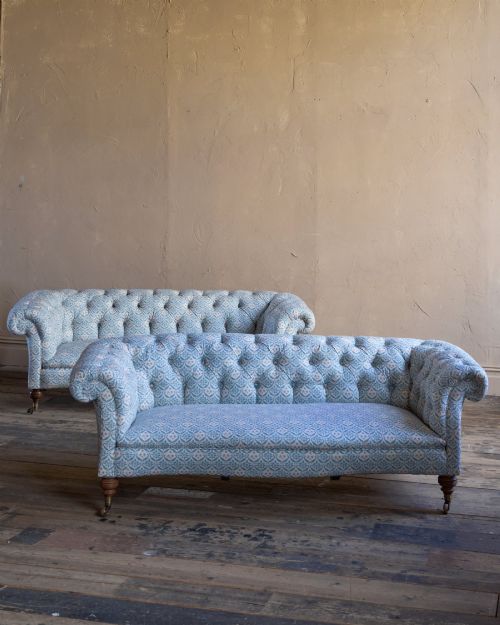
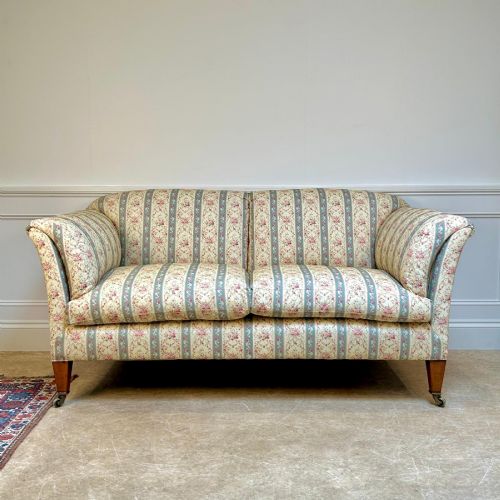
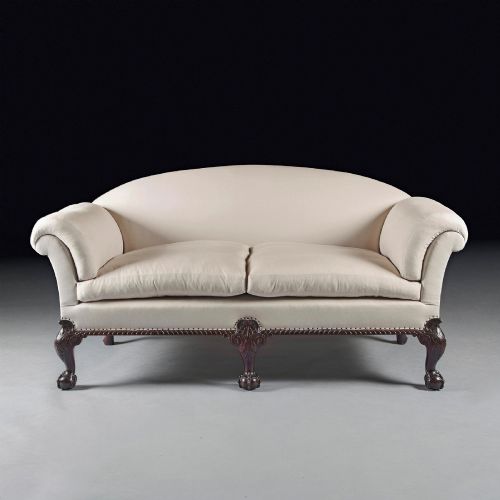
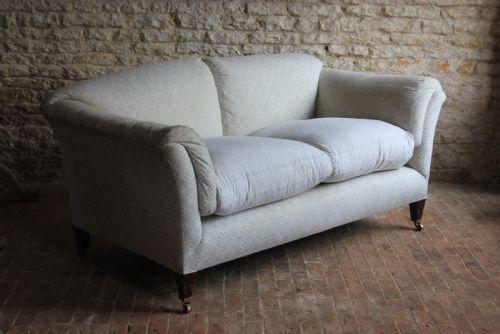
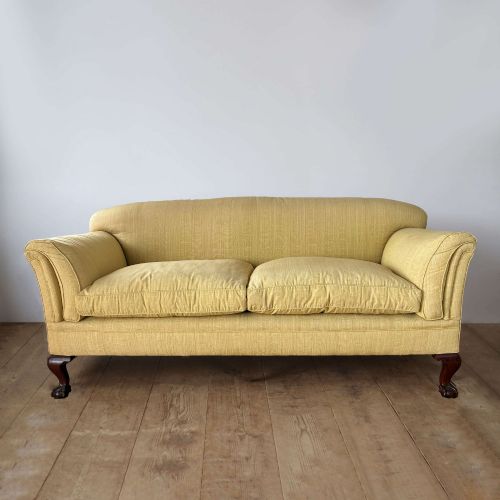
A victorian country house sofa is a substantial upholstered seat built for comfort in 19th-century domestic interiors. These pieces typically present deep seats, rolled or scroll arms, and robust frames designed for substantial drawing rooms and libraries.
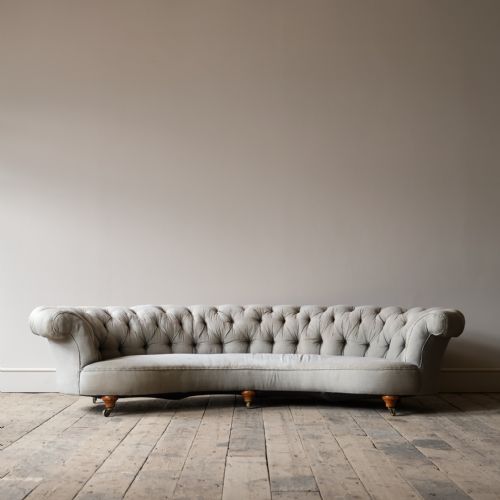
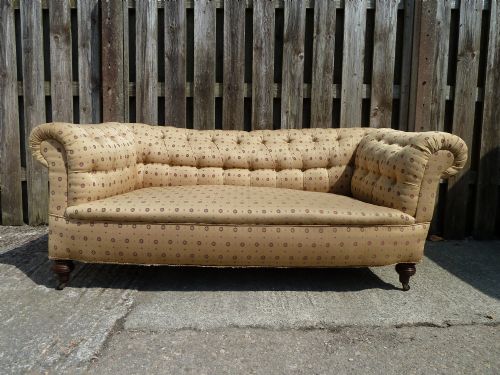
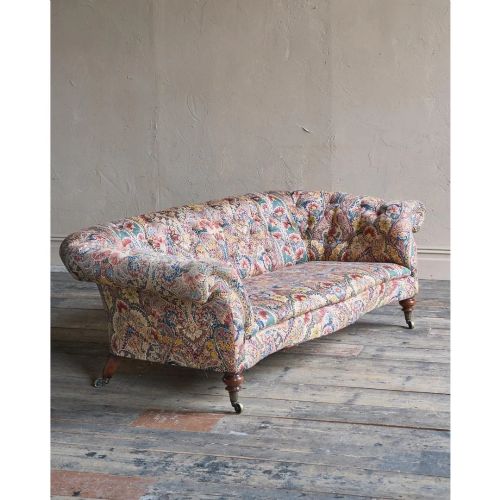
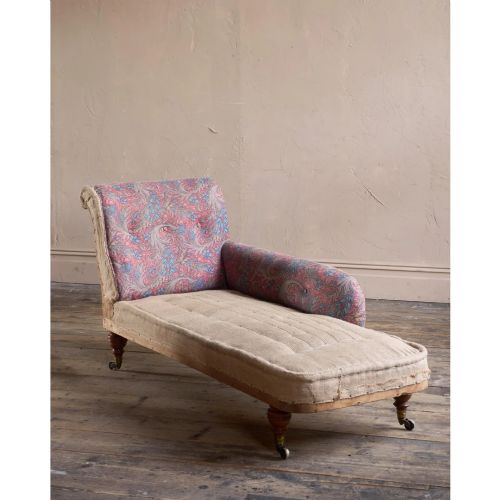
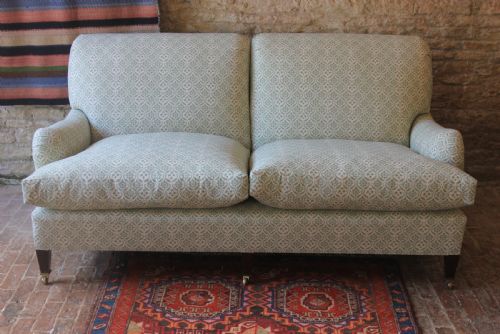
The selections available here range from button-backed Chesterfields and low-backed library seats to larger chaise longue forms and pieces attributed to prominent London makers. Mahogany, walnut, and oak frames provide the structural foundation for these heavy upholstered forms.
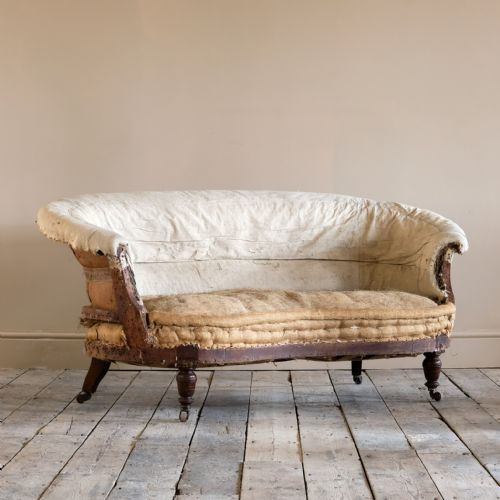
Many examples arrive on the market in need of reupholstery or retain their original ticking fabric and hair stuffing. Buyers encounter various regional English styles, alongside revival pieces that imitate earlier Chippendale or Regency lines.
Materials and Construction
Makers constructed the primary frames of a victorian country house sofa using hardwoods such as mahogany, walnut, and oak, often exposing turned wooden legs fitted with brass castors. Internal support relied on heavy coil springs tied by hand into webbing systems.
Traditional upholstery techniques involved layering horsehair, wool, and wadding directly onto the frame, held in place with Hessian and calico linings. Final outer coverings varied from rich cotton velvets and leather to practical ticking fabric.
Available forms range from standard Chesterfields and double wingback armchairs to low library seats and billiard room settees.
Assessing Quality and Construction
The distinction between standard commercial production and superior workshop output rests in the integrity of the internal frame and the density of the springing. Master makers built rigid hardwood carcases that prevented structural wobble under heavy daily use.
Detailing on the show-wood, the precision of the hand-tied coil springs, and the retention of original stamped maker markings elevate specific examples above anonymous vernacular furniture. The depth of the seating well and the balance of the scroll arm proportions determine the visual weight of the silhouette.
Howard and Sons·Hampton and Sons·Morison and Co
The Victorian Country House Sofa Glossary
- Chesterfield
- A large upholstered sofa characterised by equal height arms and back, frequently featuring deep button tufting. This form remains a staple of 19th-century English seating.
- Ticking
- A tightly woven cotton or linen fabric historically used beneath outer upholstery to contain horsehair stuffing. Surviving original ticking adds authenticity to period workshop pieces.
- Chaise Longue
- An elongated upholstered seat intended for reclining, combining the backrest of a sofa with the extended platform of a daybed. These items frequently appear in mid-19th-century country house interiors.
- Hessian
- A coarse woven fabric made from jute fibres, utilised as an internal foundation layer for webbing and stuffing. Traditional restorers retain this material where structural integrity permits.
- Scroll Arm
- An upholstered arm that curves outward and downward in a tight spiral shape. This profile defines many large Victorian drawing room seats.
Victorian Country House Sofa: Frequently Asked Questions
What defines a country house sofa?
A country house sofa is characterised by generous proportions, deep seats, and robust construction intended for heavy daily use in large 19th-century drawing rooms.
These pieces prioritise comfort through thick horsehair padding and sprung seating bases, often finished in velvet, leather, or plain ticking fabric.
How do I identify a Howard and Sons sofa?
Authentic pieces by this maker often feature stamped brass castors, numeric signatures on the legs, and specific paper labels inside the frame.
The workshop produced distinct Chesterfield and low-backed lounge forms using high-specification internal springing and traditional hair stuffing.
Are these sofas suitable for daily use?
These pieces were originally built to withstand generations of domestic use, utilising heavy hardwood frames and hand-tied coil springs.
Many examples require professional reupholstery or internal restoration before they can endure modern sitting habits comfortably.
What is original ticking upholstery?
Original ticking is the dense, striped cotton or linen lining applied beneath decorative outer fabrics to hold the internal horsehair stuffing securely in place.
Finding a sofa that retains this internal layer provides strong evidence of an unmolested period upholstery scheme.