


Gold Upholstered Couch
A gold upholstered couch brings together gilt frames and rich textiles, offering a striking centrepiece for a traditional drawing room.

Gold Upholstered Couch
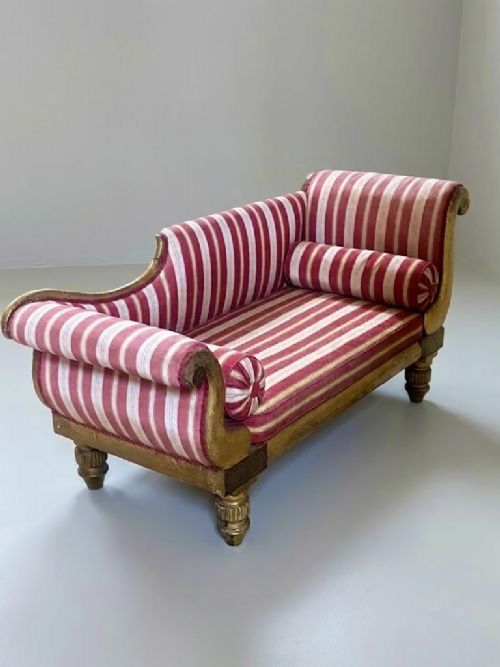
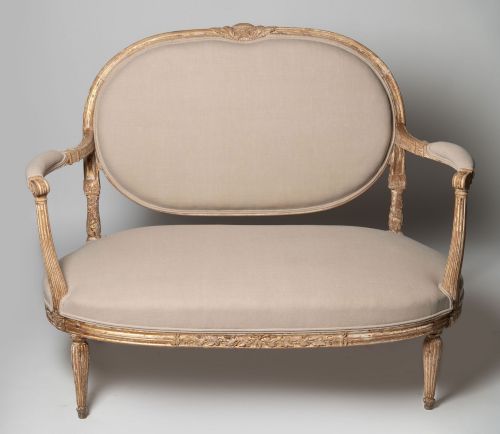
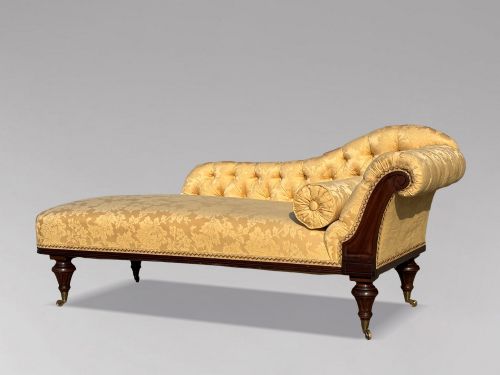
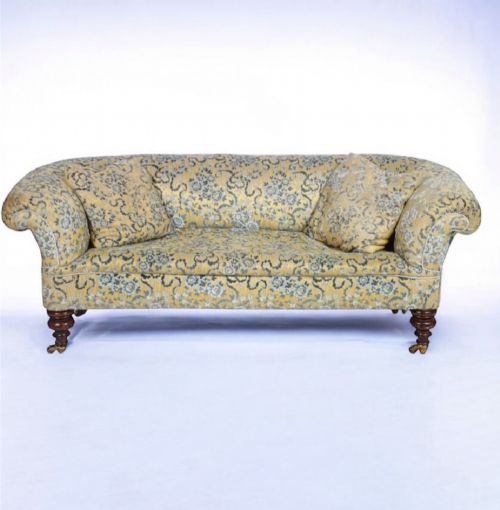
A gold upholstered couch encompasses various forms such as settees, daybeds, and chaise longues originating from the eighteenth, nineteenth, and early twentieth centuries. These pieces appear in styles including Victorian, Regency, and Louis XVI, reflecting distinct historical periods of European design.
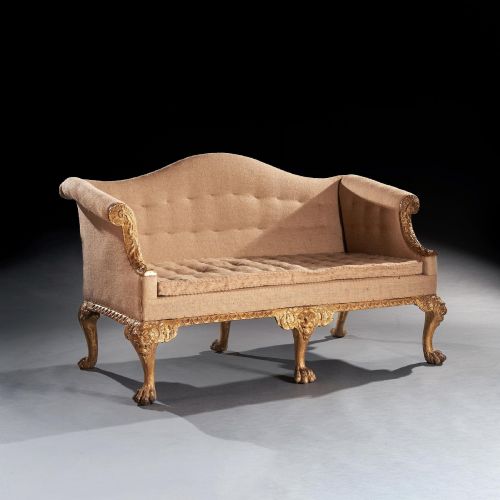
The most common examples encountered on this page date from the nineteenth century, featuring gilded frames paired with silk, damask, or velvet upholstery. Many pieces draw on French or English workshop traditions, incorporating carved woodwork and scroll-ended or camel-backed silhouettes.
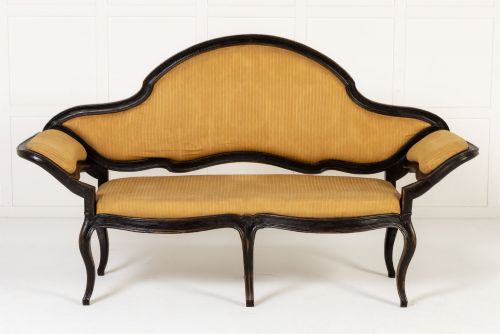
Buyers seeking a gold upholstered couch will find items ranging from large country house settees to smaller boudoir seats and shell-shaped daybeds. The selection spans structural timber frames finished in giltwood, paint, or polished mahogany, upholstered in shades of gold, cream, and green.
Materials and construction
Frames are constructed from hardwoods such as mahogany, walnut, beech, and giltwood, often shaped with hand-carved detailing like lion mask hairy paw feet or intricate scrollwork. Gilded surfaces are applied using gold leaf over prepared wooden bases to achieve a bright or burnished metallic finish.
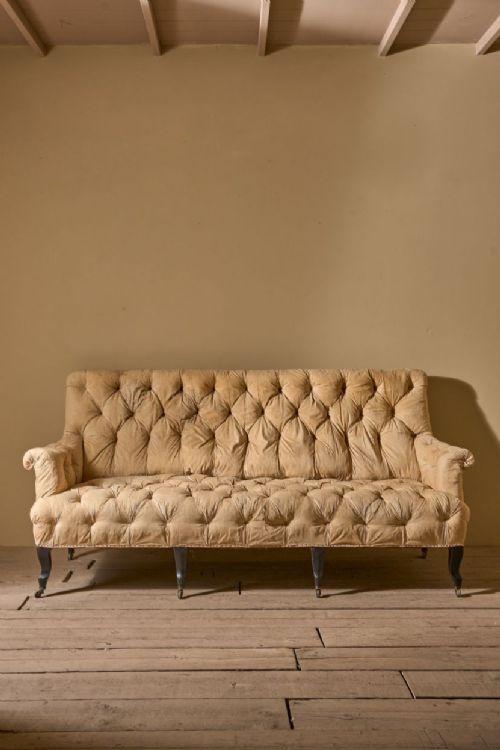
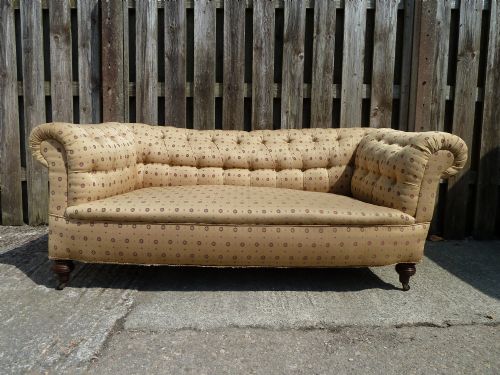
Upholstery relies on textiles including silk, velvet, damask, and striped fabrics, secured over padded foundations with traditional stuffing methods. Buttoned backs and tightly fitted covers highlight the craftsmanship of nineteenth-century and earlier seating furniture.
An Austro-Hungarian shell-shaped sofa brings an unexpected maritime curve to the formal drawing room.
Distinguishing quality
Quality rests in the crispness of the timber carving and the integrity of the original gilt finish or polished showwood frame. Pieces attributed to notable makers or specific stylistic traditions, such as George II or Regency designs, demonstrate superior joinery and sculptural detail.
The sophistication of the textile selection and the retention of period upholstery materials influence the overall character of the piece. Substantial proportions and well-balanced proportions in frame architecture set finer examples apart from standard production.
Giles Grendey
The Gold Upholstered Couch Glossary
- Giltwood
- Wood that has been coated with gold leaf or powder. This finish provides a bright metallic appearance characteristic of formal period seating.
- Scroll-ended
- A furniture arm or back design that curves outward in a spiral scroll. This contour appears frequently on Regency period seating.
- Showwood
- Polished or carved wooden framing left exposed around the upholstered portions of a seat. It highlights the quality of the underlying timber.
Gold Upholstered Couch: Frequently Asked Questions
Where were these couches used originally?
Grand country houses, formal drawing rooms, and Parisian boudoirs housed these seating pieces for reception and display. Larger settees accommodated multiple guests in public entertaining spaces.
Smaller chaise longues and daybeds served private dressing rooms or sitting rooms for resting during the day.
How should I care for giltwood frames?
Giltwood requires protection from direct sunlight and moisture to prevent the delicate gold leaf from flaking or tarnishing. Dusting should be done gently with a dry, soft brush.
Harsh chemical cleaning agents must be avoided entirely to preserve the original metallic surface.
What is the difference between a settee and a sofa?
Historically, a settee referred to a two-seater wooden or upholstered bench with a back and arms, while a sofa denoted a larger, fully upholstered piece. Over time, the terms became largely interchangeable in furniture descriptions.
Both forms appear across eighteenth and nineteenth-century inventories with varying dimensions and seating capacities.