

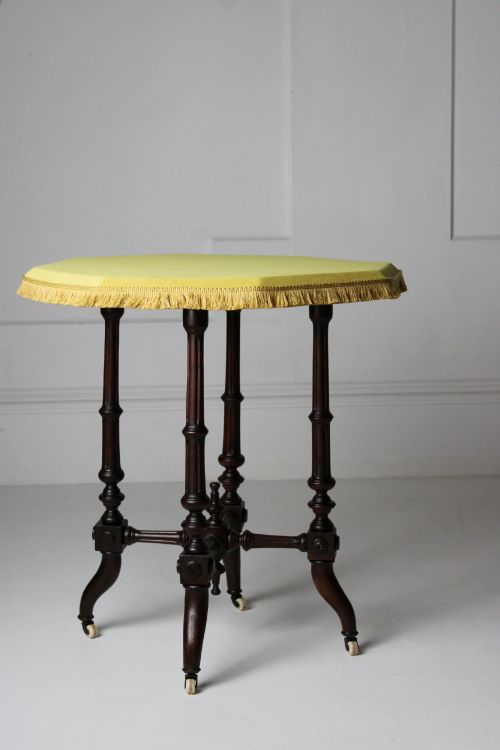


Victorian Corner Table
These pieces turn neglected angles into focal points, offering a victorian corner table to anchor a room with period character.
Victorian Corner Table
A victorian corner table transforms wasted wall junctions into useful display surfaces, utilising woods such as mahogany, walnut, and rosewood. These items span various forms, from drop-leaf surfaces to tier-based whatnots and console designs.
The selection frequently includes pieces from the mid to late nineteenth century, reflecting stylistic shifts from heavy mahogany constructions to lighter aesthetic movement and moorish designs. Buyers encounter everything from simple oak stands to exhibition-quality burr walnut creations.
How they were made
Cabinet makers utilised dense native and imported timbers, pairing solid carcases with decorative veneers like burr walnut and amboyna. Construction methods relied on traditional joinery, turning, and occasional brass fittings or inlays.
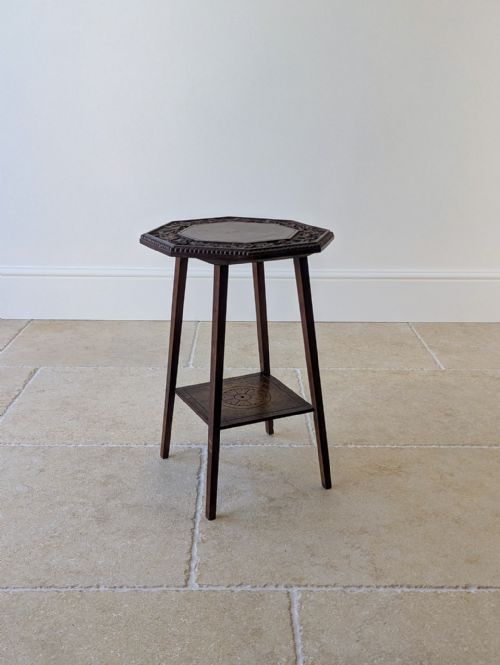
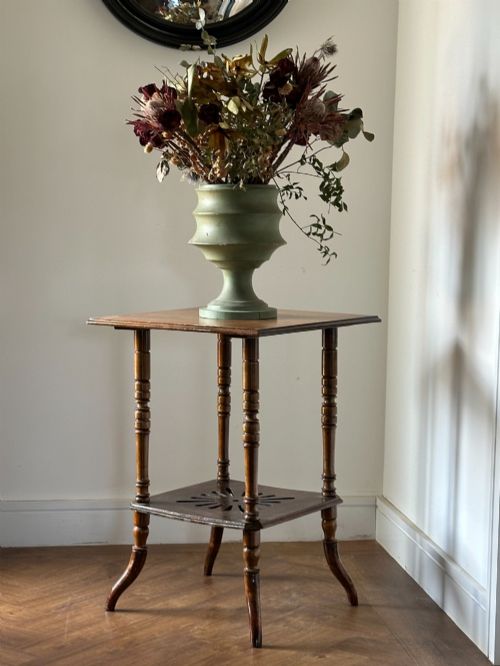
Surfaces were finished to highlight natural grain patterns, utilising ebonising or polish that emphasised the depth of rosewood and mahogany. Structural turns, barley twists, and spindle bases provided both stability and visual rhythm.
Some tables feature drop leaves designed specifically to hide away until tea time arrived.
What varies in quality
Excellence rests in the selection of timbers and the precision of decorative details, distinguishing standard utility furniture from exhibition pieces. Superior examples exhibit intricate carvings, matched veneers, and thoughtful proportions that fit snugly into room angles.
The integrity of secondary woods, the crispness of turned spindles, and the preservation of original polish separate ordinary surviving items from those held in higher regard by collectors.
Liberty & Co.
The Victorian Corner Table Glossary
- Whatnot
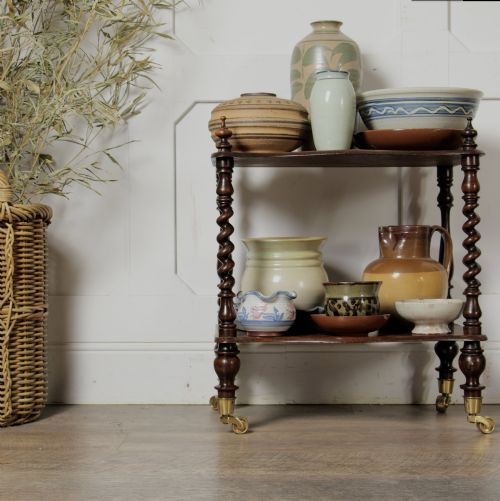
- A set of open shelves used for displaying ornaments or books. These tiered structures appear frequently in nineteenth-century interiors.
- Ebonised
- Wood treated with a dark stain or finish to imitate ebony. This technique gained popularity during the nineteenth century, particularly in aesthetic movement pieces.
- Drop-leaf table
- A table with hinged flaps that fold down to save space. They offer flexible surface area in compact rooms.
- Aesthetic movement
- A late nineteenth-century design style emphasising visual beauty over narrative content. It often incorporates Anglo-Japanese influences and ebonised finishes.
Victorian Corner Table: Frequently Asked Questions
What is a victorian corner table used for?
These tables provide a practical surface in room angles where standard rectangular furniture would obstruct walkways. They hold lamps, decorative objects, or books efficiently.
In period homes, they maximised awkward spatial layouts without overwhelming the floor area.
How do I identify a victorian corner table?
Look for timber choices typical of the nineteenth century, including mahogany, walnut, and rosewood. Construction details like turned spindle legs and period joinery indicate the era.
Stylistic cues often point toward aesthetic movement, gothic revival, or late nineteenth-century design idioms.
Where should I place a victorian corner table?
They suit empty room angles in hallways, living rooms, or bedrooms. Their wedge-shaped design allows them to tuck neatly against two adjoining walls.
Positioning them away from direct sunlight helps preserve delicate wood veneers and polish.
How do I care for nineteenth-century wood?
Maintain the finish by dusting with a soft cloth and avoiding silicone-based polishes. Keep the timber away from extreme temperature fluctuations and radiators.
Applying occasional natural wax helps nourish dry antique surfaces.