


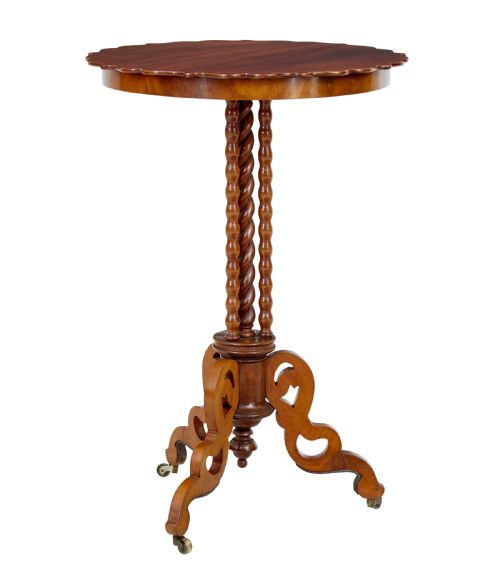

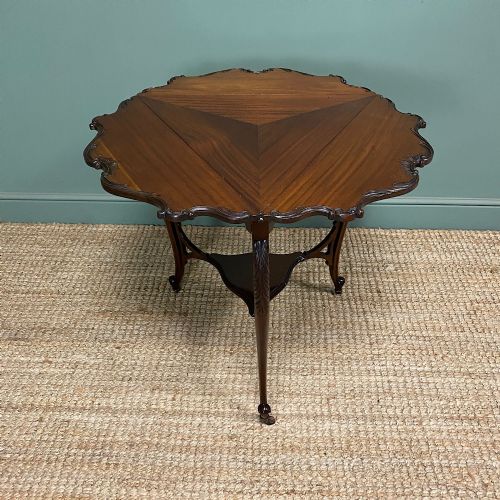

Victorian Piecrust Edge Table
These Victorian piecrust edge table pieces offer intricate scalloped borders and sturdy tripod bases, bringing practical antique charm to any sitting room.
Victorian Piecrust Edge Table
A Victorian piecrust edge table combines traditional cabinetmaking with practical domestic utility, serving as an occasional, side, wine, or lamp table. These smaller tables appear frequently in mahogany and burr walnut, often featuring a tilt-top mechanism that allowed the surface to be stowed upright when not in use.
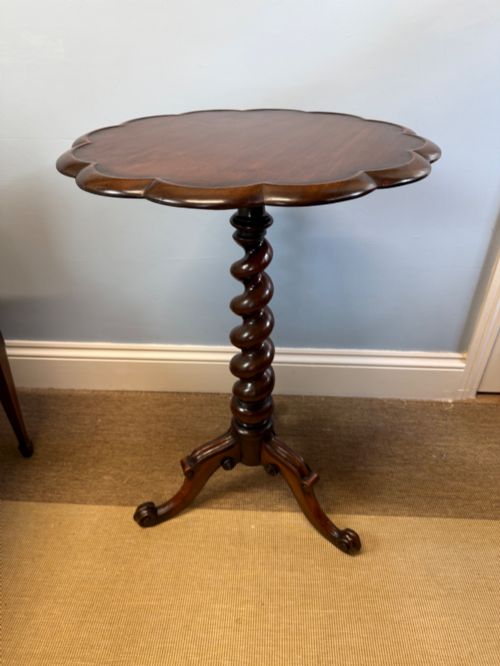
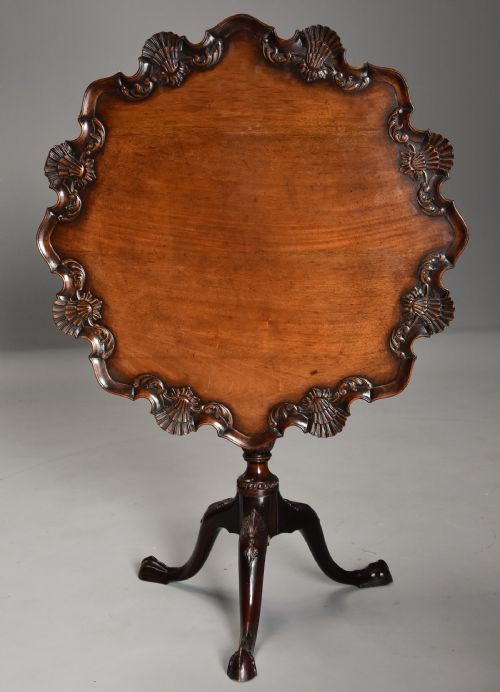
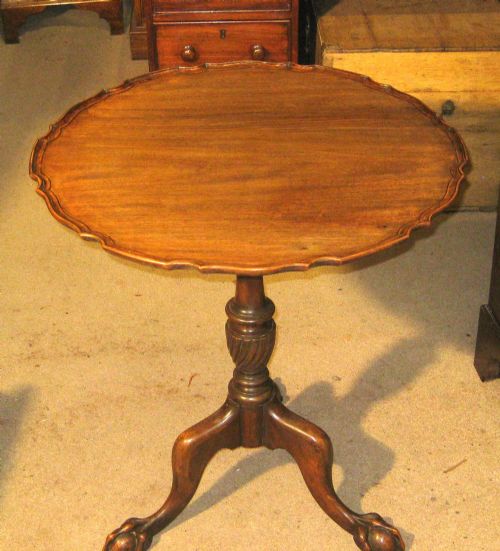
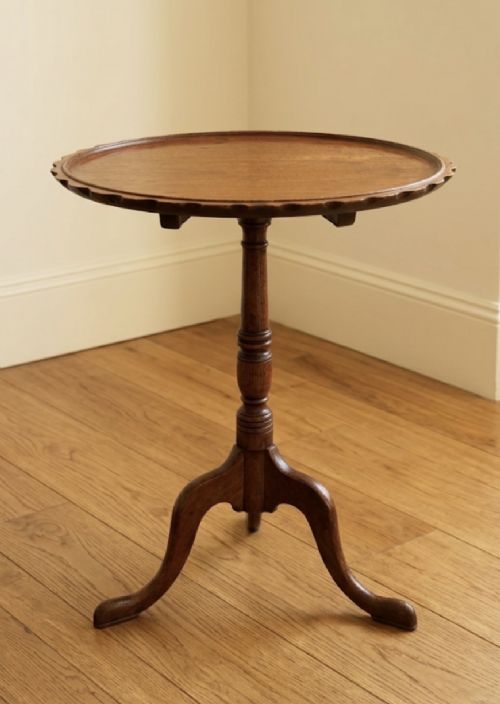
The defining characteristic is the raised, carved scalloped rim resembling pastry work, which frames circular tops mounted on pillar and tripod supports. Pieces span the nineteenth century and into the early twentieth century, incorporating revival aesthetics such as Chippendale style elements alongside colonial interpretations.
Buyers encounter diverse formats ranging from modest wine tables and tripod stands to larger centre tables and corner tables. The selection balances standard domestic furniture with occasional pieces displaying boxwood inlay or carved pillar stems.
How They Were Made
Cabinetmakers constructed these tables primarily from solid hardwoods like mahogany, oak, and teak, frequently applying burr walnut veneers to table surfaces for striking grain patterns. Boxwood inlay adds decorative contrast to selected tops, requiring precise woodworking skill to embed light wood into darker timber backgrounds.
Turning lathes shaped the central pillars and tripod legs, while skilled carvers executed the characteristic scalloped piecrust borders directly from thick timber blanks or applied mouldings. Tilt-top mechanisms relied on close-fitting brass catches and pivots, allowing the circular top to lock securely into horizontal or vertical positions.
Secretly, every piecrust edge table wishes it actually contained pastry rather than just holding your evening cup of tea.
What Varies in Quality
The distinction between standard utility items and finer examples rests upon the depth and crispness of the carved border work and the selection of timber veneers. Burr walnut surfaces with rich, figured grain patterns and carefully matched segments indicate a higher grade of manufacture than plain timber tops.
Structural integrity of the tripod base and the smooth operation of the tilt-top mechanism separate superior pieces from simpler ones. Subtle details such as boxwood stringing, bobbin turned supports, and finely proportioned pillar turnings elevate the standing of an individual table.
S & H Jewell London
The Victorian Piecrust Edge Table Glossary
- Piecrust edge
- A raised, carved circular border featuring decorative scalloping that resembles pastry crust. This edge work required patient hand carving from solid timber.
- Tilt-top
- A hinged table top that rotates into a vertical position for storage against a wall. It utilises a brass catch mechanism beneath the surface.
- Tripod base
- A supporting structure comprising three legs radiating from a central turned pillar. This design ensures stability on uneven domestic floorboards.
- Burr walnut
- Timber harvested from walnut tree growths, yielding intricate swirling grain patterns. Cabinetmakers sliced it into veneers for decorative table tops.
- Occasional table
- A small, movable table designed for light domestic use rather than a fixed dining function. Examples include wine tables and lamp tables.
Victorian Piecrust Edge Table: Frequently Asked Questions
How do tilt-top tables work?
Tilt-top tables utilise a hinged mechanism beneath the circular surface connected to a wooden block and central pivot. This allows the top to lock flat for use or swing upright for compact storage.
Brass catches and fittings secure the top in position. This design saved floor space in period drawing rooms when the furniture was not needed.
Where were these tables used?
These tables functioned primarily in nineteenth-century sitting rooms, drawing rooms, and parlours as versatile surfaces for lamps, drinks, or books. Their compact tripod footprint allowed them to sit easily beside armchairs or in corners.
Some examples also appeared as centre tables or dining pieces, depending on the scale and form of the individual table.
How do I care for antique mahogany?
Care for antique mahogany involves keeping timber surfaces away from direct sunlight and steady heat sources to prevent veneer lifting or wood splitting. Regular dusting with a soft, dry cloth preserves the finish.
Occasional application of traditional beeswax helps nourish the wood grain. Avoid modern silicone sprays that can damage historic polishes.