


Victorian Copper Preserving Pan
These Victorian copper preserving pan examples are robust kitchen workhorses bringing warmth and genuine utilitarian history to modern interiors.
Victorian Copper Preserving Pan
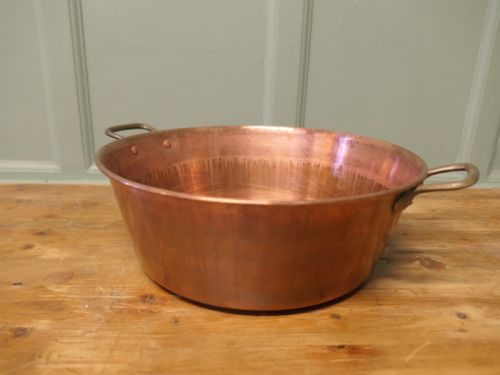
A Victorian copper preserving pan is a heavy kitchen vessel designed originally for boiling fruit and sugar, combining deep bowls with wide rims for rapid evaporation.
You will most commonly encounter large nineteenth-century jam pans and cooking vessels bearing the characteristic warm metallic sheen of the period.
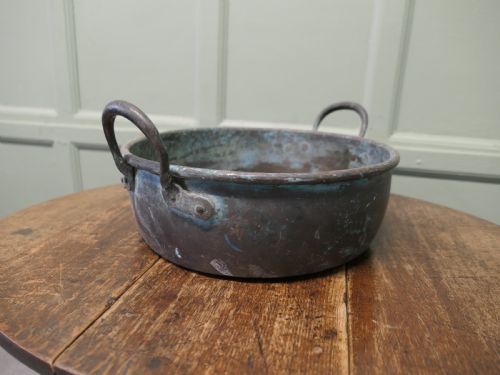
Many examples feature strong iron or brass handles, alongside specialised variants such as cream setting pans and riveted swing-handled bowls.
What varies in quality
Quality rests upon the thickness of the metal gauge and the integrity of the riveted joins, separating heavy-duty kitchenware from lighter decorative basins.
Maker marks, such as those by Hodges and Sons, elevate certain pieces by confirming workshop origin alongside superior weight and balance.
These heavy copper pans spent decades bubbling sticky jam over smoky fires, yet still polish up bright enough to mirror your face.
Hodges and Sons
The Victorian Copper Preserving Pan Glossary
- Preserving pan
- A wide, deep copper vessel used traditionally for jam making and fruit preserves. Its broad surface aids rapid evaporation.
- Jam pan
- Another term for a large cooking vessel designed to boil sugary mixtures safely without burning.
- Cream setting pan
- A specialised shallow bowl utilised in dairies to allow cream to rise to the surface of milk.
- Swing handle
- A movable arched handle attached to the sides of a pan, allowing easier tipping and hanging.
Victorian Copper Preserving Pan: Frequently Asked Questions
How were preserving pans used?
These pans sat directly over open hearths or kitchen ranges to boil fruit and sugar into stable preserves.
Their wide rims and deep copper walls allowed cooks to stir large quantities safely while managing heat distribution.
Can I use these pans for cooking?
Many historic copper pans require professional retinning on the interior surface before preparing food today.
Unlined copper reacts with acidic ingredients, so modern owners often inspect the inner lining first.
How do I clean antique copper?
Gentle washing with warm soapy water preserves the natural patina without stripping away the historic surface.
Specialised copper creams remove heavy tarnish if a bright reflective finish is preferred.
How do I date a copper pan?
Dating relies on observing manufacturing marks, handle attachments, and the presence of hand-hammered rivets.
Nineteenth-century examples frequently display heavy gauge copper and distinct maker attribution.