


Heavy Copper Preserving Basin
A heavy copper preserving basin brings warmth and utility to a kitchen, prized for traditional jam-making and open-fire cooking.
Heavy Copper Preserving Basin
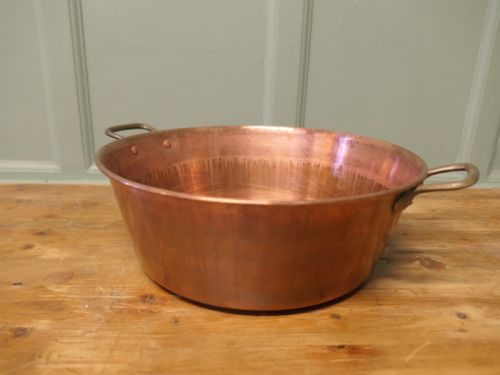
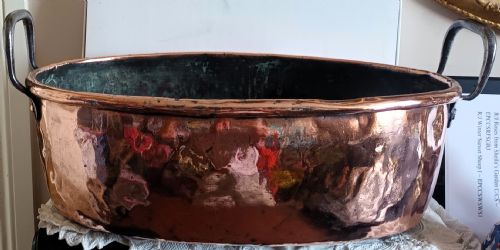
A heavy copper preserving basin is a traditional kitchen utensil designed for boiling fruit and sugar, commonly found in domestic settings from the Georgian and Victorian eras. These vessels range from large double-handled jam pans to cream setting pans and open cooking vessels.
The pieces appearing on this page span the nineteenth century, including George III examples and Victorian country wares. Buyers looking at these items will find heavy metal bowls and pans shaped for practical culinary use over heat sources.
How they were made
Makers shaped these heavy vessels from sheet copper, often combining them with iron or brass handles for lifting and carrying. The metal was beaten and formed to create deep, open bowls capable of withstanding direct heat during long hours of preserve making.
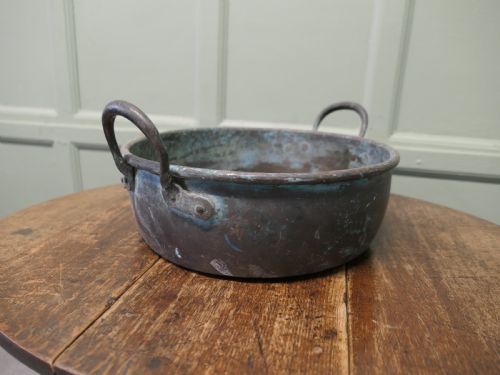
Details such as wrought iron fittings and bronze attachments appear across the cookware, reflecting the practical hardware of nineteenth-century workshops. These materials ensured durability in busy kitchens where heavy pans underwent constant daily use.
Listings feature nineteen-century copper, brass, and iron cookware originating from Georgian and Victorian domestic kitchens.
What varies in quality
Quality in a heavy copper preserving basin rests on the thickness of the metal sheet and the integrity of the forming work. Substantial walls and heavy bases distinguish superior kitchenware from lighter vessels designed for more modest tasks.
The refinement of the handles and the balance of the bowl further separate standard utility pans from finer examples. Maker attribution, such as work by Hodges and Sons, marks another layer of distinction among surviving pieces.
Hodges and Sons
The Heavy Copper Preserving Basin Glossary
- Jam pan
- A wide, open vessel designed for boiling fruit and sugar evenly. These pans feature shallow sides to allow steam to escape quickly.
- Cream setting pan
- A broad, shallow container used in dairies to let cream rise to the surface of milk. They are typically wider than standard preserving pans.
- Wrought iron
- Tough, malleable iron beaten into shape by hand, frequently used for handles and attachments on heavy copper vessels. It shows characteristic texture from the blacksmithing process.
- Bronze
- A copper alloy containing tin, utilised for robust fittings and specialised cooking dishes. It provides greater rigidity than pure copper alone.
Heavy Copper Preserving Basin: Frequently Asked Questions
What is a heavy copper preserving basin used for?
These basins were traditionally used for boiling fruit, sugar, and jam over an open fire or stove. Their wide mouths allowed moisture to evaporate efficiently during long preserving sessions.
Today, they serve both as functional cookware for culinary enthusiasts and as decorative focal points in rustic kitchens.
How do I date an antique copper preserving pan?
Dating relies on examining the construction methods, handle attachments, and overall form of the vessel. Georgian and Victorian pieces often exhibit hand-beaten surfaces and wrought iron fittings specific to their era.
Maker marks and specific stylistic cues, such as those found on George III items, provide further clues to the exact period of manufacture.
Are these copper pans safe for modern cooking?
Many antique copper pans were lined with tin to prevent the copper from reacting with acidic foods like fruit. Checking the interior lining is essential before using any historic vessel for active food preparation.
Unlined pans are frequently repurposed for display, flower arrangements, or dry storage in contemporary homes.
How do I clean an antique copper basin?
Cleaning antique copper requires mild, non-abrasive cleaners designed to preserve the metal surface and its natural aged patina. Harsh scrubbing can remove historical wear and alter the appearance of the metal.
A gentle polish maintains the warm metallic glow without stripping away the character accumulated over centuries of use.